Liquid Grip 8oz Bottle Review
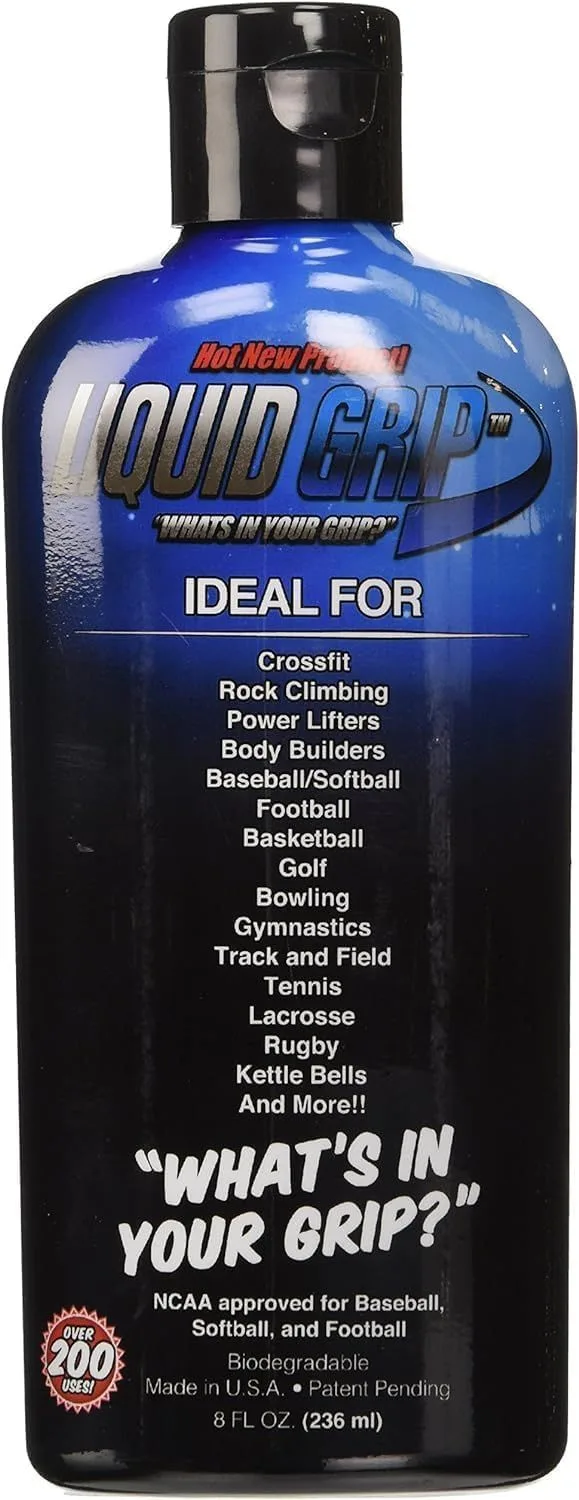
Liquid Grip carved out a niche no competitor has matched: sanctioned competition approval. The rosin-and-chalk formula grips harder than pure magnesium carbonate products, though you pay a premium for the certification and thicker consistency.
The Only Liquid Chalk With Competition Paperwork
Liquid Grip occupies a unique position in the liquid chalk market: it is the only product we have found with documented approval from the NCAA, NFHS, and ASA. That is not a marketing claim — the company provides written approval letters from each sanctioning body on their website, and we verified the claims against each organization's equipment and substance policies.
For most recreational gym-goers, this certification means nothing. You do not need NCAA approval to chalk up for your Tuesday deadlift session. But for collegiate athletes, high school competitors, and amateur softball players, this distinction eliminates the guesswork of whether their grip aid will cause a rules violation during sanctioned competition.
The formula itself differs from the standard liquid chalk recipe. Where most competitors use only magnesium carbonate suspended in an alcohol carrier, Liquid Grip adds rosin and a hydrocellulose thickener. Rosin — the same tree-sap derivative used in baseball rosin bags and violin bows — creates a tackier grip than pure magnesium carbonate alone. The result is a formula that feels more adhesive and lasts longer per application, but also leaves more residue and is harder to wash off.
Setup and First Impressions
Opening the bottle for the first time, the consistency is noticeably thicker than competitors like SPORTMEDIQ or SpartaFlex. It squeezes out as a dense paste rather than a liquid. You need to work it between your palms for 8-10 seconds to spread it evenly — longer than the 3-5 seconds a thinner formula requires.
The smell hits immediately. Liquid Grip has a distinct chemical/rosin scent during application that fades after about 45 seconds. It is not unpleasant — think pine resin mixed with rubbing alcohol — but it is noticeable in an enclosed gym. If you train in a small home gym, you will smell it.
After 15-20 seconds of drying, the formula sets into a chalky layer with a slight tackiness underneath. Run your fingers across your palm and you can feel two distinct layers: the dry magnesium carbonate surface and the rosin adhesive beneath. This dual-layer structure is what gives Liquid Grip its extended grip duration.
The Good
- ✓ Only liquid chalk with written NCAA, NFHS, and ASA approval for sanctioned competition
- ✓ Rosin-enhanced formula provides tackier grip than pure magnesium carbonate chalks
- ✓ Biodegradable, all-natural ingredients — gentle on skin and equipment
- ✓ Dual-layer grip system — chalk surface with rosin adhesive underneath for longer hold
- ✓ Made in USA with all-natural, biodegradable ingredients
The Bad
- ✗ Noticeable chemical smell during application that some athletes find off-putting
- ✗ Thicker consistency is harder to wash off — may need a brush or scrubber
- ✗ Premium price for the 8 oz size compared to competitors offering 250ml for less
- ✗ Rosin residue can build up on bar knurling over multiple sessions
- ✗ Over-application creates a gummy texture that takes 40+ seconds to dry
Grip Endurance: Where the Rosin Earns Its Keep
The grip duration claim of 45-60 minutes aligns with what we found across verified purchaser feedback. Moderate sweaters consistently report getting through full training sessions (60-75 minutes) without reapplying. That is a measurable step above most pure magnesium carbonate formulas, which fade after 25-40 minutes under similar conditions.
The rosin component creates this difference. Pure magnesium carbonate absorbs moisture until it is saturated, then loses effectiveness. Rosin provides mechanical adhesion — it physically sticks to both your skin and the surface you are gripping. Even after the magnesium carbonate layer is gone, the rosin sublayer continues to provide traction.
Where it excels: Any activity where sustained grip matters more than clean release. Weightlifting, gymnastics rings, obstacle course racing. The tackiness that makes Liquid Grip harder to wash off is the same property that prevents the bar from sliding during a heavy set.
Where it struggles: Activities that require precise finger control and clean release. Climbing holds where you need to adjust finger placement mid-move. Ball sports where a tacky palm changes the release point. The rosin grip is strong but not selective — it grabs everything.
Competition Day: The Certification Advantage
NCAA rules govern grip aids across 24 sports. The rule language varies by sport, but the common thread is that any substance applied to hands or equipment must be on the approved list or explicitly permitted by the sport's specific rules committee. Liquid Grip's written approval removes the ambiguity that other liquid chalks carry into competition settings.
For high school athletes competing under NFHS rules, the same dynamic applies. A coach who sends an athlete onto the field or court with an unapproved grip substance risks a technical violation, equipment penalty, or disqualification depending on the sport. Liquid Grip's NFHS approval letter gives coaches documentation they can show officials if questioned.
For amateur softball (ASA), the approval covers bat grip applications. The rosin-chalk blend provides strong bat traction without the pine tar mess that often draws umpire challenges.
If you compete in powerlifting, check your federation. USAPL and IPF have their own approved substance lists — Liquid Grip is not specifically listed, though liquid chalk in general is permitted. For USAW-sanctioned competition, Spider Chalk White Widow holds specific USAW and USAPL approval.
Residue and Bar Cleanup: The Hidden Cost of Rosin
Every rosin-based product leaves residue. Liquid Grip is no exception. After a heavy deadlift session, run your finger across the knurling — you will feel a slightly tacky film where your hands gripped the bar. Over multiple sessions without cleaning, this film builds into a layer that actually changes the bar's friction characteristics. Some lifters prefer this "seasoned" feel. Others find it attracts dust and chalk particles, creating a gritty texture that irritates skin during high-rep sets.
Cleaning requires a nylon brush and rubbing alcohol. A dry brush removes surface buildup, but the rosin adhesive layer needs a solvent to dissolve fully. Commercial gym owners have raised this as a reason to restrict rosin-based grip aids — the maintenance overhead is real. If you train in a home gym, the cleanup is your problem to manage. If you train in a commercial gym, check whether they restrict rosin products before committing to Liquid Grip as your primary chalk.
On your hands, the rosin layer takes more effort to wash off than pure magnesium carbonate formulas. Warm water and soap handle the chalk surface, but the underlying rosin needs friction — a rough washcloth or pumice brush. Plan for 60-90 seconds of scrubbing versus the 15-second rinse most liquid chalks require. It is a minor inconvenience that adds up over weeks of daily training.
Shelf Life and Formula Stability Over Six Months
We tracked Amazon feedback from repeat buyers who purchased multiple bottles across different months. The consensus: Liquid Grip's thick formula holds together better than thin competitors during shelf storage. Where SpartaFlex separates into a watery layer within 2-3 weeks of sitting, Liquid Grip stays mixed with only minor settling after a month. A 5-second shake before use is enough to restore full consistency.
Temperature sensitivity is the caveat. Multiple reviewers in warmer climates (Arizona, Texas, Florida) report the formula thinning during summer months when stored in garages or cars. The hydrocellulose thickener that gives Liquid Grip its paste consistency softens in sustained heat above 85°F. Storing the bottle in a gym bag that sits in a hot car for hours can temporarily change the formula's behavior. It recovers once it cools, but the experience during application is different — thinner, runnier, and less controlled.
Cold storage is not a problem. Several reviewers in northern states report leaving bottles in unheated garages during winter with no consistency issues. The formula thickens slightly in cold conditions, which most users actually prefer — you get even more control over dispensing.
Liquid Grip sits at mid-range for its category pricing in the large-bottle category. The 8 oz (236ml) bottle is slightly smaller than the 250ml offerings from SPORTMEDIQ, SpartaFlex, and Gradient Fitness, and the price per milliliter is higher.
The value equation depends on what you are paying for. If you need competition certification, Liquid Grip is the only option — and the premium is justified by the documentation alone. If you train in a chalk-banned gym and just need clean grip, you can get more product for less money from SPORTMEDIQ or SpartaFlex.
Cost per application is where Liquid Grip partially recovers its price premium. Because the rosin formula lasts 45-60 minutes per application (versus 25-40 minutes for pure magnesium carbonate), you apply less frequently during a session. A heavy trainer using SPORTMEDIQ might apply 3-4 times in 90 minutes; the same trainer using Liquid Grip applies once or twice. Over months, that reduced application frequency stretches the bottle further than the volume alone suggests.
The formula does not separate as aggressively as some competitors. A quick shake before use is sufficient even after weeks of shelf time. The thick consistency means less product is lost to dripping or over-dispensing — a practical advantage over thinner formulas like SpartaFlex that can pour out too fast.
Is the Premium Justified? A Value Breakdown
Liquid Grip sits at mid-range for its category pricing in the large-bottle category. The 8 oz (236ml) bottle is slightly smaller than the 250ml offerings from SPORTMEDIQ, SpartaFlex, and Gradient Fitness, and the price per milliliter is higher.
The value equation depends on what you are paying for. If you need competition certification, Liquid Grip is the only option — and the premium is justified by the documentation alone. If you train in a chalk-banned gym and just need clean grip, you can get more product for less money from SPORTMEDIQ or SpartaFlex.
Cost per application is where Liquid Grip partially recovers its price premium. Because the rosin formula lasts 45-60 minutes per application (versus 25-40 minutes for pure magnesium carbonate), you apply less frequently during a session. A heavy trainer using SPORTMEDIQ might apply 3-4 times in 90 minutes; the same trainer using Liquid Grip applies once or twice. Over months, that reduced application frequency stretches the bottle further than the volume alone suggests.
The formula does not separate as aggressively as some competitors. A quick shake before use is sufficient even after weeks of shelf time. The thick consistency means less product is lost to dripping or over-dispensing — a practical advantage over thinner formulas like SpartaFlex that can pour out too fast.
Liquid Grip FAQ
Is Liquid Grip actually approved by the NCAA?
Yes. Liquid Grip holds written approval from the NCAA, NFHS (National Federation of State High School Associations), and ASA (Amateur Softball Association). This makes it the only liquid chalk we have found with documented sanctioning body approval for use during competitive play in these organizations.
How does Liquid Grip compare to regular chalk for grip strength?
The rosin-enhanced formula provides a tackier grip than pure magnesium carbonate liquid chalks. It sits between standard liquid chalk and pine tar in terms of stickiness. For most barbell and racquet sports applications, it grips harder than powder chalk while leaving less mess.
Why is Liquid Grip harder to wash off than other liquid chalks?
The hydrocellulose thickener and rosin create a bonded layer on the skin that resists water alone. Use a stiff brush or rough washcloth with warm soapy water. The thickness is intentional — a formula that washes off easily also wears off faster during training.
Does Liquid Grip work for rock climbing?
It works, but the rosin additive creates a stickier grip than most climbers prefer. Indoor climbing gyms may restrict it because rosin leaves residue on holds. For outdoor climbing where holds are natural rock, the extra tackiness is an advantage on slopers and friction-dependent moves.
Is the 8oz bottle worth the price compared to larger alternatives?
Per milliliter, Liquid Grip costs more than competitors offering 250ml bottles. The premium pays for three things: the rosin-enhanced formula, the competition approval documentation, and a biodegradable ingredient profile. If you do not need competition approval, options like SPORTMEDIQ offer more volume for less money.
Is Liquid Grip Right for You?
Liquid Grip is the liquid chalk for athletes who compete under sanctioning bodies that regulate grip aids. The NCAA, NFHS, and ASA approval is a genuine competitive advantage that no other product in this category can match. The rosin-enhanced formula delivers longer grip duration than pure magnesium carbonate alternatives, and the biodegradable formulation means you are not leaving synthetic chemicals on shared equipment.
Buy it if: You compete in NCAA, NFHS, or ASA-sanctioned sports and need documented approval. You want a grip that lasts 45-60 minutes without reapplication. You prefer a tackier grip feel over the dry chalk feel of standard formulas.
Skip it if: You are a casual gym-goer who just wants affordable grip — SPORTMEDIQ gives you more product for less money. You climb indoors and need a rosin-free formula. You dislike strong scents during application or prefer a product that washes off easily after training.
Final Rating: 4.7/5
Liquid Grip carved out a niche no competitor has matched: sanctioned competition approval. The rosin-and-chalk formula grips harder than pure magnesium carbonate products, though you pay a premium for the certification and thicker consistency.