Liquid Chalk for Winter Sports: Cold-Weather Grip Solutions
Cold weather creates a paradox: your hands feel cold on the outside while sweating on the inside. Insulated gloves trap body heat and moisture against your palms, turning the interior into a humid microclimate that degrades grip on ski poles, ice tools, hockey sticks, and every other winter implement. Liquid chalk addresses the moisture side of this equation — absorbing sweat before it pools between your skin and your glove liner, keeping your grip dry and secure through hours of cold-weather activity. This guide covers sport-by-sport applications, cold-weather formula behavior, and which products handle sub-freezing conditions best.
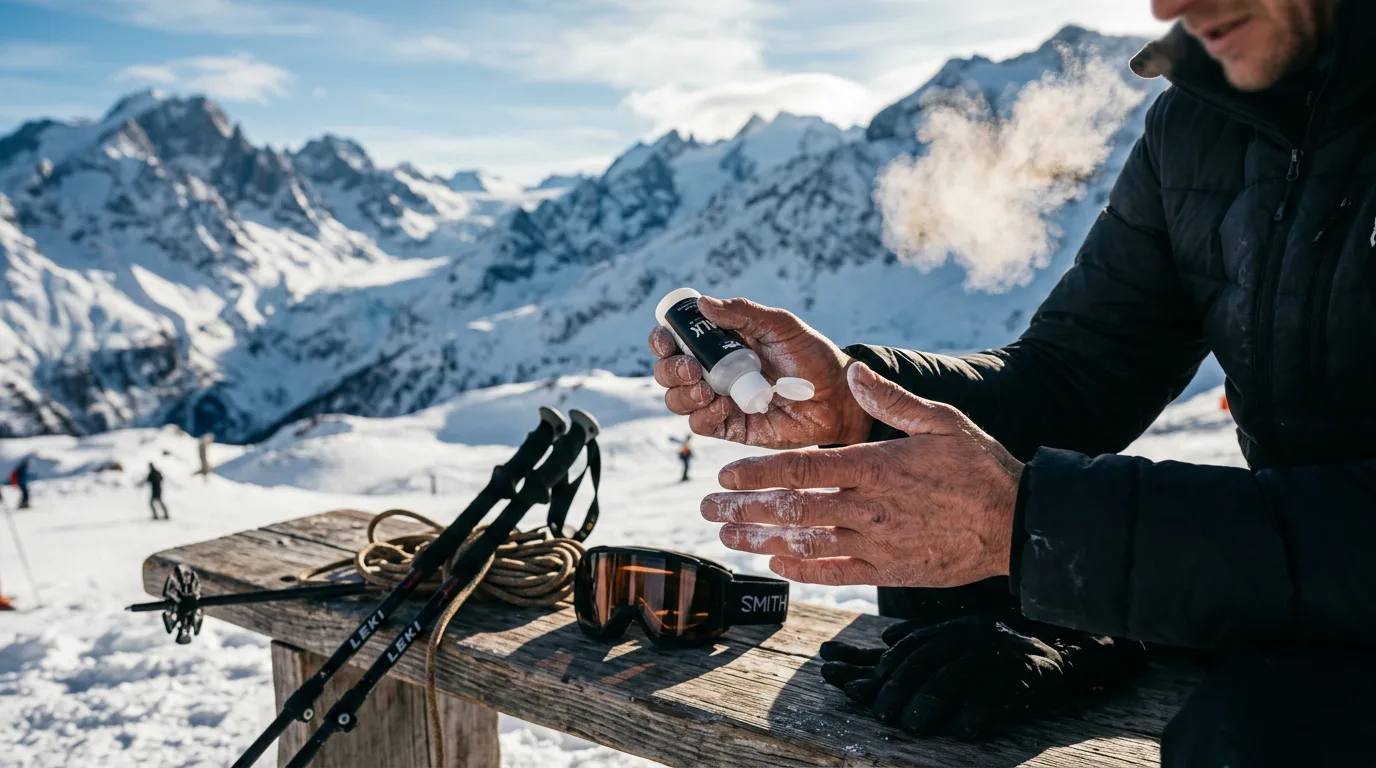
The Hidden Sweat Problem Inside Winter Gloves
Your body does not stop sweating because the air is cold. Physical exertion in winter sports generates metabolic heat that your body regulates by sweating — including through your palms. Ski gloves, ice climbing gloves, and hockey gloves all trap this moisture against your skin. Within 20-30 minutes of sustained effort, the interior of your gloves becomes damp. Within an hour, your palms are sitting in accumulated moisture that reduces friction against the glove liner and anything you grip through it.
The problem compounds as the session extends. A full day of skiing involves 4-6 hours of pole gripping. A backcountry ice climbing approach can take hours before you even reach the ice. Hockey players cycle between intense shifts and bench rest, creating alternating sweat and cooling cycles that leave the glove interior perpetually clammy.
Moisture-wicking glove liners help but do not solve the problem entirely. They transport sweat away from the skin surface, but the moisture stays inside the glove system. Liquid chalk works at the source — absorbing sweat as it leaves your pores, creating a dry barrier between your skin and the liner material. The result is a drier glove interior, better grip on whatever you are holding, and warmer hands (wet skin conducts heat away from your body 25 times faster than dry skin).
Alpine and Backcountry Skiing
Ski pole grip affects everything from balance to turning initiation. In mogul skiing, aggressive pole plants provide timing cues for each turn — a loose grip from sweaty palms delays the plant, which delays the turn, which throws off rhythm on a mogul field where timing is measured in fractions of a second. Slalom racers plant at every gate and need consistent grip pressure through 40-60 pole plants in a single run.
For resort skiing, apply liquid chalk to bare hands in the lodge or parking lot before gloving up. Let it dry completely — 15-20 seconds in lodge temperatures, up to 30 seconds in cold parking lots. Then pull your gloves on. One application handles a full morning session (3-4 hours). Reapply during the lunch break if you plan to ski the afternoon.
Backcountry skiing adds the skinning approach — a sustained cardiovascular effort that generates significant sweat. Touring gloves are lighter and less insulated than resort gloves, which means moisture builds up faster relative to glove volume. Apply chalk before the skinning approach and again at the transition point (when you remove skins and switch to downhill mode). The transition pause is the natural reapplication window.
Pole Grip Technique with Chalk
Modern pole grip technique emphasizes a relaxed hold during traverses and a firm plant during turns. Chalk supports this by maintaining consistent friction at both grip pressures — your hand does not slip when you loosen your hold, and you do not need to white-knuckle the grip to compensate for moisture. This relaxed-to-firm transition is what separates efficient skiers from those who fatigue their forearms by gripping too tightly all day.
Ice Climbing and Mountaineering
Ice climbing places the highest grip demand of any winter sport. You are swinging ice tools into vertical ice with enough force to set secure placements, then hanging your body weight from those tools while placing ice screws or moving your feet. A sweaty hand inside a climbing glove reduces grip strength on the tool shaft — and in ice climbing, grip failure is not an inconvenience. It is a fall.
The application protocol for ice climbing differs from other winter sports. Apply chalk to bare hands at the base of the route or during the approach hike. Cover the full palm and all fingers — ice tool grips demand whole-hand contact. Let the chalk dry fully, then put on your climbing gloves. The chalk layer bonds to your skin and absorbs moisture throughout the climb.
For multi-pitch ice climbs, reapplication between pitches is standard. At the belay stance, pull off your gloves, apply a fresh layer, dry for 20-30 seconds (longer at altitude where air is drier but colder), and re-glove. The rest time between pitches provides a natural application window. Some climbers carry a small 50ml bottle clipped to their harness for quick access.
Dry-tooling — climbing rock with ice tools — follows the same protocol. The grip demands are identical, and the chalk performs the same function: keeping the interface between palm and tool shaft dry under sustained effort. Many dry-tooling routes involve extended overhanging sequences where pump (forearm fatigue) combines with grip degradation from sweat. Chalk delays the onset of pump by ensuring your grip is friction-based rather than force-based.
Cross-Country Skiing and Biathlon
Cross-country skiing is the most cardiovascularly demanding winter sport. Heart rates above 180 BPM are common during race-pace intervals, and sustained efforts of 15-50 minutes produce extraordinary sweat output — including from the palms. Classic technique demands constant pole grip during the poling phase, and skating technique requires explosive pole plants at every stride cycle.
Nordic pole grips are narrower than alpine pole grips and rely on a strap system that wraps around the wrist. The strap takes some load off the grip, but your palm still needs to maintain friction on the cork or rubber grip surface during the push phase. Sweat on a cork grip is particularly problematic because cork absorbs moisture and becomes slippery — the opposite of its intended behavior.
Biathletes face an additional wrinkle: transitioning from skiing to shooting. On the firing line, athletes need stable, precise hand control. A sweaty palm inside a shooting mitt or glove introduces micro-tremors from the effort of maintaining grip that interfere with trigger pull and rifle control. Chalk applied before the race helps maintain dry hands through both the skiing and shooting phases.
Best Picks for Cold-Weather Training
Winter sports demand formulas that handle cold bottle storage, perform under gloves, and last through extended sessions. These five products earned recommendations for cold-weather performance.
1. Spider Chalk White Widow — Best for Extended Backcountry Sessions
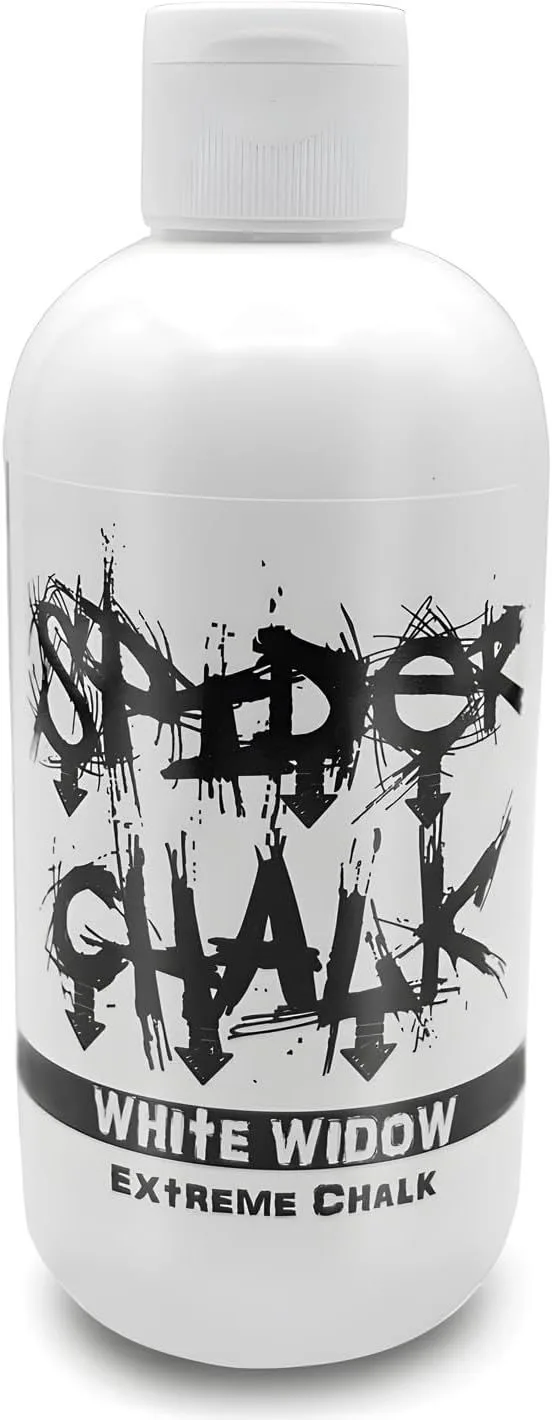
White Widow's 60-minute grip duration is the longest in our catalog — and in winter sports, session lengths are measured in hours, not minutes. The extra-thick paste formula holds up inside gloves better than thin, watery formulas that can break down faster when trapped against warm, damp skin. At premium for the 8 oz bottle, one bottle covers an entire winter season of weekend activities.
The thicker formula takes 25-30 seconds to dry, extending to 35-40 seconds in cold conditions. Plan for this — apply inside the lodge or car, not in the trailhead parking lot at 20°F. Once dry, the grip layer is temperature-independent and holds through sustained climbing, skiing, or skating.
Read our full Spider Chalk White Widow review | Check Price
2. Spider Chalk Black Widow — Best Compact Option for Harness Carry
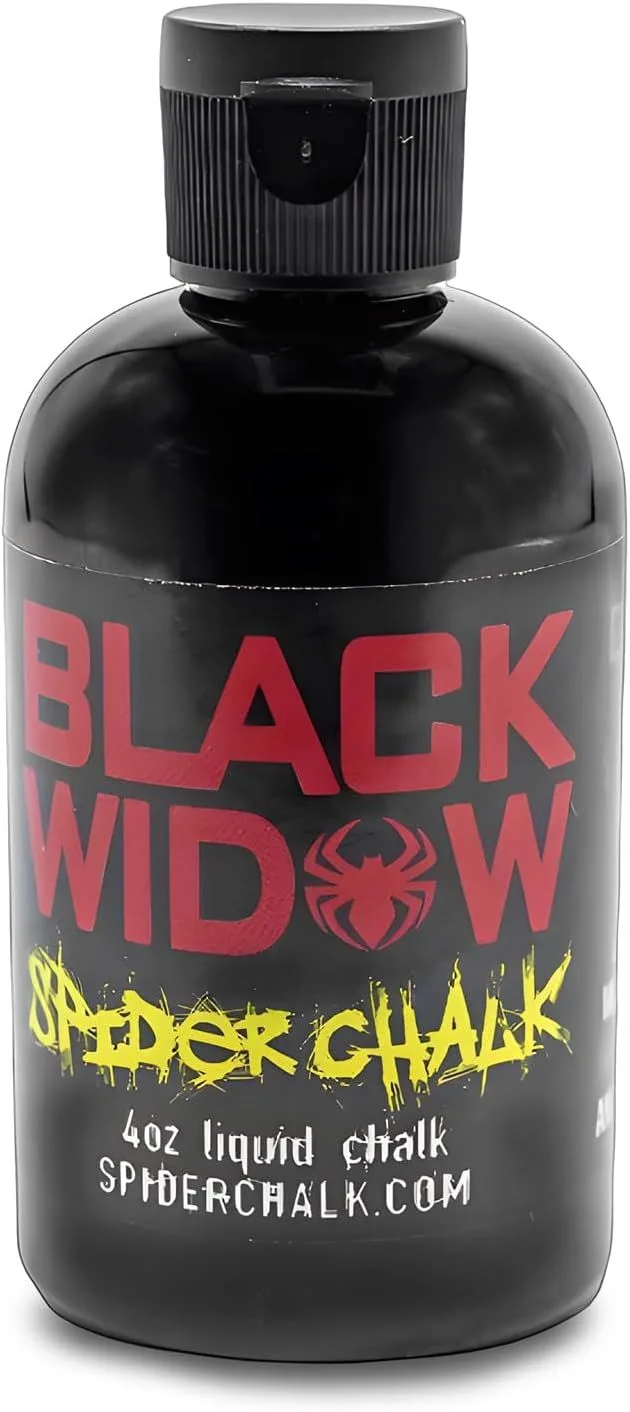
The 4 oz bottle fits in a harness gear loop or an interior jacket pocket without bulk. The Grip-Lock Technology provides 40-55 minutes per application — enough for a full ice climbing pitch or a morning of resort skiing. Lab-grade, skin-friendly formula resists the cracking and drying that harsh alcohol-heavy products cause during repeated cold-weather applications.
At mid-range, it costs more per ounce than the White Widow, but the portability justifies the premium for climbers and skiers who carry their chalk on-body rather than in a vehicle.
Read our full Spider Chalk Black Widow review | Check Price
3. IRON AMERICAN Combo Kit — Best Lodge + Trail Setup
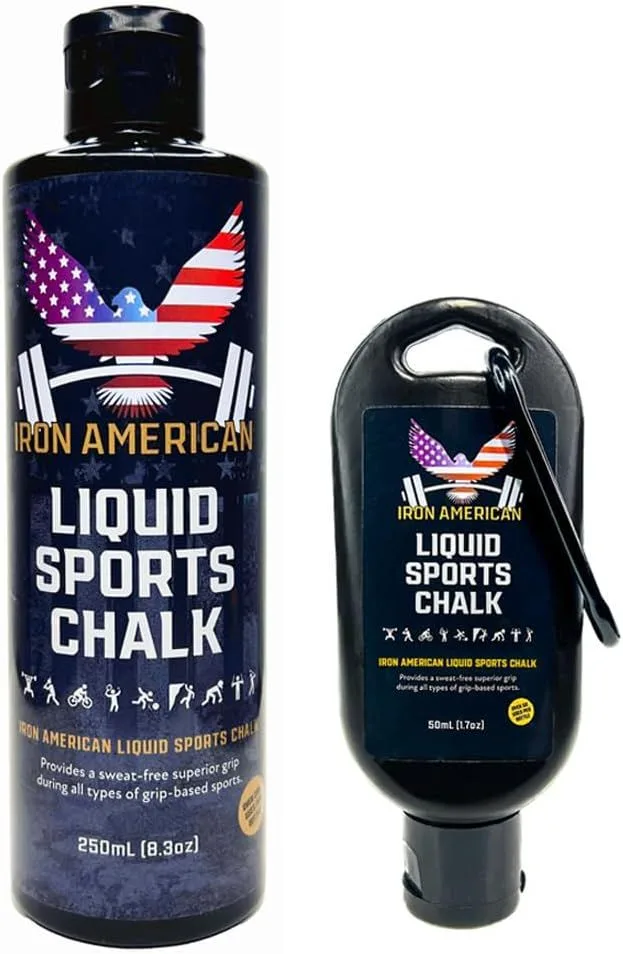
The combo format was designed for exactly this use case: the 8.3 oz bottle stays in the lodge or car for morning and lunch applications, and the 1.7 oz travel bottle clips to your pack or harness for trailside reapplication. At top-tier for both bottles, it undercuts buying a full-size and travel-size separately.
The formula is basic magnesium carbonate without rosin or nano-resins — grip duration is shorter than Spider Chalk products (20-35 minutes). For resort skiing where you can reapply at lift lines, this is fine. For extended backcountry sessions, the shorter duration means more frequent stops.
Read our full IRON AMERICAN review | Check Price
4. SURVIVOR — Best Scented Option for Cold Days
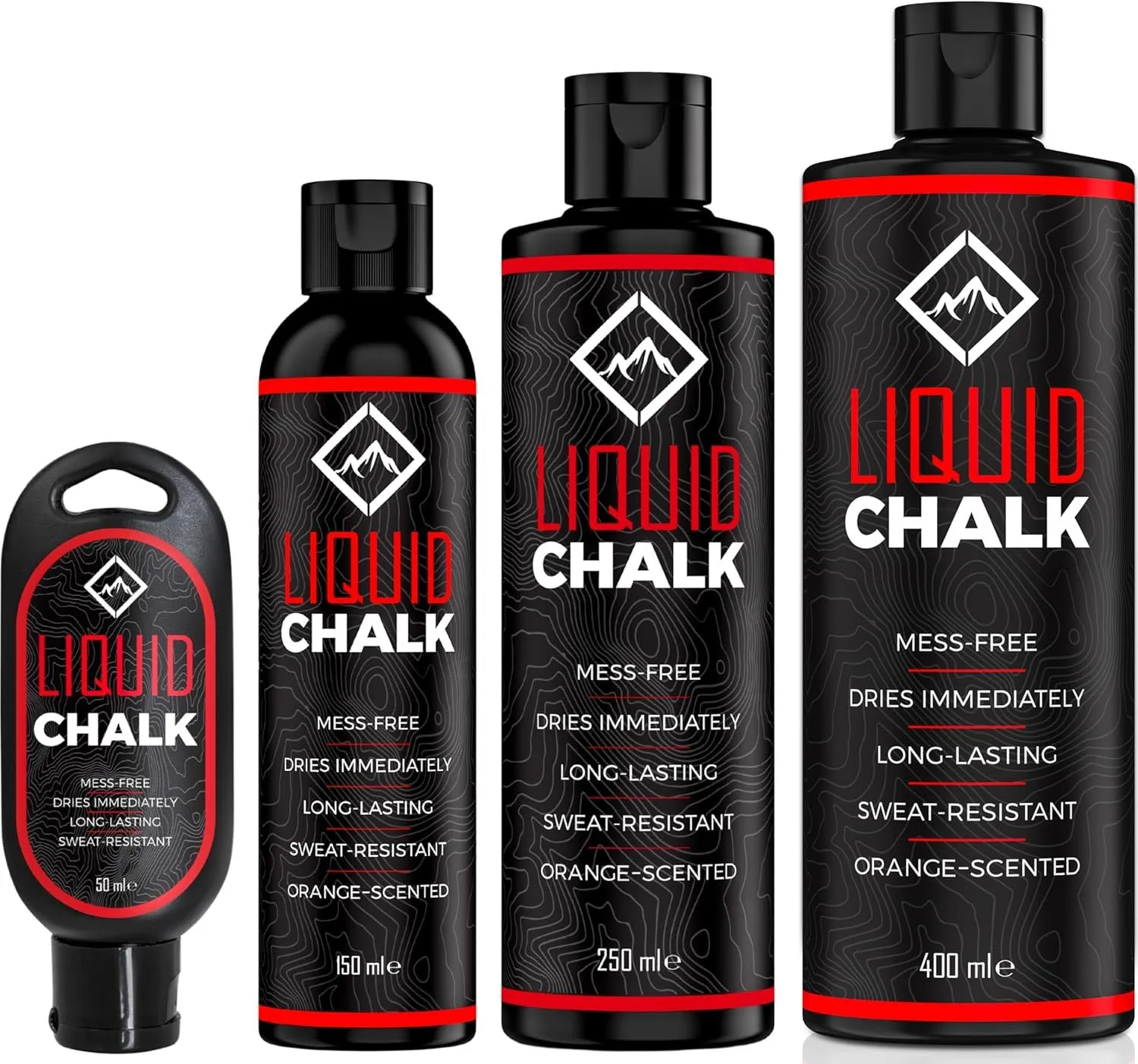
SURVIVOR's orange-scented formula replaces the harsh alcohol smell that is especially noticeable in the cold, enclosed space of a car or lodge where you are applying chalk before heading out. The sweat-resistant formula holds up well for moderate sweaters, and the 150ml bottle is sized between travel and full-size — enough for weeks of regular winter use without being bulky.
At mid-range, it sits at the value end of the range. Over 1309 reviews at 4.6 stars provide strong validation. The 25-40 minute grip duration covers a morning ski session with one reapplication at lunch.
Read our full SURVIVOR review | Check Price
5. EVMT Brands — Best Ultra-Portable for Day Trips
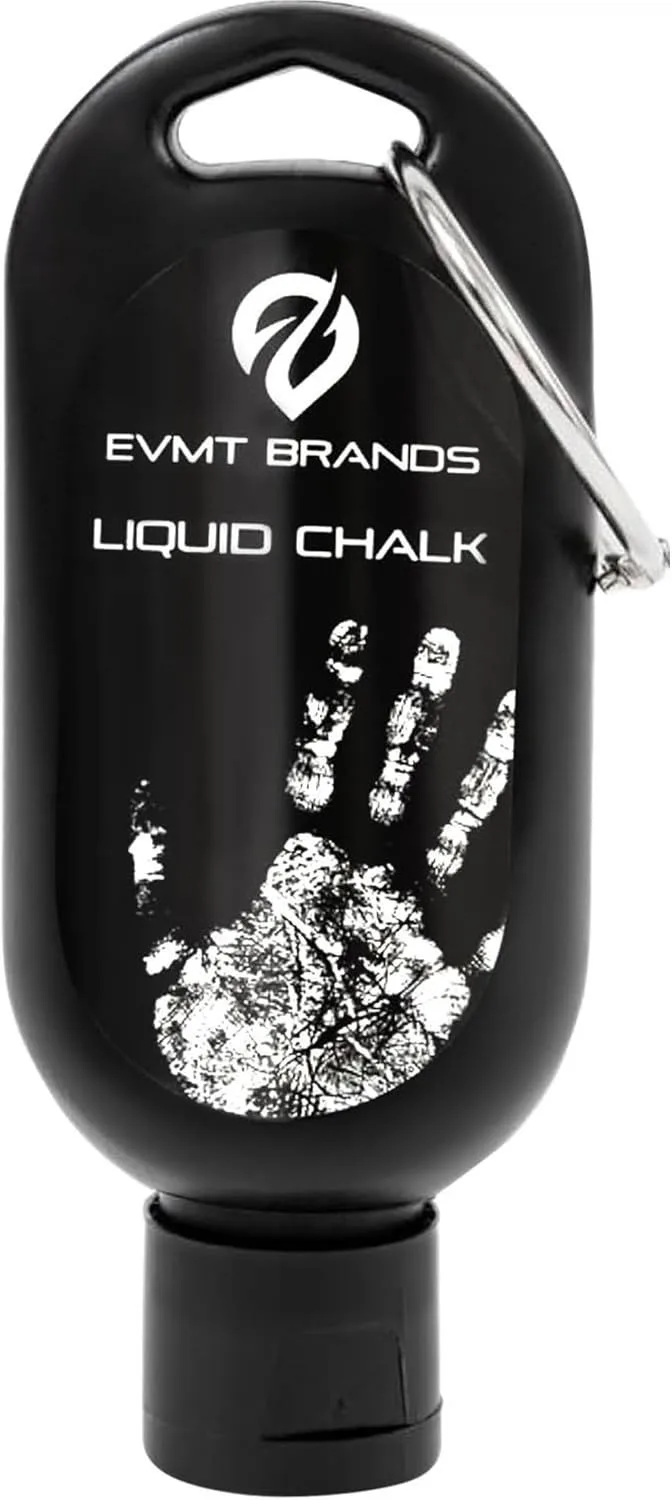
The 50ml bottle fits in any jacket pocket. The 10-15 second dry time (extending to 20-25 seconds in cold conditions) makes it the fastest formula to apply during a quick stop. At affordably priced, you can buy one for your ski jacket, one for your climbing pack, and one for your hockey bag and still spend less than a single premium bottle. Over 3121 reviews confirm the formula works.
The trade-off at this price is grip duration — expect 25-35 minutes in cold conditions, which is the lower end of our catalog. For short sessions or activities with natural breaks (chairlift rides, belay stations), this is plenty.
Read our full EVMT review | Check Price
Cold-Weather Application Protocol
Cold temperatures change liquid chalk behavior in predictable ways. Understanding these changes prevents the common frustrations winter athletes experience when they bring a product designed for room-temperature gyms into sub-freezing conditions.
- Warm the bottle first. Keep it inside your jacket for at least 10 minutes before application. A cold bottle dispenses thick, clumpy chalk that does not spread evenly. A warm bottle pours like normal.
- Apply indoors or in your car whenever possible. The alcohol evaporates faster in warm, dry air. Applying in a 65°F lodge cuts dry time to 15-20 seconds. Applying at a 20°F trailhead extends it to 30-40 seconds. Plan accordingly.
- Dry hands completely before applying. Cold hands tend to be damp from condensation or previous sweat. Towel dry thoroughly. Chalk bonds to dry skin — applying over a damp surface creates a weak layer that breaks down within minutes.
- Allow extra dry time. In cold conditions, add 10-15 seconds to the normal dry time. Putting gloves on over partially dried chalk traps the alcohol against your skin, creating a wet layer that defeats the purpose. Wait until your palms feel completely dry and powdery before gloving up.
- Store upright in a warm pocket. Inverted storage in cold conditions can cause the formula to settle and clog the bottle opening. Keep the bottle upright and warm.
Sport-by-Sport Cold Weather Grip Comparison
| Sport | Grip Demand | Application Location | Reapplication | Recommended Formula |
|---|---|---|---|---|
| Alpine Skiing | Moderate | Lodge / car | At lunch break | EVMT or SURVIVOR |
| Backcountry Skiing | High | Car / trailhead | At skin transition | Spider Chalk White Widow |
| Ice Climbing | Very High | Car / approach trail | Between pitches | Spider Chalk White or Black Widow |
| Cross-Country Skiing | High | Wax room / lodge | At feed zones or mid-session | Spider Chalk White Widow |
| Hockey (Ice) | Moderate | Locker room | Between periods | EVMT or Spider Chalk Black Widow |
| Snowboarding | Low | Lodge / car | Rarely needed | EVMT (if used at all) |
| Curling | Moderate | Club / warm-up area | Between ends | EVMT or Medi Chalk |
Common Mistakes in Cold-Weather Chalk Use
Four errors account for most complaints about liquid chalk "not working" in winter sports:
- Gloving up too soon. Putting gloves on before the chalk dries traps wet alcohol against your skin. This creates a slippery layer that is worse than bare skin. Wait until your palms feel completely dry and powdery — 30-40 seconds in cold conditions.
- Using a cold bottle. Chalk dispensed from a cold bottle comes out thick and clumpy. It spreads unevenly and takes longer to dry. Warm the bottle inside your jacket for 10 minutes before application.
- Over-applying for under-glove use. A thick chalk layer inside a glove creates a gritty, uncomfortable texture that compresses under pressure and can form lumps. Use half the amount you would for bare-hand applications. A thin, even coat is all that is needed to absorb glove-interior moisture.
- Assuming all winter activities need chalk. Snowboarding, snowshoeing, and casual resort skiing at moderate pace generate minimal palm sweat. Chalk provides marginal benefit for these activities. Save it for high-exertion sports where grip is a performance factor: ice climbing, competitive skiing, hockey, and long backcountry tours.
Winter Grip FAQ
Does liquid chalk work in freezing temperatures?
Can I apply liquid chalk while wearing gloves?
Will liquid chalk freeze inside the bottle?
Is liquid chalk useful for skiing?
Does liquid chalk help with ice climbing tool grip?
Can I use liquid chalk for snowboarding?
Grip the Cold with Confidence
Cold weather does not eliminate the sweat problem — it just hides it inside your gloves. A single application of liquid chalk before you gear up keeps your hands drier, warmer, and more secure on whatever you grip for the next hour. Whether you are planting poles on a mogul run, swinging tools on vertical ice, or gripping a hockey stick through the third period, chalk removes the moisture variable and lets you focus on performance instead of fighting your equipment.
Check PriceGet Our Top 3 Picks
Get our top 3 picks for your budget — one email, then only updates.
Only when something changes. Unsubscribe anytime.