What Is Liquid Chalk? How It Works & Why Athletes Use It
Liquid chalk is a grip-enhancing solution made from magnesium carbonate suspended in alcohol. Athletes squeeze it onto their palms, the alcohol evaporates in seconds, and a thin, dry chalk layer bonds to the skin — providing friction without the airborne dust of traditional powder chalk.
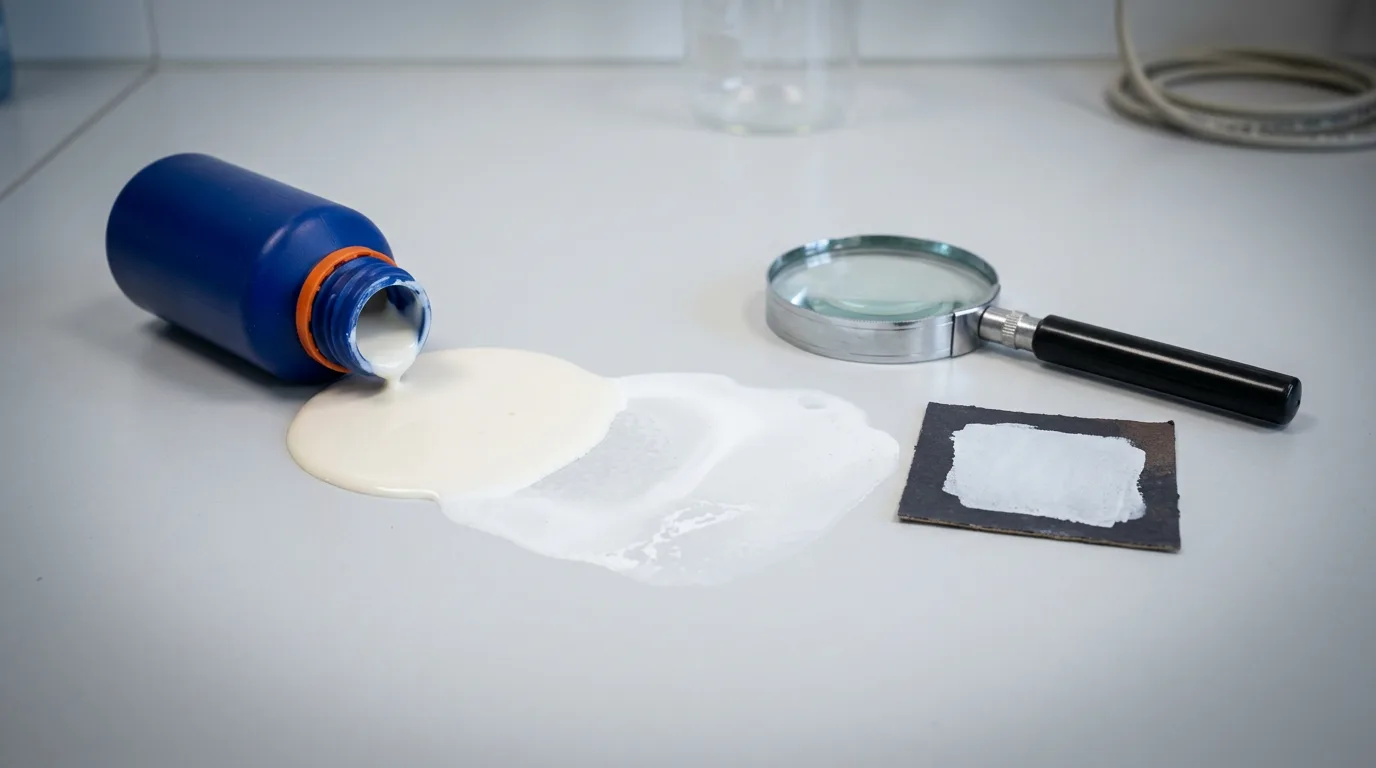
That one-sentence explanation covers the basics, but it doesn't explain why liquid chalk has become the default grip solution in commercial gyms, climbing walls, and competition warm-up rooms across the world. The full story involves chemistry, athletic performance, and a practical problem that powder chalk never solved.
The Core Components
Every bottle of liquid chalk contains two essential ingredients working together. Magnesium carbonate (MgCO3) is the active grip agent — the same mineral compound found in traditional gym chalk blocks and loose chalk powder. It absorbs moisture from your skin surface, creating a dry barrier between your palms and whatever you're gripping.
The second component is an alcohol carrier, usually isopropyl alcohol (IPA) or ethanol. The alcohol dissolves the powdered magnesium carbonate into a smooth, spreadable liquid. Without it, you'd just have a bottle of dry powder. The alcohol also serves as a mild antiseptic, killing surface bacteria on your hands during application — a side benefit that became more appreciated after 2020.
When you rub liquid chalk between your palms, the alcohol begins evaporating immediately on contact with warm skin. Within 10–30 seconds (depending on the formula thickness), all the alcohol is gone. What remains is a thin, even layer of magnesium carbonate bonded directly to your skin — not sitting loosely on top like powder chalk, but actually adhering through mechanical interlocking with your skin's surface texture.
How It Differs From Powder Chalk
Powder chalk and liquid chalk share the same active ingredient, but the delivery method changes everything about the user experience.
Powder chalk is applied by dipping hands into a chalk bag or bucket, coating the palms, and clapping off the excess. This creates visible dust clouds, leaves residue on equipment, and produces an uneven coating where some spots are over-chalked and others are bare. The chalk sits on the skin surface and is easily wiped away by contact with a barbell, climbing hold, or any gripping surface.
Liquid chalk bonds to the skin during the alcohol evaporation process. The resulting layer is thinner, more uniform, and more resistant to being wiped off. Because there's no loose powder involved, there's no dust cloud — the chalk goes on your hands and stays there. This is why most commercial gyms that ban powder chalk still allow liquid versions.
The bonding difference has a performance implication too. Powder chalk needs to be reapplied after almost every set because the loose particles transfer to the bar. Liquid chalk typically lasts 2–6 sets before the coating degrades enough to need refreshing, depending on the formula and your sweat output.
Who Uses Liquid Chalk
Liquid chalk started in climbing and powerlifting communities in the early 2000s, but it has spread to virtually every sport where grip matters.
Strength Sports
Powerlifters, Olympic weightlifters, and strongman competitors use liquid chalk for barbell grip during deadlifts, cleans, snatches, and pressing movements. Many federations (USAPL, USAW, IPF) explicitly permit liquid chalk in competition. For heavy deadlifts where grip is the limiting factor, the difference between a chalked and unchalked pull can be 20–50 pounds.
Climbing and Bouldering
Indoor climbing gyms were among the first mainstream venues to adopt liquid chalk over powder. The reduced dust keeps air quality better in enclosed spaces, and the even coating works well on textured climbing holds. Outdoor climbers use liquid chalk as a base layer, supplementing with powder chalk from a chalk bag during long multi-pitch routes.
CrossFit and Functional Fitness
CrossFit athletes cycle through pull-ups, barbell lifts, and gymnastic movements within the same workout. Liquid chalk's durability through varied grip demands makes it practical for WODs where stopping to re-chalk breaks your pace. Many CrossFit boxes stock liquid chalk dispensers alongside their chalk buckets.
Gymnastics and Pole Dance
Gymnasts need grip on bars, rings, vault, and beam — but traditional chalk creates residue that must be cleaned between rotations. Liquid chalk's clean application solves this. Pole dancers face a unique challenge: they need grip on the pole while also needing skin-to-pole slide for spins. Specialized grip enhancers (like Chalkless products) address this better than traditional chalk of any format.
Ball Sports and Beyond
Baseball players, golfers, tennis players, and basketball players all deal with grip degradation from sweaty palms. Liquid chalk provides a discreet, fast-applying solution that doesn't leave visible residue on balls, bats, clubs, or racquets. It's also found a niche in occupational contexts — surgeons, rock musicians, and even competitive gamers have adopted it for steady hand control.
Why Gyms Prefer Liquid Chalk
The gym owner's perspective on chalk is simple: powder chalk makes a mess, and messes cost money to clean. A single powerlifter using loose chalk can generate visible dust that settles on equipment, floors, mirrors, and HVAC filters across the entire facility. Multiply that by 20 chalk-using members, and the cleaning burden becomes a real operational cost.
Liquid chalk eliminates approximately 95% of that mess. The chalk stays on the athlete's hands, not in the air. Whatever small amount transfers to barbells or pull-up bars wipes off with a quick towel swipe — no chalk dust requiring vacuuming, no white handprints on bench upholstery, no powder settling into equipment bearings.
This is why "no chalk" gym policies increasingly include a carve-out for liquid chalk. The gym gets cleaner facilities and happier cleaning staff. The athlete gets the grip they need without being told to put the chalk away. Both sides win.
The Evolution of Liquid Chalk Formulas
Early liquid chalk products were simple two-ingredient solutions: magnesium carbonate and isopropyl alcohol. They worked, but grip duration was limited to 15–20 minutes and the formulas separated quickly in the bottle.
Modern formulations have added performance-enhancing compounds that push the technology well beyond that baseline. Rosin (pine resin) adds tackiness that pure magnesium carbonate lacks — useful for smooth bar surfaces where friction alone isn't enough. Honey creates a secondary grip layer that activates as the primary chalk coating wears down. Nano-resin compounds (like Spider Chalk's Grip-Lock Technology) form molecular bonds with skin proteins for grip durations exceeding 45 minutes.
The newest category isn't liquid chalk at all. Silica silylate compounds — sold under the Chalkless brand — represent a fundamentally different approach to grip enhancement. Instead of absorbing moisture (like magnesium carbonate), silica silylate creates a hydrophobic barrier that repels moisture while increasing surface friction. The result is invisible, residue-free grip that works on skin, poles, and equipment without any white chalk marks.
This evolution means "liquid chalk" is no longer a single product category. It's a spectrum from basic magnesium-and-alcohol solutions to engineered grip compounds using advanced material science. What you need depends on your sport, your sweat level, and how long you need the grip to last.
Common Misconceptions
Liquid chalk attracts several persistent myths that are worth addressing directly.
"Liquid chalk is just watered-down regular chalk." No. The alcohol carrier creates a fundamentally different application and bonding mechanism than mixing chalk with water (which would just make a paste that never dries properly). The alcohol evaporates cleanly, leaving bonded chalk. Water-mixed chalk leaves a damp, clumpy mess.
"It's bad for your skin." The alcohol can cause dryness with daily use, but this is reversible with basic moisturizing. There's no evidence of permanent skin damage from normal liquid chalk use. It's less abrasive than powder chalk, which creates more friction-based skin tears during heavy barbell work.
"More expensive means better grip." Price and performance correlate for specific use cases, but a budget formula works just fine for casual gym training. You're paying a premium for longer grip duration, advanced additives, and competition certifications — features that matter for some athletes and not others.
"You can make liquid chalk at home." Technically yes — magnesium carbonate powder mixed with isopropyl alcohol in a roughly 2:1 ratio creates a functional liquid chalk. But homemade versions lack the suspension agents that keep commercial products from separating, and the consistency is harder to control. For the price of a budget commercial bottle, the convenience of a pre-mixed, properly suspended formula is worth it.
What to Look for When Buying
If you're ready to try liquid chalk, a few key factors will determine which product matches your needs. Volume matters — a 50ml bottle is perfect for testing or occasional use, while daily trainers should consider 250ml options for better per-use value. Ingredients tell you about grip character: pure magnesium carbonate for standard use, rosin-enhanced for maximum tack, or silica compounds for invisible grip. And dry time matters if you're training in a fast-paced environment where 30 seconds between sets feels like an eternity.
Our complete buying guide breaks down every variable with specific product recommendations by activity, budget, and training frequency.
What Athletes Ask About Liquid Chalk
Is liquid chalk the same as regular chalk?
No. Liquid chalk is magnesium carbonate dissolved in an alcohol carrier. When applied, the alcohol evaporates and leaves a thin chalk layer bonded to your skin. Regular (powder) chalk is loose magnesium carbonate that sits on top of the skin. Both absorb moisture, but liquid chalk creates a more even coating with far less mess.
What sports use liquid chalk?
Weightlifting, powerlifting, rock climbing, bouldering, CrossFit, gymnastics, pole dancing, kettlebell training, calisthenics, strongman, and even ball sports like basketball and baseball. Any activity where sweaty palms reduce grip benefits from liquid chalk.
Does liquid chalk damage your skin?
The alcohol carrier can dry out skin with repeated daily use. This is temporary and manageable with post-workout moisturizing. Liquid chalk does not cause permanent skin damage. Athletes with eczema or psoriasis should test a small patch first and look for hypoallergenic formulas.
How long does liquid chalk last on your hands?
Most formulas provide grip for 15–60 minutes depending on the product, your sweat level, and the intensity of your activity. Budget products last 15–25 minutes. Premium formulas with rosin or nano-resin additives can hold for 45–60 minutes.
Can you use liquid chalk on equipment?
Liquid chalk is designed for skin application. Applying it directly to barbells, pull-up bars, or climbing holds can leave residue that affects the next user. Apply it to your hands only and let it dry fully before gripping equipment.
Why does liquid chalk smell like alcohol?
Because it contains alcohol — typically isopropyl alcohol or ethanol. The alcohol serves as the carrier that dissolves the magnesium carbonate into a spreadable liquid. The smell disappears within 15–30 seconds as the alcohol evaporates. Some brands add fragrances (like orange) to mask the initial scent.
Get Grip Tips Delivered
One email per week. Honest reviews, no spam.
Only when something changes. Unsubscribe anytime.