Liquid Chalk Ingredients Explained: What's in Your Bottle?
Every liquid chalk bottle lists "magnesium carbonate" on the label. But the full ingredient story is more nuanced — and understanding what's inside explains why one product grips for 15 minutes while another holds for an hour, why some cost twice as much as others, and why certain formulas irritate sensitive skin while others don't.
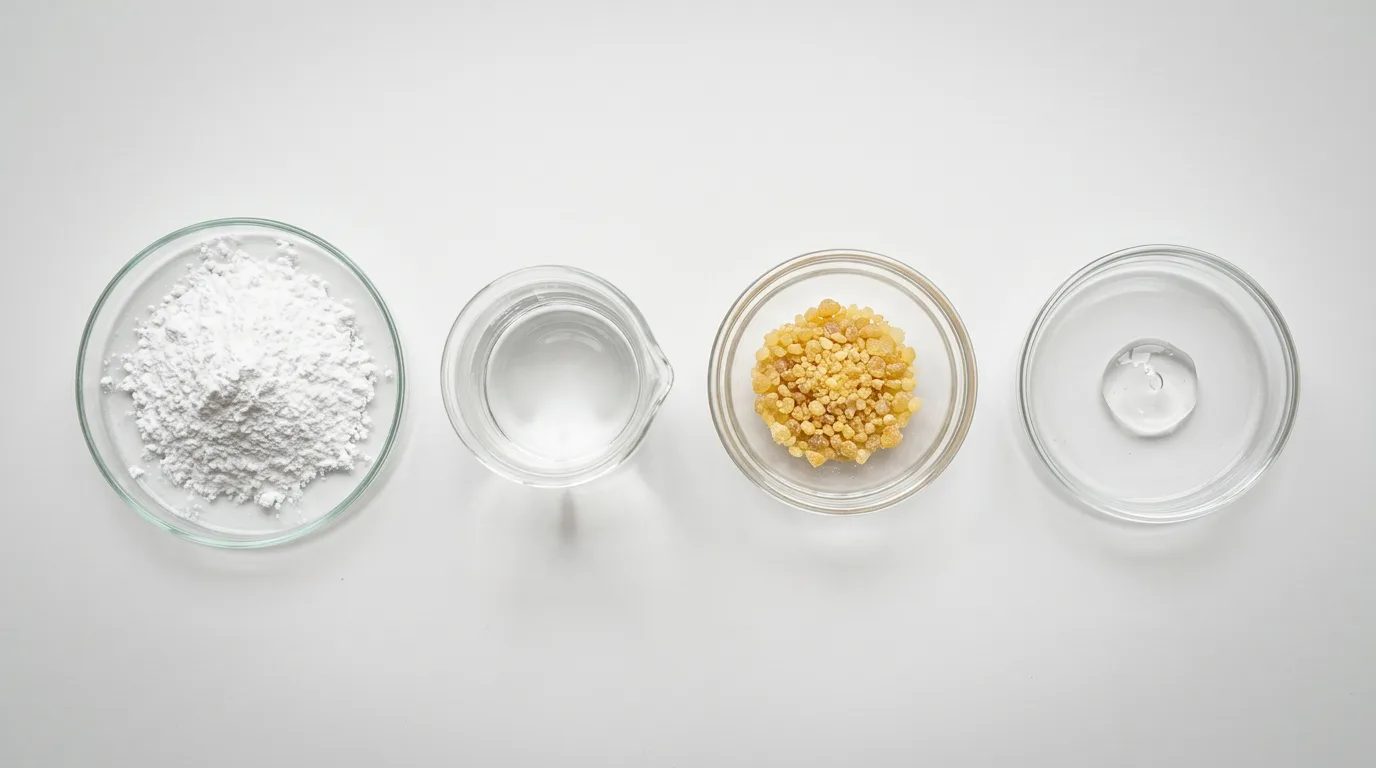
We examined the ingredient lists of all 19 products in our catalog, cross-referencing with manufacturer spec sheets, safety data sheets (SDS), and patent filings where available. Here's what's actually in liquid chalk — and what each ingredient does for your grip.
Magnesium Carbonate: The Active Ingredient
Magnesium carbonate (MgCO3) is the foundation of every traditional liquid chalk formula. It's a white, odorless, inorganic salt that occurs naturally as the mineral magnesite. In its powdered form, it's the same substance used in gymnastic chalk blocks, loose climbing chalk, and even food-grade anti-caking agents.
The reason it works for grip is hygroscopy — magnesium carbonate naturally attracts and absorbs water molecules from its environment. When coating your palm, it pulls sweat away from the skin surface and traps it within the powder's crystalline structure. This keeps the skin-to-equipment interface dry, maintaining friction even during heavy exertion.
Not all magnesium carbonate is created equal. Three grades appear across commercial products:
- Technical grade: Standard purity, the most common in budget liquid chalks. Effective for grip, may contain trace impurities that don't affect performance but can affect skin sensitivity.
- USP/pharmaceutical grade: Higher purity with controlled particle size distribution. Used in products marketed as hypoallergenic or skin-friendly. SPORTMEDIQ and some Spider Chalk products use this grade.
- Lab grade: The highest purity, with very uniform particle size. Spider Chalk's Black Widow advertises "lab-grade" magnesium carbonate, which creates a smoother, more even coating.
The particle size affects application feel. Finer-ground particles (under 10 micrometers) produce a silky, even coating that feels smooth after drying. Coarser particles (20–50 micrometers) create a grittier texture that some lifters prefer for aggressive bar grip. Most products don't disclose exact particle specifications, but you can feel the difference between brands.
Alcohol Carriers: Isopropyl vs Ethanol
The alcohol is what makes liquid chalk "liquid." It dissolves the magnesium carbonate into a spreadable consistency and then evaporates cleanly, leaving the chalk bonded to your skin. Two types dominate the market.
Isopropyl Alcohol (Isopropanol, IPA)
The most common carrier in liquid chalk. Isopropyl alcohol evaporates quickly (boiling point 82.6°C), has excellent solvent properties for suspending mineral particles, and is inexpensive. The typical concentration in liquid chalk is 40–60% by volume.
The drawbacks: IPA is more drying to skin than ethanol, produces a sharper smell during application, and can cause mild irritation on broken skin (hangnails, callus tears, paper cuts). If you've ever felt a sting when applying liquid chalk over a small cut, that's the IPA making contact with exposed tissue. Harmless, but uncomfortable.
Ethanol (Ethyl Alcohol)
A gentler alternative used by brands targeting sensitive-skin athletes. Ethanol evaporates slightly slower than IPA (boiling point 78.4°C — counterintuitively lower, but the evaporation rate depends on more than just boiling point), produces a milder odor, and is less drying on skin with repeated daily use.
The downside is primarily economic: ethanol is more expensive than IPA, and products using it tend to cost more per bottle. For athletes who train daily and already manage dry hands, the switch to ethanol-based liquid chalk can reduce cumulative skin drying.
Rosin (Colophony): The Tackifier
Rosin is a solid resin obtained from pine trees by heating the liquid sap to evaporate volatile compounds. What remains is a brittle, amber-colored solid that becomes tacky at room temperature — a property that makes it valuable as a grip-enhancing additive.
In liquid chalk, rosin is dissolved into the alcohol carrier alongside the magnesium carbonate. During the drying phase, it co-deposits on the skin, creating a composite coating that's both moisture-absorbing (from the MgCO3) and adhesive (from the rosin).
Products containing rosin grip harder on smooth, polished surfaces because the tackiness creates mechanical adhesion beyond simple friction. On chrome barbells, polished climbing holds, and gymnastic apparatus, rosin-enhanced chalk measurably outperforms pure MgCO3 formulas.
The downsides are real though. Rosin residue is harder to wash off hands and equipment. It can irritate skin with daily use, causing peeling or redness in sensitive individuals. And people with tree-sap or pine-related allergies should avoid rosin products entirely — contact dermatitis is a documented reaction.
Products in our catalog containing rosin: Liquid Grip (rosin + hydrocellulose thickener), Spider Chalk White Widow (nano-resins + tackifiers), and PowerGrip (rosin + honey blend).
Honey: The Secondary Grip Layer
Honey is a natural hydrocolloid — a substance that forms a viscous gel when in contact with water. In liquid chalk, honey is dissolved into the formula and co-deposits with the magnesium carbonate during drying.
The engineering concept is a two-stage grip system. Initially, the magnesium carbonate layer does the primary work of absorbing moisture and providing friction. As that layer degrades from use and sweat, the underlying honey compound becomes exposed and activates — creating a secondary tacky layer that bridges the gap until you can reapply.
PowerGrip products use this approach. In practice, athletes report that grip degrades gradually rather than failing abruptly — the honey buys an extra 10–15 minutes of usable grip after the primary chalk layer would normally be spent.
Honey is non-allergenic for the vast majority of people (bee-product allergies are extremely rare in topical use), non-toxic, and washes off easily with water. The only practical concern is that honey-containing formulas can feel slightly stickier during application before they dry — a texture that some athletes find unusual on first use.
Nano-Resins and Proprietary Compounds
Spider Chalk's Grip-Lock Technology represents the most advanced additive chemistry in our product catalog. The formulation includes nano-resin compounds — synthetic particles engineered at the nanometer scale — that create molecular-level bonds with both the magnesium carbonate matrix and the keratin proteins in your skin.
The result is a grip layer with two improvements over standard chalk. First, the nano-resin particles fill gaps between larger MgCO3 particles, creating a denser, more continuous barrier that resists sweat penetration longer. Second, the molecular bonding with skin proteins anchors the chalk layer more firmly, resisting the mechanical wear that normally strips chalk during repeated gripping.
Spider Chalk claims grip durations of up to 60 minutes with their White Widow formula, which includes nano-resins plus conventional tackifiers. While independent testing data isn't publicly available, user reports from competition powerlifters and climbers consistently confirm grip times well above the 20–35 minute range of standard products.
The catch: these advanced formulas are thicker, take longer to dry (25–30 seconds vs 10–15 seconds for basic formulas), and cost more per application.
Silica Silylate: The Non-Traditional Path
Chalkless products break from the magnesium carbonate paradigm entirely. Their active ingredient is a patented silica silylate compound — a modified form of silicon dioxide (the primary component of sand and quartz) that has been chemically treated with silylating agents to become hydrophobic.
Where magnesium carbonate absorbs moisture, silica silylate repels it. The compound creates a hydrophobic barrier on the skin that causes sweat to bead up and roll off rather than forming a lubricating film. Friction comes from the silica's micro-textured surface rather than from a dry-powder coating.
The application method is different too — Chalkless products come as dry granules, not liquids. You pour a small amount into your palm and rub your hands together. There's no alcohol, no evaporation phase, and no drying time. The grip is instant.
The result is completely invisible. No white chalk marks on hands, clothing, equipment, or surfaces. For pole dancers, gymnasts in competition, and athletes in chalk-restricted environments, this solves a problem that no amount of magnesium carbonate engineering can address.
Thickeners and Suspension Agents
Beyond the active grip ingredients, most liquid chalk contains supporting compounds that maintain the formula's consistency in the bottle.
Hydrocellulose thickeners (found in Liquid Grip) increase viscosity to create a paste-like consistency. Without thickeners, the magnesium carbonate would settle out within minutes, requiring constant shaking. Thickeners keep the formula homogeneous for weeks between uses.
Xanthan gum is a natural polysaccharide used by some brands as a suspension stabilizer. It's the same compound used in salad dressings to keep oil and vinegar mixed. In liquid chalk, it prevents the "watery top, thick bottom" separation that plagues thin formulas.
Antibacterial agents — some products (SpartaFlex, for example) include antimicrobial compounds beyond the base alcohol effect. These don't improve grip but address hygiene concerns in shared gym environments where chalk bottles pass between many hands.
None of these supporting ingredients affect grip performance directly. They affect the user experience: how the product feels in the bottle, how consistently it dispenses, and how often you need to shake before use.
Fragrances
Most liquid chalk smells like rubbing alcohol during application. The scent fades within 15–30 seconds as the alcohol evaporates, but the initial hit can be sharp enough to draw stares in a quiet gym.
A few brands address this. SURVIVOR uses an orange fragrance that replaces the alcohol smell with citrus. The scent doesn't affect grip and adds minimal cost, but it does make the application experience more pleasant — especially in enclosed spaces like home gyms where ventilation is limited.
If fragrance sensitivity is a concern, look for products labeled "unscented" or "fragrance-free." Pure magnesium carbonate formulas (WARM BODY COLD MIND's 100% MgCO3 formula, for example) have no added scent — just the inherent alcohol smell that dissipates quickly.
Reading an Ingredient Label: What Matters
When comparing products, focus on three questions:
- What's the active ingredient? Magnesium carbonate = traditional chalk grip. Silica silylate = invisible, non-traditional grip. This is the fundamental choice.
- Are there performance additives? Rosin, honey, or nano-resins extend grip duration and add tackiness. If the only ingredient is "magnesium carbonate, alcohol," you're getting a basic formula — fine for casual use, but limited for heavy sweaters or long sessions.
- What's the alcohol type? Isopropyl = faster drying, more drying on skin, stronger smell. Ethanol = gentler on skin, milder smell, slightly slower dry. For daily users concerned about skin health, this distinction matters.
Everything else — thickeners, suspension agents, antibacterial additives, fragrances — is secondary to these three factors. They affect the bottle experience, not the grip experience.
Ingredient Questions Answered
Is magnesium carbonate safe to touch?
Yes. Magnesium carbonate is classified as GRAS (Generally Recognized As Safe) by the FDA. It's used in food products as an anti-caking agent, in antacid tablets, and in cosmetics. Skin contact is safe for the vast majority of people. Those with very sensitive skin may experience minor dryness from repeated use.
What alcohol is used in liquid chalk?
Most liquid chalks use isopropyl alcohol (rubbing alcohol) at 60–70% concentration. Some brands use ethanol, which is slightly less drying on skin and has a milder smell. Both evaporate quickly and leave no residue — the choice affects dry time and skin compatibility more than grip performance.
Is rosin in liquid chalk the same as violin rosin?
Fundamentally yes — both are derived from pine tree resin (colophony). The grade and processing differ, but the base compound is the same natural material. In liquid chalk, rosin is dissolved into the alcohol carrier and deposits on skin along with the magnesium carbonate, adding tackiness to the grip.
Are liquid chalk ingredients toxic?
No. Commercial liquid chalk products use non-toxic ingredients. Magnesium carbonate is food-safe, alcohol evaporates during application, and additives like rosin and honey are natural compounds. The only precaution is ventilation during application — the alcohol vapor in concentrated amounts can cause lightheadedness in very small, enclosed spaces.
Can I be allergic to liquid chalk?
Allergic reactions to pure magnesium carbonate are extremely rare. The more common sensitivity is to rosin (pine resin), which can cause contact dermatitis in people with tree-sap allergies. If you have known sensitivities, test a small amount on the back of your hand first and choose rosin-free products.
Why do some liquid chalks have different colors?
Most liquid chalk is white (from the magnesium carbonate). Chalkless BLACK uses a different compound (silica silylate) that appears dark. Some brands add colorants for branding. The color does not affect grip performance — it's purely a visual difference in the active compounds used.
Get Grip Tips Delivered
One email per week. Honest reviews, no spam.
Only when something changes. Unsubscribe anytime.