Liquid Chalk for Yoga: Steady Palms, Steady Practice
Downward dog, arm balances, and hot yoga — how liquid chalk prevents mat slip without damaging yoga surfaces.
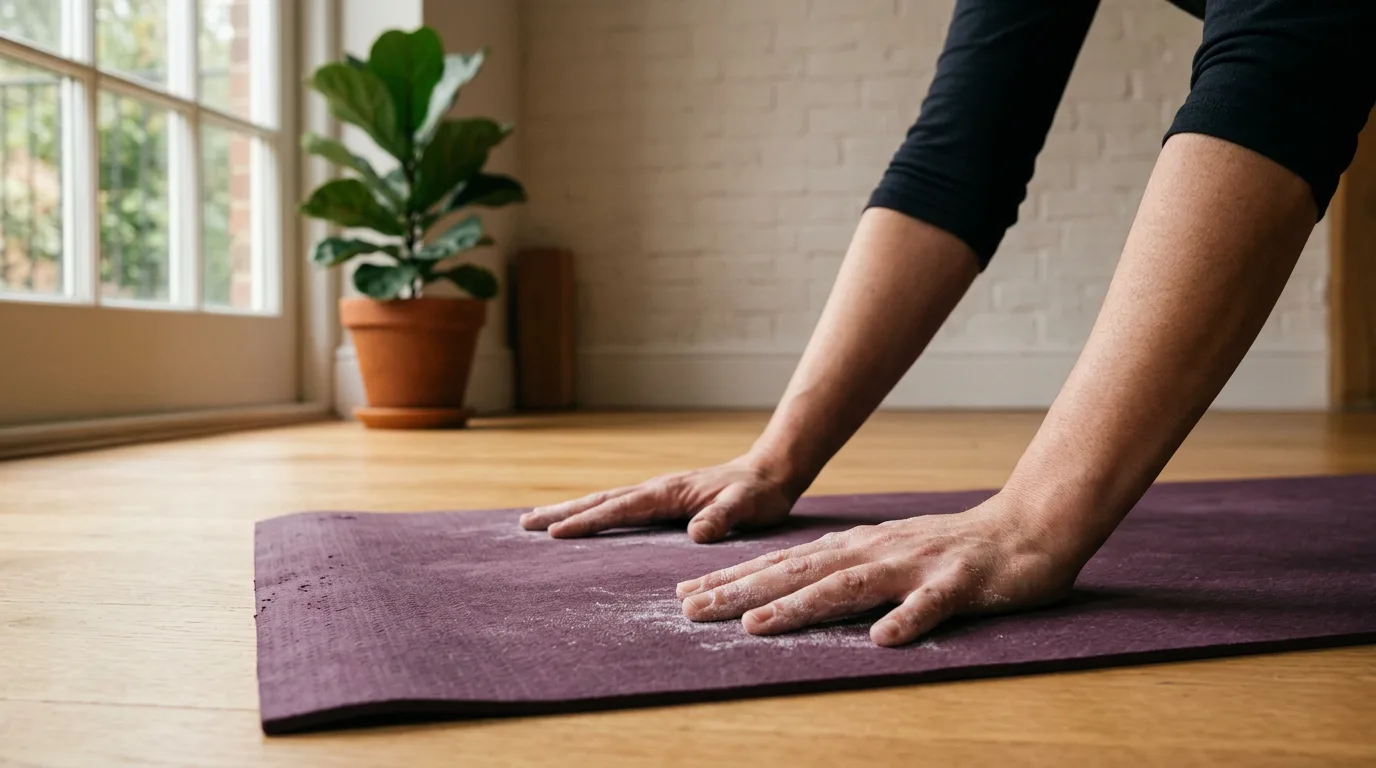
Where Grip Meets the Mat
Yoga is not a grip sport in the traditional sense — nobody is hanging from a bar or pulling a deadlift. But sweat on the hands creates a cascade of problems that disrupts practice at a fundamental level. Downward Dog turns from a stable foundation into a slow slide toward the front of the mat. Chaturanga becomes a shoulder strain when the hands slip forward under body weight. Arm balances become impossible when palm friction drops below the threshold needed to support 130-200 lbs on two hands.
The yoga community has addressed hand sweat with yoga towels, mat sprays, and grippy mat surfaces. These work for general practice. But for the subset of yoga that demands hand-to-mat friction — Ashtanga flows, arm balances, inversions, and all of hot yoga — the hands themselves need to be dry. A towel under your body does not keep your palms from sweating. Liquid chalk does.
The key distinction for yoga is that chalk goes on your skin, not on the mat. This means the mat surface stays unaffected for the rest of your practice — Warrior II, Tree Pose, and seated postures are unchanged. Only the hand-intensive moments benefit, and they benefit enormously. A dry palm on a quality yoga mat produces more friction than any towel can match.
Hot Yoga: The Ultimate Sweat Challenge
Hot yoga studios run at 95-105°F with elevated humidity. Your body's cooling system activates within minutes. By the time the instructor cues the first Sun Salutation, your palms are already moist. By the standing sequence, they are dripping. The entire room is engineered to make you sweat — and your practice depends on gripping a mat with wet hands.
Liquid chalk performs exceptionally in hot yoga because the conditions match exactly what it was designed for: high sweat output in a warm environment. The alcohol in the formula evaporates rapidly in heated air (faster than at room temperature), leaving the magnesium carbonate layer bonded to your skin within 10-12 seconds. That layer then absorbs perspiration for 25-40 minutes before needing renewal.
The practical protocol for a 60-minute hot yoga class: apply in the changing room before entering the hot room. By the time you settle onto your mat and the class begins, the chalk is fully set. At the halfway point — usually during a rest or transitional sequence — a quick reapplication takes 15 seconds. Two applications cover the entire class.
One consideration unique to hot yoga: the volume of sweat eventually overwhelms any chalk layer. In a 90-minute Bikram class, expect the chalk to be completely depleted by the 60-minute mark. The third application at that point extends your grip through the floor series, which includes some of the most hand-intensive poses (Rabbit, Camel setup, Final Savasana approach). Bring a towel as backup for the final 15 minutes.
Mat material matters in hot yoga: PVC and rubber mats grip better when dry. Cork mats grip better when slightly damp. If you use a cork mat in hot yoga, liquid chalk on your hands may reduce grip (dry hands on damp cork slide). Test before committing — you may not need chalk on a cork mat at all. On PVC and rubber, chalk is an unqualified improvement.
Arm Balances and Inversions
This is where liquid chalk transforms yoga practice. Crow Pose, Side Crow, Eight-Angle, Firefly, Handstand, Forearm Stand — every one of these poses places your full body weight on your hands or forearms. The margin for error is millimeters. A slight hand slip under load does not just break the pose — it can cause a face-first fall or a wrist sprain.
For Crow Pose (Bakasana), the primary contact points are the palm heels and the bases of the index and middle fingers. Chalk these areas and let them dry. Then place your hands on the mat with fingers spread wide. The difference is immediately apparent: instead of the subtle forward slide that limits hold time, your hands lock to the mat surface and stay there. Hold time for arm balances typically extends 3-5 seconds with chalked hands — enough to progress from "briefly getting into the pose" to "actually holding it."
For Handstand (Adho Mukha Vrksasana), the balance mechanism is your fingertips pressing into the mat to prevent over-rotation. When the fingertips are slippery, they cannot exert the corrective pressure needed to hold balance. Chalk the entire palm plus the fingertip pads. In a handstand, every finger is a balance sensor — all of them need traction.
Forearm Stand (Pincha Mayurasana) requires forearm-to-mat friction more than palm friction. You can apply chalk to your forearms for this pose, though the application is less intuitive — spread the formula along the contact surface of each forearm (the flat underside from wrist to elbow). A thin coat provides measurable stability improvement on a rubber mat.
Application for Yoga Practice
Yoga requires a lighter touch than weightlifting or climbing. The goal is the minimum effective chalk layer — just enough to absorb sweat without creating a thick, gritty surface between your skin and the mat. Thick chalk disrupts the sensory feedback that yoga practitioners rely on for balance and alignment.
Dispense a drop smaller than a pea into one palm. Rub both palms together for 5 seconds, then spread across all ten fingers. Pay attention to the heel of the palm (Downward Dog), the finger pads (arm balances), and the webbing between thumb and index finger (wide-hand poses). Wait 15-20 seconds until completely dry. You should feel subtle dryness with no grit or powdery texture.
For feet: if you struggle with foot slip in standing poses (Warrior III, Half Moon, Tree), apply a small amount to the balls of your feet and toes. Let it dry completely before stepping on the mat. Skip the heel — chalked heels on smooth studio floors (outside the mat) can be slippery, which is the opposite of what you want.
Clean your mat after every chalked session. Even "residue-free" products leave trace amounts on the mat surface over time. A quick wipe with a damp cloth after practice prevents buildup that can alter the mat's grip characteristics.
Best Grip Products for Yoga
Yoga demands the least visible, least tactile chalk products. You do not want to leave white handprints on a studio mat that the next person will use. You do not want a gritty sensation during meditation or savasana. We prioritized invisible formulas and fast-drying options for yoga practitioners.
1. Chalkless CLEAR — Best for Studio and Mat Protection
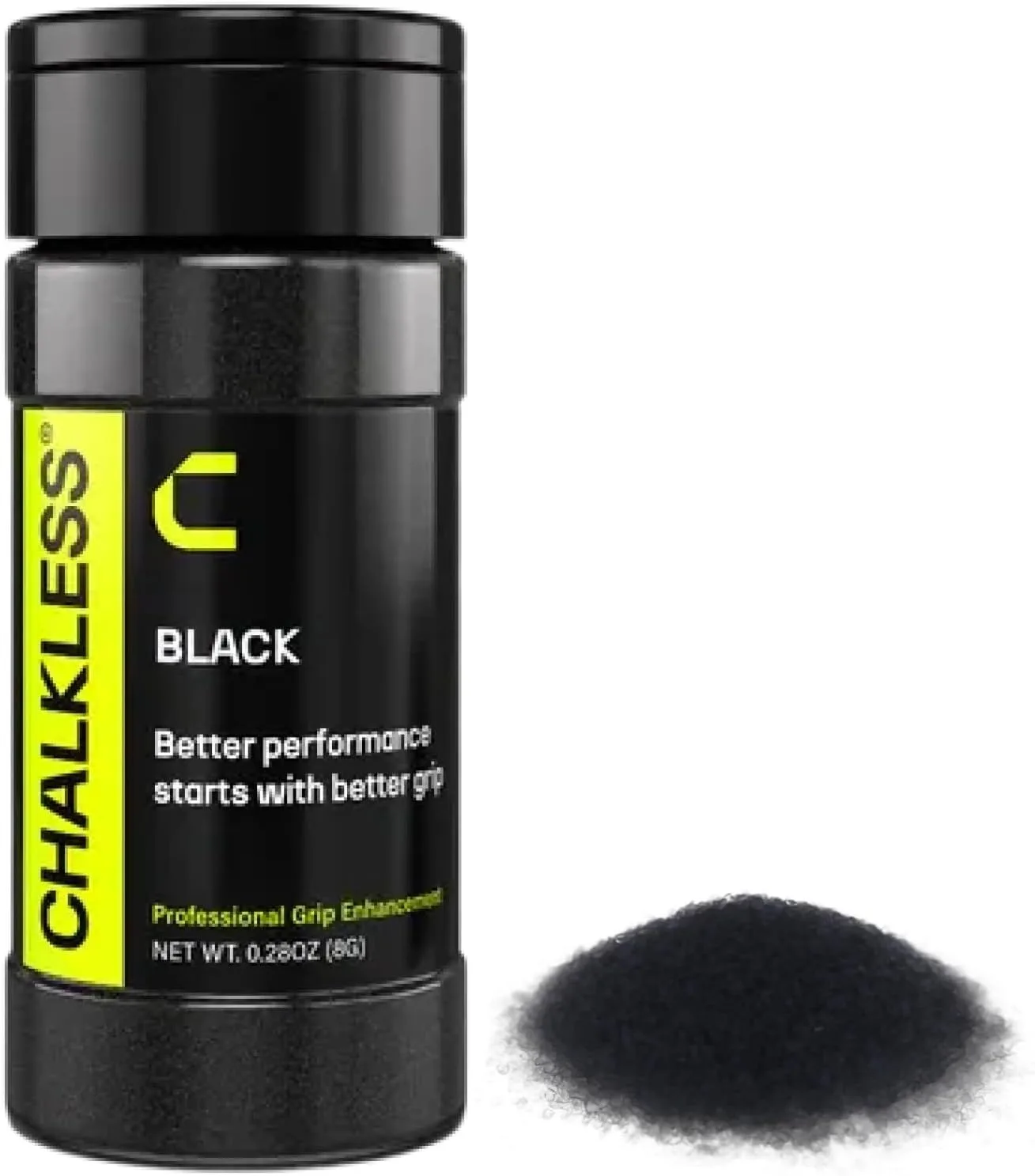
The best yoga grip product is not technically chalk at all. Chalkless CLEAR's silica silylate compound provides grip enhancement with zero visible residue. No white marks on mats, no powder on yoga props, no visible signs that you used anything. The granular application dries instantly — no wet phase, no 20-second wait. For dedicated yogis who practice daily and want to protect their mat investment, this is the only product we recommend without reservation. At top-tier, the cost per application is the highest in our catalog, but daily yoga practitioners spend more than this on mat spray each month.
Read our full Chalkless CLEAR review →
2. Chalkless BLACK — Best for Performance Yogis
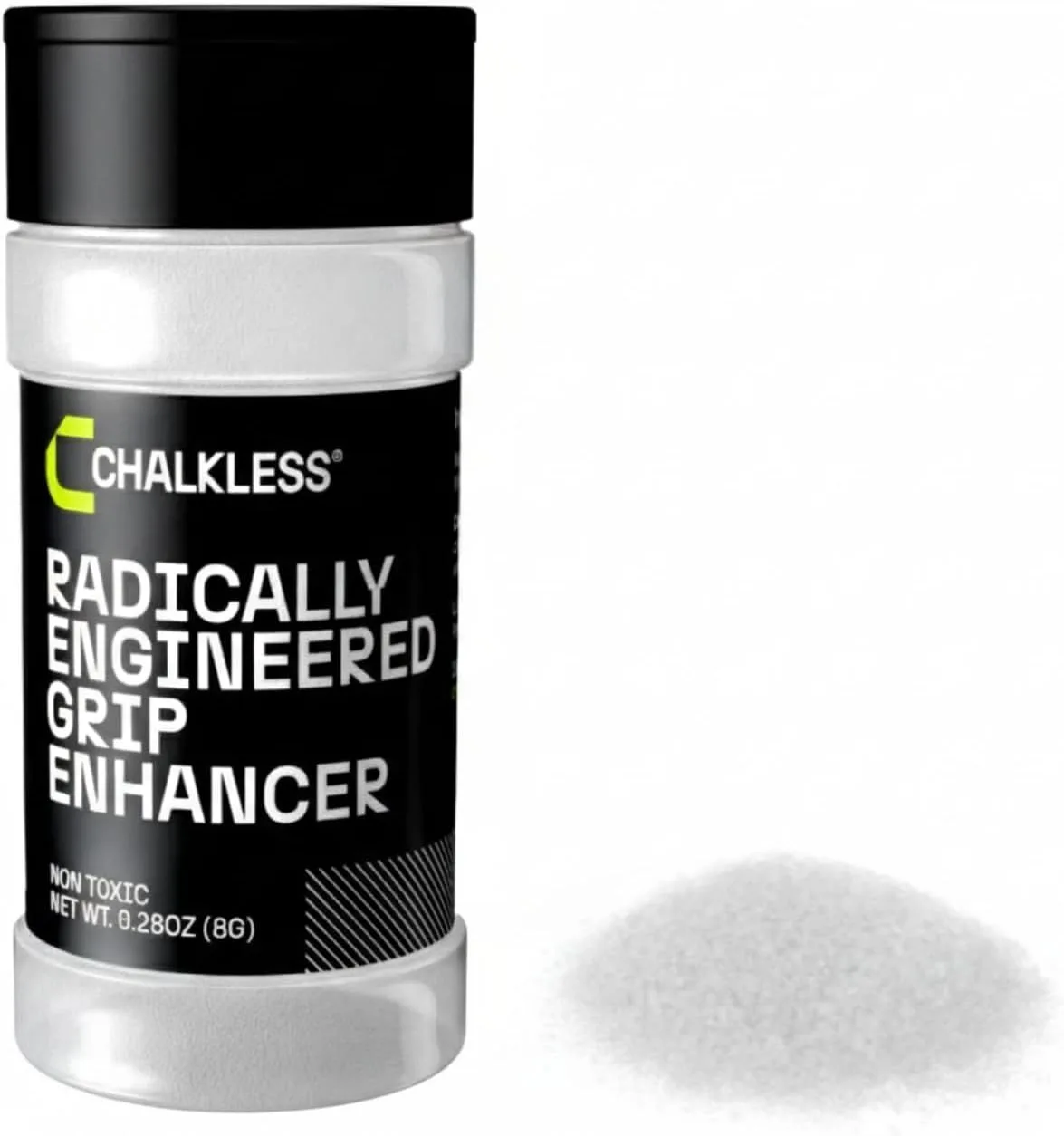
The BLACK variant uses the same patented silica silylate compound as CLEAR but with a different visual profile. For yogis who also climb or lift and want one product for multiple disciplines, BLACK provides the same residue-free grip in a format that crosses over to other sports. At top-tier, it is priced near the CLEAR variant. The 5.0 rating (from early reviews) and the growing 400+ monthly purchase rate suggest strong early adoption from the cross-training community.
Read our full Chalkless BLACK review →
3. EVMT Brands — Best Budget Yoga Chalk
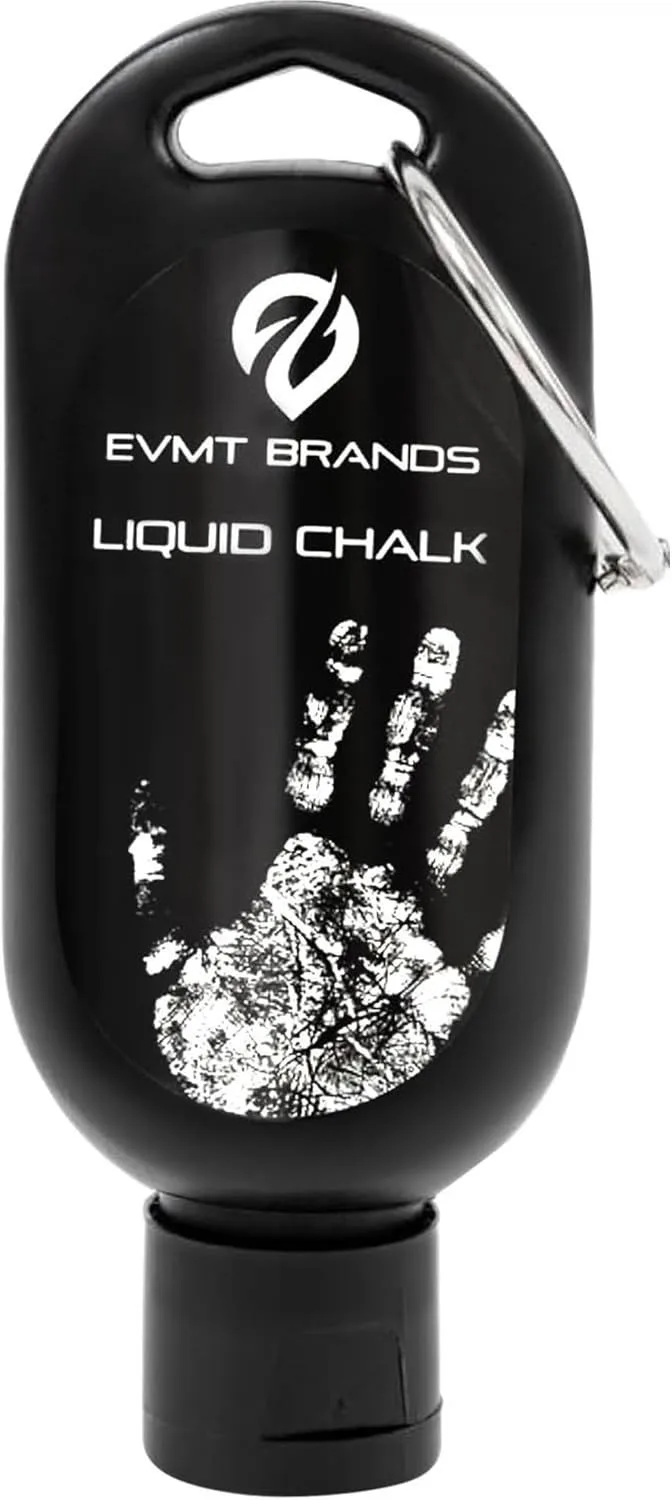
For yogis who want to try hand grip enhancement without investing in a premium product, EVMT at affordably priced is the low-risk entry point. The magnesium carbonate formula does leave light white residue on dark mats — you will need to wipe down after class. But for home practice where you control the cleanup, or for occasional hot yoga sessions, the 10-15 second dry time and proven 3,100+ review track record make it a sensible first purchase.
Read our full EVMT Brands review →
4. Medi Chalk — Best for Occasional Classes
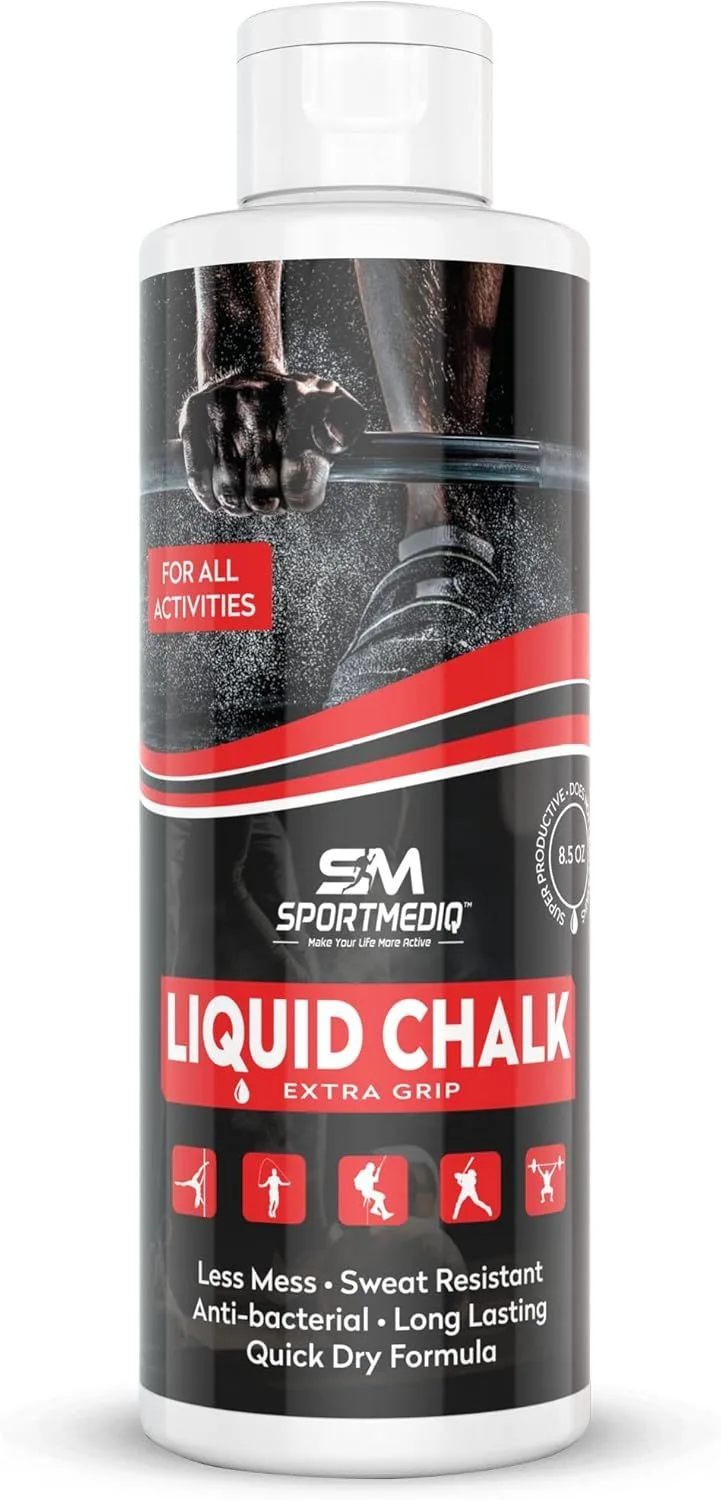
If you attend yoga once or twice a week and just want basic sweat management for Downward Dog, Medi Chalk at budget-friendly costs less than a single studio drop-in class. The 50ml bottle lasts weeks at this usage frequency. The carabiner clip keeps it in your yoga bag without rattling around. Grip duration is shorter at 15-25 minutes, so plan to reapply at the halfway point of a 60-minute class.
Read our full Medi Chalk review →
Yoga Mat Compatibility Guide
Your mat material determines whether chalk helps, hurts, or has no effect. Here is a quick reference:
PVC mats (Manduka PRO, Jade Harmony): Chalk improves grip. PVC performs best when dry. Chalk keeps both hands and mat surface in the dry zone. Clean after use to prevent residue buildup in the mat texture.
Rubber mats (Liforme, Lululemon Reversible): Chalk improves grip. Natural and synthetic rubber surfaces grip better when dry. The mat's alignment markers stay visible — chalk does not obscure them with normal use.
TPE mats (Gaiam, budget brands): Chalk slightly improves grip. TPE surfaces are less affected by moisture than PVC or rubber, so the benefit is moderate. Still helpful for arm balances.
Cork mats (Yoloha, Corkcollective): Chalk may reduce grip. Cork surfaces use moisture for natural traction — a dry hand on dry cork slides more than a slightly damp hand. Test before committing. If you practice hot yoga on cork, you likely do not need chalk.
Cotton/jute mats: Chalk is unnecessary. These absorbent surfaces handle moisture through the mat material itself. Adding chalk does not improve grip on absorbent textiles.
Yoga Chalk Questions
Will liquid chalk damage my yoga mat?
Standard magnesium carbonate liquid chalk leaves white residue on yoga mats, especially dark-colored ones. This residue wipes off with a damp cloth but requires cleaning after each session. Residue-free grip enhancers like Chalkless CLEAR leave no marks whatsoever. If mat preservation is a priority, choose a non-chalk grip product or wipe your mat after practice.
Is liquid chalk safe for hot yoga at 105°F?
Yes. Liquid chalk is safe at hot yoga temperatures. The magnesium carbonate is thermally stable well above 105°F. The alcohol evaporates during application (before you start practicing). In a heated room, chalk actually performs better because your hands produce more sweat — exactly what the chalk is designed to absorb. Apply before entering the hot room and reapply at the midpoint if needed.
Can I use liquid chalk for arm balances?
Arm balances like Crow Pose, Eight-Angle, and Handstand require maximum palm grip on the mat. Liquid chalk keeps your palms dry during these poses, reducing the risk of slipping during the weight-bearing phase. Apply to palms and the base of each finger — these are the primary contact points in arm balances. Let it dry fully before placing hands on the mat.
How does liquid chalk compare to a yoga towel?
Yoga towels cover the entire mat surface and absorb moisture from your whole body. Liquid chalk only addresses your hands (and feet if applied). They solve different problems. For general hot yoga, a towel is the primary grip solution. Liquid chalk supplements the towel by keeping your palms dry for arm balances and hand-intensive flows where the towel alone is not enough.
Should I apply liquid chalk to my feet for yoga?
You can, but be selective. Apply a thin layer to the balls of your feet and toes for standing balance poses like Tree or Warrior III. Skip the heels — you do not need chalk there for most poses, and chalked heels on a hard floor outside the mat can be slippery. Let the chalk dry completely before stepping onto the mat.
Does liquid chalk affect grip on cork yoga mats?
Cork mats are naturally antimicrobial and grip better when slightly damp. Adding liquid chalk to your hands when using a cork mat can actually reduce grip because you are removing the moisture that the cork needs for its natural traction. Test a small area first. On rubber, TPE, and PVC mats, liquid chalk improves grip. On cork, it may be counterproductive.
Find Your Mat Grip
Slippery hands are not a sign that you need a new mat — they are a sign that moisture is getting between your skin and the mat surface. Liquid chalk (or a residue-free grip enhancer) solves this at the source. For daily yogis who protect their mats, Chalkless CLEAR is the mat-safe choice. For hot yoga warriors who prioritize sweat absorption, EVMT Brands provides the most affordable moisture management available.
Get Our Top 3 Picks
Get our top 3 picks for your budget — one email, then only updates.
Only when something changes. Unsubscribe anytime.