Liquid Chalk for Weightlifting: Complete Gym Guide
Weightlifting puts your grip under constant tension — from heavy barbell compounds to high-rep dumbbell accessory work. Liquid chalk bonds a thin magnesium carbonate layer to your palms that absorbs sweat on contact, holds through multiple sets, and leaves zero residue on gym equipment. This guide covers application technique for every major lift, session planning strategies, and product recommendations based on training style.
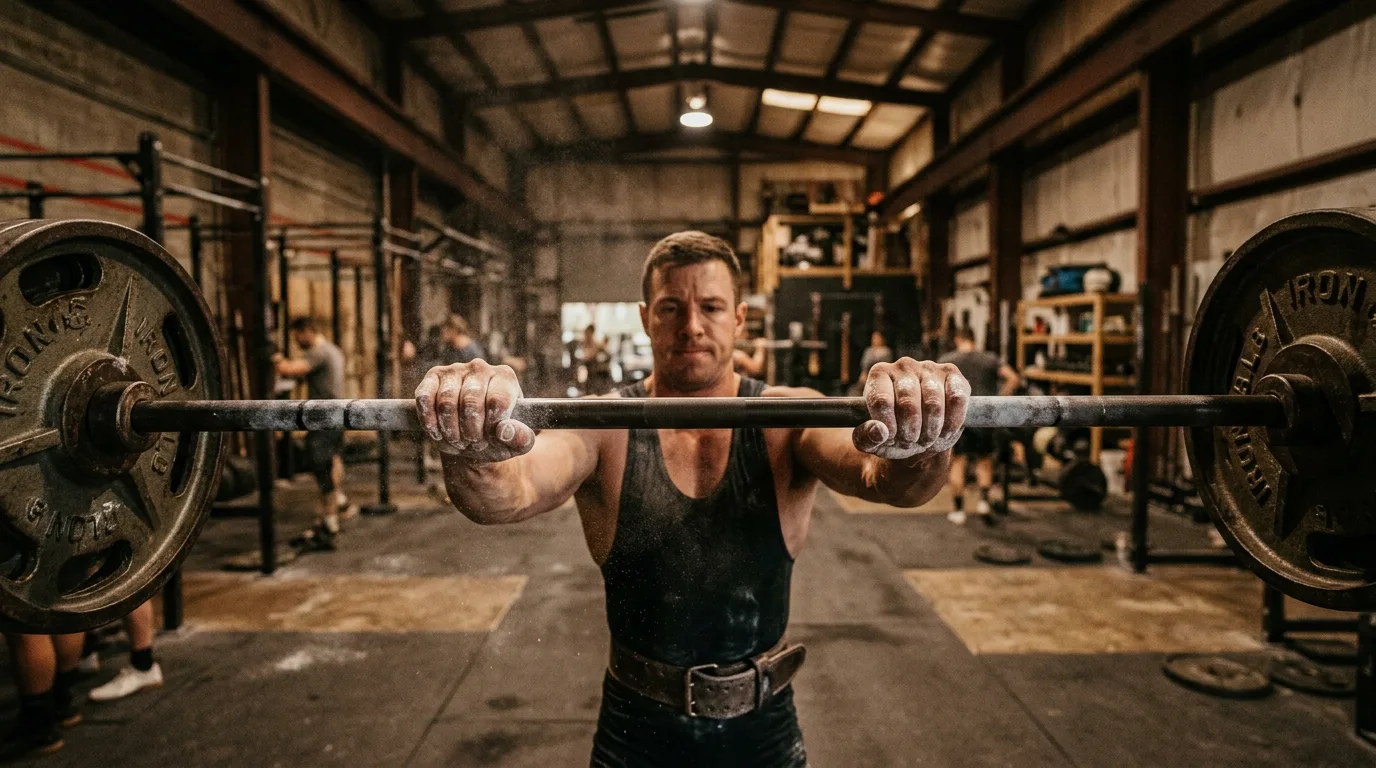
Why Lifters Are Switching to Liquid Chalk
Powder chalk was the default for decades. Lifters crushed blocks, clapped their hands, and left white clouds over every platform. Gyms started banning it — not because chalk is bad, but because the mess is real. Dust coats equipment, irritates lungs, and triggers cleaning complaints from other members. Liquid chalk solves every one of those problems while delivering grip that most lifters report lasts longer per application than powder.
The formula is simple: magnesium carbonate suspended in isopropyl alcohol. Squeeze a small amount onto your palm, rub your hands together, and wait 10-20 seconds for the alcohol to evaporate. What remains is a dry, bonded chalk layer that will not flake off onto the bar, the floor, or your clothes. One application handles 2-4 heavy sets for most lifters, and the entire session for lighter accessory work.
Beyond the practical advantages, there is a performance angle. Powder chalk sits on top of your skin and can actually fill bar knurling, reducing the friction pattern the knurling was designed to create. Liquid chalk bonds into the fine ridges of your skin, creating a complementary surface that meshes with knurling rather than coating over it. The result is a grip that feels more secure without the thick, cakey texture of heavy powder application.
Application Technique by Lift Type
Different lifts put pressure on different parts of your hand. A deadlift loads your fingers and the crease below them. A bench press loads the meaty part of your palm at the heel. A snatch wraps the bar across the widest point of your hand. Knowing where to concentrate your chalk application makes each dose more effective and reduces waste.
Deadlifts, Rows, and Pulling Movements
Pulling movements are where grip fails first. The bar sits in your fingers, and sweat between your fingertips and the knurling is what causes slippage. Apply a nickel-sized amount to each palm, then work the chalk deliberately into your finger pads — especially the first knuckle joint where the bar naturally sits during a pull. Extend coverage to the thumb pad if you use hook grip. Let it dry for a full 15-20 seconds before touching the bar.
For mixed grip deadlifts, pay extra attention to the supinated hand (underhand). That palm faces the ceiling and accumulates sweat faster due to the stretched-open position. A slightly heavier application on the underhand side prevents the bar from rolling out of the weaker grip position. Overhand grip rows follow the same finger-focused approach — the bar rests on the last three fingers, so chalk those thoroughly.
Bench Press and Overhead Press
Pressing movements have a different grip problem: the bar slides down the palm toward the wrist, not out of the fingers. Focus your application on the heel of the palm and the fleshy pad at the base of the thumb. These are the surfaces that lock the bar into the correct pressing position — slightly diagonal across the palm, not straight across the fingers.
A lesser-known technique for bench press: apply a thin layer to your upper back and traps where they contact the bench surface. This creates traction against the bench pad, preventing your back from sliding during leg drive. The chalk bonds to both skin and the vinyl bench surface without leaving visible marks. Competitive powerlifters have used this trick for years.
Squats (High-Bar and Low-Bar)
Squats do not test hand grip in the traditional sense, but bar security depends entirely on how well your hands lock the bar into your back. For high-bar squats, chalk your palms to prevent the bar from shifting on your traps during the set. For low-bar squats, the demand is higher — the bar sits on the rear delts in a shelf position, and your hands must actively pull the bar into your back. Chalk both palms and fingers for low-bar to maintain that active pull throughout the set.
Your upper back and rear delts also benefit from a light chalk application for low-bar squats. The bar rests on skin (or a thin shirt), and sweat between the bar and your back creates the same slippage problem as sweaty palms on a deadlift. A light swipe across your upper back before the set adds enough friction to keep the bar planted.
Olympic Lifts — Snatch, Clean, and Jerk
Olympic lifts combine high bar speed with a wide grip and hook grip demand. The snatch requires full-hand coverage because the bar contacts your entire palm width during the pull and turnover. Apply chalk from the heel of the palm to the fingertips, with extra attention on the thumbs and the first two fingers — these are the hook grip contact points where most of the force concentrates.
For the clean and front rack position, some lifters also chalk the backs of their hands lightly. This prevents the bar from sliding off the front delts during the catch. The jerk demands grip security through the explosive drive and overhead lockout — fresh chalk before heavy jerk attempts gives the confidence to commit fully to the push.
Session Planning: When and How Often to Reapply
Most lifters overcomplicate this. Here is the practical framework based on session type:
Strength Sessions (Heavy, Low Rep)
Volume: 5-20 working sets, 1-5 reps each
Duration: 60-90 minutes
Chalk strategy: Apply once before your first working set. The rest periods between heavy sets (2-5 minutes) give chalk time to stay bonded. One application typically covers the entire session. Reapply only before your heaviest set if grip feels compromised.
Hypertrophy Sessions (Moderate Weight, High Rep)
Volume: 15-25 sets, 8-15 reps each
Duration: 60-75 minutes
Chalk strategy: Apply before your first compound movement. Reapply once at the midpoint — typically when you switch from compounds to isolation work. Higher rep counts generate more palm sweat, breaking chalk down faster than heavy singles.
Full-Body or Circuit Training
Volume: Mixed — barbells, dumbbells, machines, bodyweight
Duration: 45-60 minutes
Chalk strategy: Apply before the first exercise. The variety of grips (overhand, neutral, underhand) distributes wear across your hands differently, which actually helps chalk last longer. One application handles most circuit-style sessions unless you are a heavy sweater.
Accessory and Isolation Work
Volume: Light to moderate loads, 10-20 reps
Duration: 20-30 minutes
Chalk strategy: Usually not needed. If you chalked for your compound lifts earlier, the residual layer handles accessory work. The exception is heavy farmer's walks, shrugs, or any loaded carry where grip is the limiting factor — chalk fresh for those.
Our Top Picks for Weightlifting
We tested 19 liquid chalk products across every major gym discipline. For general weightlifting — a mix of compound barbell work, dumbbell accessories, and machine movements — these five products stood out based on grip strength, longevity, dry time, and value.
1. SPORTMEDIQ Pro Grade — Best Overall for Lifters
SPORTMEDIQ's 250ml bottle delivers thick, competition-grade chalk in a format designed for daily training. The rosin-enhanced formula creates a tackier grip than pure magnesium carbonate options, which matters during heavy pulling and pressing. At premium pricing for the volume, each application costs fractions of a penny. The pump dispenser means no squeezing or fighting with bottle caps mid-workout.
With over 3765 Amazon reviews at 4.7 stars, this is one of the most battle-tested formulas available. Lifters consistently report 30-45 minutes of grip per application, which covers most working set blocks with room to spare.
Read our full SPORTMEDIQ review | Check Price on Amazon
2. WARM BODY COLD MIND — Best for Olympic Lifting Focus
Designed by Olympic champion Oleksiy Torokhtiy, this twin 50ml pack delivers 100% pure magnesium carbonate with zero additives. The clean formula matters for Olympic lifters who need the bar to rotate freely during the snatch turnover — rosin-enhanced products can create too much stick for fast barbell movements. Each 50ml bottle tucks into a gym bag pocket, and the twin format means one lives in your bag while the spare stays in your locker.
The mid-range price point reflects the athlete endorsement and twin-pack format. For lifters who split time between Olympic lifts and strength work, this is the cleaner-feeling option.
Read our full WARM BODY COLD MIND review | Check Price on Amazon
3. Spider Chalk White Widow — Best for Maximal Grip Duration
White Widow's Grip-Lock Technology with nano-resins delivers up to 60 minutes of continuous grip — the longest in our testing catalog. For lifters who train in hot or humid gyms, or whose sessions regularly exceed 90 minutes, that extra longevity means skipping the mid-session reapplication entirely. The extra-thick paste requires a longer dry time (25-30 seconds), but once set, it does not budge.
USAW and USAPL sanctioned for competition use, so training and meet-day chalk can be the same product. At a premium price for 8 oz, it sits at the premium end of the market — but the 400+ applications per bottle make the per-use cost competitive.
Read our full Spider Chalk White Widow review | Check Price on Amazon
4. IRON AMERICAN Combo Kit — Best Home + Gym Setup
IRON AMERICAN solves the "I forgot my chalk at home" problem with a combo kit: an 8.3 oz full-size bottle for your home gym and a 1.7 oz travel bottle with carabiner for your gym bag. The lifetime warranty and USA-based support are genuine differentiators in a market full of no-name imports. Grip quality is solid for general weightlifting, though batch consistency has been flagged by some users.
At top-tier for both bottles, the combo pricing undercuts buying two separate products from different brands. Keep the big bottle by your rack, clip the small one to your bag, and you are always covered.
Read our full IRON AMERICAN review | Check Price on Amazon
5. EVMT Brands — Best Budget Daily Driver
EVMT's 50ml bottle is the default recommendation for lifters trying liquid chalk for the first time. Over 3121 reviews confirm it works. The formula dries in 10-15 seconds, grips for 25-35 minutes, and comes in a "Weightlifting" variant tuned for barbell work. At affordably priced, the risk of trying it is essentially zero.
The downside is the 50ml size — daily users will burn through it in 2-3 weeks. For long-term economy, buy the multi-pack or upgrade to a large-bottle option. But as an entry point for the chalk-curious lifter, nothing beats the combination of price, availability, and community validation.
Read our full EVMT Brands review | Check Price on Amazon
Gym Etiquette: Using Chalk Without Getting Banned
Even liquid chalk requires some awareness in a shared gym environment. The product is clean, but your behavior around it determines whether staff see it as a non-issue or a rule violation.
- Apply away from machines and the main floor. Use a corner, the stretching area, or near your water bottle station. Applying in the middle of the dumbbell rack area draws unnecessary attention.
- Wipe bars and handles after your set. Liquid chalk does not leave visible residue like powder, but sweat mixed with chalk residue can leave a faint film on knurling. A quick wipe with a gym towel prevents complaints from the next user.
- Keep the bottle out of sight when not in use. A chalk bottle sitting openly on a bench invites questions. Tuck it in your bag between uses.
- If a staff member asks, explain the difference. Most gym employees do not know the difference between powder and liquid chalk. A 10-second demonstration — show clean hands after application, point out zero dust — resolves most concerns instantly.
Common Mistakes That Waste Chalk and Reduce Grip
Three application errors account for most complaints about liquid chalk "not working" in the gym:
- Applying too much. More is not better. A nickel-sized amount covers both palms adequately. Over-application creates a thick layer that cracks and flakes under bar pressure, reducing contact between your skin and the knurling.
- Not waiting for full drying. Touching the bar while alcohol is still evaporating creates a wet, slippery mess. The alcohol needs 10-20 seconds to fully evaporate. Rub your hands together during this window — the friction accelerates drying and distributes chalk evenly.
- Applying over old chalk layers. Stacking a fresh application on top of a worn-out layer creates uneven coverage. Before reapplying, briskly rub your palms on your shorts or a towel to remove the old layer. Then apply fresh chalk to clean, dry skin.
Liquid Chalk vs Lifting Straps and Gloves
Chalk, straps, and gloves solve different problems. Chalk improves friction between your skin and the bar. Straps mechanically attach your hand to the bar, bypassing grip strength entirely. Gloves add padding and protect skin but often reduce grip by creating a soft, compressible layer between you and the knurling.
For general weightlifting, chalk is the correct first choice. It preserves your grip strength (straps let grip atrophy over time), maintains full bar feel (gloves mute feedback), and costs far less per session than either alternative. Reserve straps for sets where grip is the limiting factor and you want to isolate the target muscle — heavy Romanian deadlifts, shrugs, and back-off sets after your grip-intensive work sets.
Some lifters combine chalk and straps: chalk up, then strap in. The chalk prevents your hand from rotating inside the strap loop during heavy pulls, which is a common issue with sweaty hands and cotton straps. The combination gives maximum mechanical advantage with minimal hand slip.
Weightlifting Chalk Questions
Does liquid chalk affect bar knurling feel during lifts?
How long does one application last during a weight training session?
Can I layer liquid chalk over lifting gloves or straps?
Is liquid chalk allowed in commercial gym chains like Planet Fitness?
Should I use liquid chalk for every exercise or just heavy compounds?
What is the difference between liquid chalk and lifting chalk blocks?
Lock In Your Grip
Every missed rep to a sweaty grip is a rep you were strong enough to complete. Liquid chalk removes that variable from your training — clean, long-lasting, and welcome in every gym. Pick the formula that matches your training style and stop leaving reps on the table.
Check Price on AmazonGet Our Top 3 Picks
Get our top 3 picks for your budget — one email, then only updates.
Only when something changes. Unsubscribe anytime.