Liquid Chalk for Sweaty Hands: The Heavy Sweater's Grip Playbook
Some people sweat through chalk in minutes. Palms dripping before the first working set, grip failing by rep three, towel permanently draped over the bar. If this describes your gym experience, you are not imagining it — palmar hyperhidrosis and high sweat rates are real physiological conditions that standard grip products were not designed to handle. This guide covers the science behind excessive palm sweating, specific application strategies for heavy sweaters, formula selection based on moisture output, and product recommendations that actually hold up when your hands generate moisture faster than average.
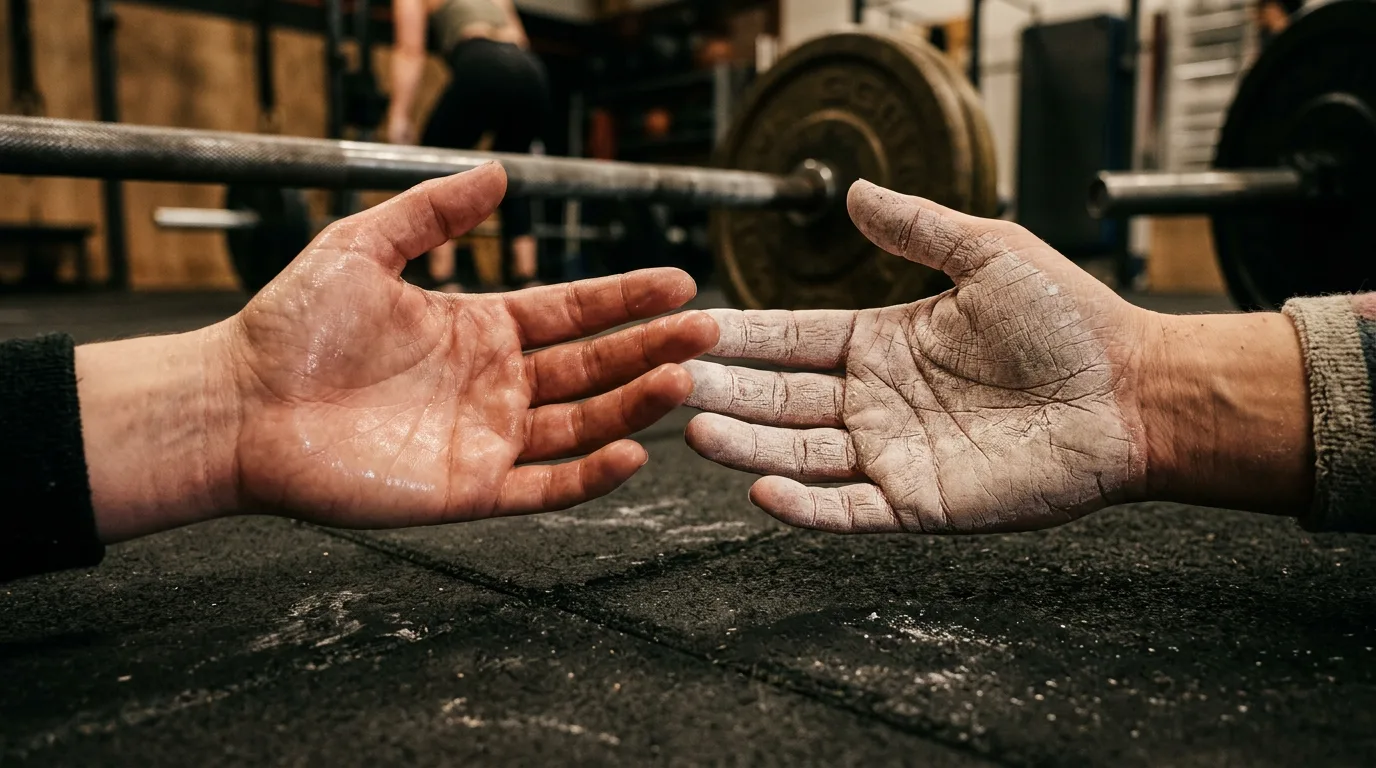
Why Your Hands Sweat More Than Everyone Else's
The palms contain among the highest density of eccrine sweat glands on the human body — roughly 600-700 glands per square centimeter compared to 200 per square centimeter on the back. These glands activate in response to two triggers: thermal regulation (your body is hot) and emotional or physical stress (your sympathetic nervous system fires). During exercise, both triggers activate simultaneously, which is why palm sweating spikes during intense training even in a cold gym.
Palmar hyperhidrosis affects approximately 3% of the population. People with this condition produce palm sweat at rates 4-5 times higher than the general population, often independently of temperature or exercise intensity. If your hands sweat while sitting still in an air-conditioned room, you likely have some degree of hyperhidrosis. For these athletes, standard gym chalk — whether powder or basic liquid formulas — saturates and fails within minutes.
Even without clinical hyperhidrosis, individual sweat rates vary dramatically. Factors include genetics, fitness level (fitter individuals often begin sweating earlier as a trained cooling response), medication side effects (antidepressants, blood pressure drugs, and stimulants all increase sweat production), caffeine intake, and body composition. A 220-pound athlete on pre-workout in a humid gym will generate far more palm moisture than a 130-pound lifter in an air-conditioned facility.
How Magnesium Carbonate Fights Moisture
Liquid chalk works through a two-phase mechanism. Phase one: the alcohol carrier evaporates within 10-20 seconds of application, leaving a thin, dry layer of magnesium carbonate bonded to the skin's surface. Phase two: this magnesium carbonate layer acts as a desiccant, actively absorbing moisture that reaches the skin's surface from the sweat glands beneath.
The absorption capacity of magnesium carbonate is not infinite. Each gram of MgCO3 can absorb a limited volume of water before it becomes saturated and stops working. For average sweaters, one application lasts 30-45 minutes because the chalk absorbs moisture slowly enough to stay effective. For heavy sweaters, the chalk layer reaches saturation in 10-20 minutes because moisture production outpaces absorption. This is not a product failure — it is a physics limitation. The solution is reapplication strategy, not just a "better" chalk.
Formulas that include rosin, honey, or nano-resin additives extend effective grip time for a specific reason: when the magnesium carbonate layer saturates, the sticky additive provides a secondary friction layer that maintains grip even in the presence of moisture. Pure MgCO3 formulas lose grip entirely once saturated. Enhanced formulas degrade more gracefully — grip reduces gradually rather than vanishing suddenly.
The Heavy-Sweater Application Protocol
Standard application advice — one thin coat, 10-second dry, good for 30 minutes — does not apply to heavy sweaters. You need a different protocol designed for high moisture output. Follow these four steps:
Step 1: Pre-Dry Your Hands Completely
Before applying chalk, your palms must be bone-dry. Applying chalk to even slightly damp skin dilutes the formula and prevents proper bonding. Use a dedicated gym towel (not the one you use for sweat on your face — that towel is already damp). Some athletes keep a separate microfiber hand towel specifically for this purpose. Wipe vigorously across both palms and between the fingers. If your hands re-moisten within seconds of drying, keep the towel in your lap and dry again immediately before chalking.
Step 2: Apply in Two Thin Layers, Not One Thick Layer
One thick application creates an uneven layer with thick spots that crack under bar pressure and thin spots that saturate quickly. Instead, apply a small amount (half a pea per palm), rub hands together, and let it dry for 15 seconds. Then apply a second identical thin layer on top. Two thin layers bond more evenly and create a denser chalk coating than one thick application. The total dry time is about 35-40 seconds, which feels long in a busy gym but is worth every second.
Step 3: Time Your Application Strategically
Apply chalk 60-90 seconds before your first working set, not during your warm-up. The warm-up itself generates heat and sweat that begins degrading the chalk immediately. If you chalk up at the start of warm-ups and take 10 minutes to reach working weight, the chalk is already partially saturated by the time you need it most. Wait until your last warm-up set, then chalk fresh before the first working set.
Step 4: Reapply Before Failure, Not After
Do not wait until your hands feel wet to reapply. By the time moisture is noticeable, the chalk layer is already fully saturated and grip is compromised. Set a mental timer: reapply every 15 minutes regardless of how your hands feel. Between reapplications, do a quick palm-on-shorts wipe to remove the spent chalk layer, then apply fresh to clean skin. This proactive approach prevents the sudden grip failures that catch heavy sweaters mid-set.
Best Formulas for Excessive Palm Sweating
Not all liquid chalk handles moisture equally. Pure magnesium carbonate formulas work fine for average sweaters but saturate too quickly under heavy moisture. For sweaty hands, you need formulas with one or more of these features: rosin or pine resin additives, honey-based secondary grip agents, nano-resin technology, or higher magnesium carbonate concentration. Here are the products that perform best under high-sweat conditions.
1. Spider Chalk White Widow — Best for Maximum Grip Duration
White Widow's Grip-Lock Technology with nano-resins was built for exactly this problem. The nano-resin particles create a secondary grip layer that activates as the primary chalk layer gets wet — the opposite of how most formulas fail. Under heavy sweating conditions, White Widow maintains measurable grip for 40-50 minutes where standard formulas tap out at 15-20. The extra-thick paste requires 25-30 seconds of dry time, and the application is less forgiving than thinner products (too much and it cakes). But for heavy sweaters, the extended performance window justifies the learning curve.
At premium for 8 oz with 400+ applications per bottle, the per-use cost is competitive with budget options despite the higher bottle price. USAW and USAPL sanctioned for competition.
Read our full Spider Chalk White Widow review | Check Price on Amazon
2. PowerGrip 250ml — Best Secondary Grip Layer
PowerGrip's honey and rosin blend is the smartest formula design for sweaty hands. When the magnesium carbonate saturates — and it will, faster than the 35-50 minute rating suggests for heavy sweaters — the honey and rosin layer underneath still provides meaningful friction. This secondary grip phase buys an extra 5-10 minutes before complete grip failure, which is often enough to finish a set that would otherwise require stopping to reapply. The 250ml bottle at mid-range pricing provides excellent volume for athletes who reapply frequently.
Read our full PowerGrip 250ml review | Check Price on Amazon
3. SPORTMEDIQ Pro Grade — Best for Consistent Daily Use
The SPORTMEDIQ formula includes honey as a secondary binding agent, and the lotion-like consistency makes the two-thin-layer application technique easy to execute. For heavy sweaters who train 5-6 days per week, the 250ml bottle at premium provides months of daily use without running dry. With over 3765 Amazon reviews at 4.7 stars, the formula consistency is reliable batch to batch — important when you depend on your chalk working the same way every session.
Read our full SPORTMEDIQ review | Check Price on Amazon
4. Chalkless CLEAR — Best for Non-Chalk Grip Enhancement
Chalkless takes a completely different approach. Instead of magnesium carbonate, it uses a patented silica silylate compound that creates grip through micro-friction particles rather than moisture absorption. For athletes whose hands are so sweaty that even enhanced chalk formulas saturate in under 15 minutes, Chalkless offers an alternative mechanism entirely. The granular application is instant — no dry time, no alcohol smell, no white residue. At top-tier for 8g, the per-application cost is higher than liquid chalk, but the 826 reviews at 4.5 stars confirm it works for the athletes who need it most.
Read our full Chalkless CLEAR review | Check Price on Amazon
5. EVMT Brands — Best Budget Starting Point
If you are not sure whether liquid chalk will work for your sweat level, EVMT is the low-risk trial. At affordably priced for 50ml, you can test the application protocol described above and determine whether standard formulas hold up for your moisture output. Over 3121 reviews confirm the baseline formula is reliable. The quick 10-15 second dry time is helpful when reapplying frequently. For heavy sweaters, treat EVMT as the diagnostic tool: if this formula lasts less than 15 minutes on your hands, you need a rosin-enhanced or nano-resin formula. If it holds 20+ minutes, budget options will serve you fine.
Read our full EVMT Brands review | Check Price on Amazon
Combining Chalk With Other Sweat Management Tools
Liquid chalk is the in-session grip solution, but it works best as part of a broader sweat management approach. For athletes with persistent excessive palm sweating, consider layering these strategies:
- Topical antiperspirant (pre-training). Apply an aluminum chloride antiperspirant to clean, dry palms 20-30 minutes before training. Brands like Carpe Hand Lotion or Certain Dri are designed specifically for palms. The antiperspirant reduces moisture production at the gland level, giving liquid chalk less moisture to absorb. This combination can extend effective chalk grip by 50-100% for moderate to heavy sweaters.
- Microfiber hand towel (during training). Keep a small, dedicated hand towel clipped to your belt or tucked in your waistband. Between sets, wipe your palms down briskly. This removes spent chalk and surface moisture, creating a clean base for reapplication. Machine-wash the towel after every 2-3 sessions — accumulated chalk residue reduces the towel's absorbency over time.
- Gym bag hand dryer rotation. Pack two hand towels and rotate them during your session. A towel absorbs moisture from your hands, but if it becomes saturated itself, it starts returning moisture instead of absorbing it. Switching to a dry towel halfway through ensures consistent performance.
- Temperature management. If you train in a hot gym, position yourself near a fan or AC vent during rest periods. Lower ambient temperature slows sweat production. Some athletes keep a small spray bottle of cold water and mist their forearms between sets — the evaporative cooling reduces core temperature and slows systemic sweat output.
Mistakes Heavy Sweaters Make With Liquid Chalk
The following errors are specific to athletes with high palm moisture. Standard chalk advice does not account for these failure modes:
- Applying to damp skin. This is the most common failure. Even a thin film of moisture on the palm prevents the alcohol-chalk slurry from bonding to skin. The chalk sits on top of the moisture layer instead of adhering to the skin surface, and it wipes off the moment you grip a bar. Towel your hands aggressively before every application. If your hands re-wet within seconds of drying, use the towel-then-chalk-immediately technique with zero delay between drying and application.
- Over-applying in a single layer. Heavy sweaters instinctively use more chalk, reasoning that more product equals more protection. A thick single layer actually performs worse than two thin layers because thick chalk cracks under bar pressure, creating exposed gaps where moisture reaches the bar. The two-thin-layer protocol described above outperforms a thick single layer every time.
- Waiting too long to reapply. By the time you feel your hands getting slippery, the chalk is already done. For heavy sweaters, the wet feeling arrives 3-5 minutes after the chalk layer is functionally saturated. Your grip is compromised before you realize it. Time-based reapplication beats feel-based reapplication for heavy sweaters.
- Using the same formula as average sweaters. Budget pure-MgCO3 formulas are great value for people with normal sweat rates. For heavy sweaters, they saturate too quickly to be practical. Spending an extra few dollars on a rosin-enhanced or nano-resin formula saves more money in the long run because you use less product per session (longer grip means fewer reapplications).
Sport-Specific Advice for Sweaty-Handed Athletes
Different activities stress the chalk layer in different ways. Grip-intensive sports like climbing and deadlifting put constant friction on the chalk surface, wearing it down mechanically as well as through moisture. Ball sports involve intermittent high-intensity gripping with rest between plays. Each pattern affects how quickly chalk degrades for heavy sweaters.
Barbell Training
Chalk fresh before every working set if your grip fails within 3 sets. Use the finger-pad focus technique for deadlifts and rows. For pressing, chalk the palm heel to prevent bar rollback. Bar knurling accelerates chalk wear, so expect shorter grip windows than other activities.
Rock Climbing
Indoor climbing in warm gyms is a worst-case scenario for sweaty hands — high exertion, enclosed space, holds covered in rubber dust. Apply chalk after every 2-3 routes. Outdoor climbing in dry conditions is more forgiving. Use a chalk bag with powder for supplemental dusting between liquid chalk applications.
CrossFit and HIIT
The intensity and variety of movements make mid-workout reapplication impractical during timed WODs. Apply the two-layer protocol before the workout starts, and choose the longest-lasting formula you can find. White Widow's 40-50 minute effective window for heavy sweaters can cover most standard WODs without reapplication.
Racquet Sports and Golf
These involve sustained light grip with sudden force spikes during shots. Chalk the grip hand heavily and the guide hand lightly. Reapply at changeovers (tennis) or every 3-4 holes (golf). The Chalkless CLEAR option works well here — no white marks on racquet handles or golf gloves.
Sweaty Palm Solutions: Common Questions
What causes excessively sweaty palms during exercise?
How often should heavy sweaters reapply liquid chalk?
Is liquid chalk better than antiperspirant for sweaty hands?
Do rosin-enhanced formulas work better for sweaty hands?
Can liquid chalk handle sweaty hands in hot, humid gyms?
Will liquid chalk stain my clothes or gym equipment?
Stop Losing Reps to Sweat
Excessive palm sweating is a real physiological condition, not a weakness. The right formula combined with the right application protocol keeps your grip secure from the first rep to the last — regardless of what your sweat glands are doing. Start with the protocol above, test your sweat severity, and pick the formula that matches your moisture output. Every rep you lose to a slippery bar is a rep you were strong enough to complete.
Check Price on AmazonGet Our Top 3 Picks
Get our top 3 picks for your budget — one email, then only updates.
Only when something changes. Unsubscribe anytime.