Liquid Chalk for Pole Dancing: Grip Without Killing Your Spin
Pole dancing exists in a unique grip paradox: you need enough friction to hold your bodyweight in inverted positions, but not so much that transitions and spins feel like your skin is welded to the metal. Traditional grip aids solve for one side of this equation — either maximum hold or smooth slide. Liquid chalk offers pole dancers a dry, consistent friction layer that enhances static holds and strength tricks without completely eliminating the controlled slide needed for spins and flow. This guide covers pole material considerations, application strategies for different trick categories, the grip-to-slide balance, and which formulas work best on chrome, brass, and stainless steel.
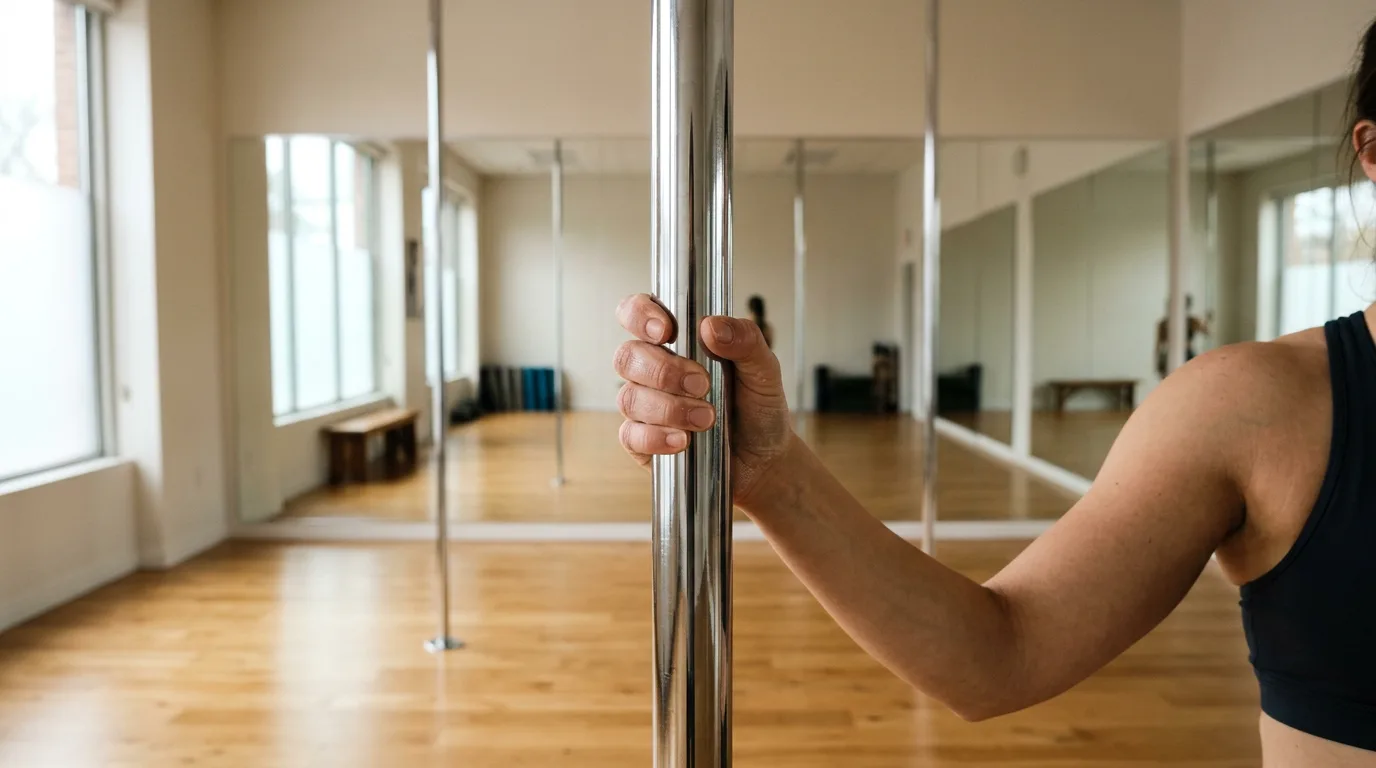
The Grip-to-Slide Equation
Every pole dancer manages a constant negotiation between grip and slide. A shoulder mount demands maximum friction — you are holding your bodyweight through skin contact on a smooth metal cylinder. A spinning transition demands controlled release — your hands need to slide around the pole at a regulated speed. A body wave passes through both states within a single movement sequence.
This is why pole dancers cannot simply use the strongest grip product available. Rock climbers want maximum friction at all times. Lifters want maximum friction at all times. Pole dancers want variable friction that matches the movement being performed. Liquid chalk serves the grip side of this equation better than the slide side — which makes it most valuable for strength training, static tricks, conditioning drills, and competition pieces where security matters more than flow.
The practical approach most experienced pole dancers use: liquid chalk for strength elements and conditioning, pole-specific grip aid for flow and choreography. During a training session that mixes both, start with liquid chalk for the strength portion (inverts, deadlifts, flag holds), then wipe the pole and switch to grip aid for flow combinations. Competition routines that blend strength and flow often use liquid chalk on hands only, with specific body-part grip aid for skin contact tricks.
Pole Material Matters: Chrome, Brass, and Steel
The pole material determines how chalk interacts at the friction surface. Chrome, brass, stainless steel, and powder-coated poles all respond differently, and choosing the wrong product for your pole material creates either too much or too little grip.
Chrome
The most common pole finish in studios. Chrome is naturally slippery when cold and becomes grippier as body heat warms the metal. Liquid chalk works well on warm chrome — the thin film adds consistent friction without the tackiness that makes chrome grabby. Cold chrome (first thing in the morning, air-conditioned studios) benefits from a warmup of the pole surface before chalking up.
Brass
Brass provides naturally higher friction than chrome, especially when warm. Many dancers who struggle with grip on chrome find brass manageable without any product. Liquid chalk on brass produces very strong grip — sometimes too strong for spin work. If your studio has brass poles, use liquid chalk sparingly and only for strength tricks. Flow work on chalked brass feels like moving through cement.
Stainless Steel
The slipperiest common pole material. Stainless steel does not warm up as much as chrome or brass, and the smooth surface offers minimal mechanical texture. Liquid chalk makes the biggest difference on stainless steel — it transforms an unreliable surface into a workable one for strength tricks. Double-coat on stainless if single coats feel insufficient.
Trick Categories and Chalk Strategy
Not every pole trick demands the same grip approach. Organizing your chalk strategy around trick types — rather than applying one coat and hoping for the best — produces better performance and reduces skin irritation from over-chalking.
Static Strength Tricks
Iron X, human flag, deadlift inversions, Ayesha — these moves require you to hold your bodyweight through hand grip alone, often for several seconds. Liquid chalk is at its best here. Apply a full coat to both palms and fingers. Wait for complete drying. The bonded magnesium carbonate layer handles the sustained pressure and sweat that builds during multi-second holds. This is the trick category where liquid chalk directly prevents falls.
Spins and Transitions
Fireman spin, chair spin, back hook spin — your hands or body slide around the pole at controlled speed. Full liquid chalk application makes these feel jerky and stop-start. For spin practice, apply liquid chalk to fingertips only, leaving the palms with natural skin friction. This gives you lock-off ability at the tips while allowing the palm to glide during rotational movement. Alternatively, apply a full coat and wipe your palms with a damp cloth before spin work — this removes the top layer from palms while leaving the bonded base on fingers.
Body Contact Tricks
Leg hangs, elbow grips, armpit holds, back-of-knee hooks — the pole contacts body parts other than your hands. Liquid chalk can be applied to these specific contact points. Behind the knee for leg hangs, inner arm for elbow grip, back of the shoulder for shoulder mount. The key is targeted application — chalk only the contact zone, not the surrounding skin. Excess chalk on non-contact areas serves no purpose and dries out skin unnecessarily.
Humidity, Temperature, and Seasonal Variables
Pole grip is wildly temperature-sensitive. In cold studios (below 65 degrees Fahrenheit), chrome poles feel slippery and unresponsive because both the metal and your skin are cold. Sweat production is low, but natural skin oils sit on the surface instead of being absorbed. Liquid chalk in cold conditions takes longer to dry — give it an extra 15-20 seconds. The reduced sweat means the chalk layer lasts longer per application, so you need fewer reapplications through a winter session.
Hot and humid conditions create the opposite challenge. Your body produces more sweat, the pole surface collects atmospheric moisture, and chalk breaks down faster. In summer sessions or studios without air conditioning, expect to reapply liquid chalk every 15-20 minutes instead of every 30-40 minutes. High-humidity environments above 70% relative humidity degrade all chalk products faster because the magnesium carbonate absorbs moisture from the air before your sweat even reaches it. In these conditions, high-alcohol formulas with rosin additives outperform pure MgCO3 formulas.
Studio Etiquette and Shared Poles
In a studio setting where 5-15 dancers share poles during a class, chalk management affects everyone. One dancer's heavy chalk application coats the pole surface, changing the grip experience for the next person. Studios that allow chalk typically require pole cleaning between users — a quick wipe with alcohol removes chalk residue and resets the surface to a neutral state.
Liquid chalk has an advantage here: it deposits less material on the pole surface than block chalk or thick grip creams. The thin bonded film on your hands contacts the pole and transfers a minimal amount of magnesium carbonate. Compare this to a dancer using loose chalk from a bag — the fallout coats the pole, the floor around the base, and the dancer's clothing. The studio cleanliness difference between liquid and loose chalk is dramatic.
If your studio does not allow any chalk, ask specifically about liquid chalk. Many studios that ban "chalk" are thinking about the white dust cloud from blocks. When they see liquid chalk's clean application and minimal residue, the policy often changes. Bring a bottle, demonstrate on your own hands away from the pole, and offer to clean the pole after your session. The practical demonstration converts skeptics faster than any explanation.
Recommended Formulas for Pole Dancers
Pole dancing needs products that provide reliable dry grip without excessive residue on the pole surface. Clear formulas reduce visible marks on chrome. Thin-application formulas avoid the tacky buildup that disrupts spins. These picks address pole-specific needs.
Chalkless Grip Enhancer CLEAR — Best for Chrome Poles
Clear formula leaves zero white marks on chrome — the pole looks clean after your session. The grip-enhancing formula works differently from traditional MgCO3 chalks, providing friction without the powdery texture that interferes with spins. At top-tier, it suits dancers who train on chrome in studios where visible chalk is frowned upon.
Check Price on AmazonChalkless Grip Enhancer BLACK — Best for Dark Pole Finishes
The dark-tinted formula avoids white chalk marks entirely, making it ideal for studios with dark chrome or titanium-finish poles. Same grip-enhancing technology as the clear version with a visual profile that matches dark metal aesthetics. At top-tier, the formula works for both practice and performance where visible product on the pole distracts from the routine.
Check Price on AmazonMedi Chalk Liquid Chalk — Best for Sensitive Skin
Gentle formula for dancers who train daily and worry about skin drying from repeated alcohol exposure. Thin application that provides grip for strength tricks without the heavy coating that disrupts flow work. At budget-friendly, the compact size fits in a dance bag alongside shoes, knee pads, and grip aids.
Check Price on AmazonEVMT Brands Liquid Chalk — Best for Strength Conditioning
When your session is pure strength work — deadlift inversions, press handstands on pole, extended flag holds — this formula delivers a firm, dry grip. Not ideal for flow, but that is not the point. For pole conditioning classes and strength block training, the secure hold prevents the grip fatigue that forces early dismounts. Priced at affordably priced.
Check Price on AmazonCompetition and Performance Considerations
Performance settings — recitals, showcases, competitions — add constraints that practice does not. Stage lighting heats the pole and the performer. Adrenaline increases sweat output beyond normal training levels. Costumes may expose more skin for body-contact tricks while restricting access to chalk between elements. The audience and judges create psychological pressure that manifests physically through clammy hands at the worst possible moment.
Pre-performance chalk application must account for all of these factors. Apply liquid chalk 5 minutes before your routine, not 30 seconds before. The extra drying time ensures the layer is fully bonded — partially dried chalk under stage lights will sweat through immediately. If possible, apply a thin second coat after the first dries for double-layer protection on a performance day. This thicker-than-usual application is justified by the higher sweat output of performance conditions.
For multi-routine events where you perform 2-3 pieces with breaks between, reapply before each routine. Do not assume the first application will survive a 10-minute break in a warm backstage area where your hands are nervous and sweating. Fresh chalk per routine is cheap insurance against the grip failure that ends a competition run. Keep the bottle in your backstage bag alongside your costume changes and warmup tools.
Skin Care for Pole Dancers Using Chalk
Pole dancing already places extreme demands on skin. Friction burns, bruising from contact tricks, and the gradual callus development on inner thighs, arms, and hands are part of the conditioning process. Adding liquid chalk — with its alcohol base that strips natural oils — requires a proactive skin care routine.
Post-training, wash all chalked areas with mild soap. Follow with a non-greasy moisturizer — coconut oil is popular but leaves a residue that can persist to the next session, making grip unpredictable. Shea butter or specialized pole skin care products absorb fully without leaving a slippery film. Apply moisturizer at least 2 hours before your next training session, or the night before morning classes, so it absorbs completely.
For hands specifically, the same rules apply as for climbers and lifters. Manage calluses flat — peaked calluses catch on the pole and tear, which is both painful and a major setback for training. A pumice stone after showers keeps calluses smooth and uniform. The alcohol in liquid chalk can split existing callus cracks wider if applied to already-damaged skin. If you have an active tear or split, skip the chalk on that area until the skin heals — a bandage with pole grip tape over it is the interim solution.
Pole Dancers Ask: Chalk Edition
Does liquid chalk damage pole surfaces or finishes?
Pure magnesium carbonate liquid chalk does not damage chrome, brass, stainless steel, or powder-coated pole finishes. The chalk wipes off with a damp cloth or pole-specific cleaner. Formulas containing rosin or pine resin can leave a sticky residue that builds up over time and is harder to remove — check ingredients and avoid rosin-based products for pole use. Between sessions, wipe the pole with rubbing alcohol to remove any chalk film and restore the original surface friction.
Should I chalk my whole body or just my hands for pole?
This depends on the moves in your routine. For hand-dominant tricks (spins, handsprings, flag), chalk hands only. For body-contact tricks (body waves, thigh holds, armpit grips), apply chalk to the specific skin contact point. Back hooks need chalk behind the knee. Shoulder mounts need chalk on the shoulder and inner arm. Avoid chalking areas that should slide — transitions and flow moves require slip in some areas while gripping in others. Map your routine contacts before applying.
What is the difference between pole grip aids and liquid chalk?
Pole-specific grip aids (Dry Hands, iTac, Mighty Grip) are formulated to manage the grip-to-slide ratio that pole dance requires. Most use antiperspirant compounds rather than magnesium carbonate. Liquid chalk provides a stronger, drier grip — which is ideal for static tricks and strength moves but can make spinning and transitional moves feel grabby. Many pole dancers use grip aid for flow and choreography work, then switch to liquid chalk for strength tricks, competition, and conditioning drills where maximum hold is the priority.
Can I use liquid chalk on a spinning pole?
On a spinning (rotating) pole, you need to maintain static contact while the pole rotates beneath you. Liquid chalk works well here because you need consistent friction — your hands stay put while momentum carries you around. On a static pole where YOU spin around the bar, the grip-to-slide dynamic is more complex. Liquid chalk on static poles makes initial contact very secure but can make flowing transitions feel sticky. For static pole flow work, use less chalk or apply only to fingertips.
How do I remove chalk residue from the pole between dancers?
Keep a microfiber cloth and isopropyl alcohol at the base of the pole. Between dancers or routines, spray the contact zones with 70% isopropyl alcohol and wipe with the cloth — two passes remove virtually all chalk residue. For studios where multiple dancers share a pole within minutes, a quick alcohol wipe between turns takes 15 seconds and resets the surface. Deep cleaning with pole-specific cleaners should happen daily at the end of training.
Is liquid chalk allowed in pole dance competitions?
Most pole sport federations (IPSF, PSO, POSA) allow chalk and grip aids. Competition-specific rules vary on what grip products are permitted — some competitions ban certain sticky grip aids while allowing chalk. Pure magnesium carbonate liquid chalk is accepted at virtually every sanctioned competition. Check the specific competition rules for any product restrictions. At international IPSF events, athletes must declare grip products used during their routine.
Grip Confidence for Every Trick
From iron X holds to flowing choreography, the right chalk approach keeps you locked where you need to be and free where you want to move. Start with our recommended clear formula for clean pole training.
Check Price on AmazonGet Our Top 3 Picks
Get our top 3 picks for your budget — one email, then only updates.
Only when something changes. Unsubscribe anytime.