Liquid Chalk for Parkour & Ninja Warrior: Grip Every Surface
Wall runs, bar laches, and obstacle grips — how liquid chalk handles the dynamic grip demands of parkour and ANW courses.
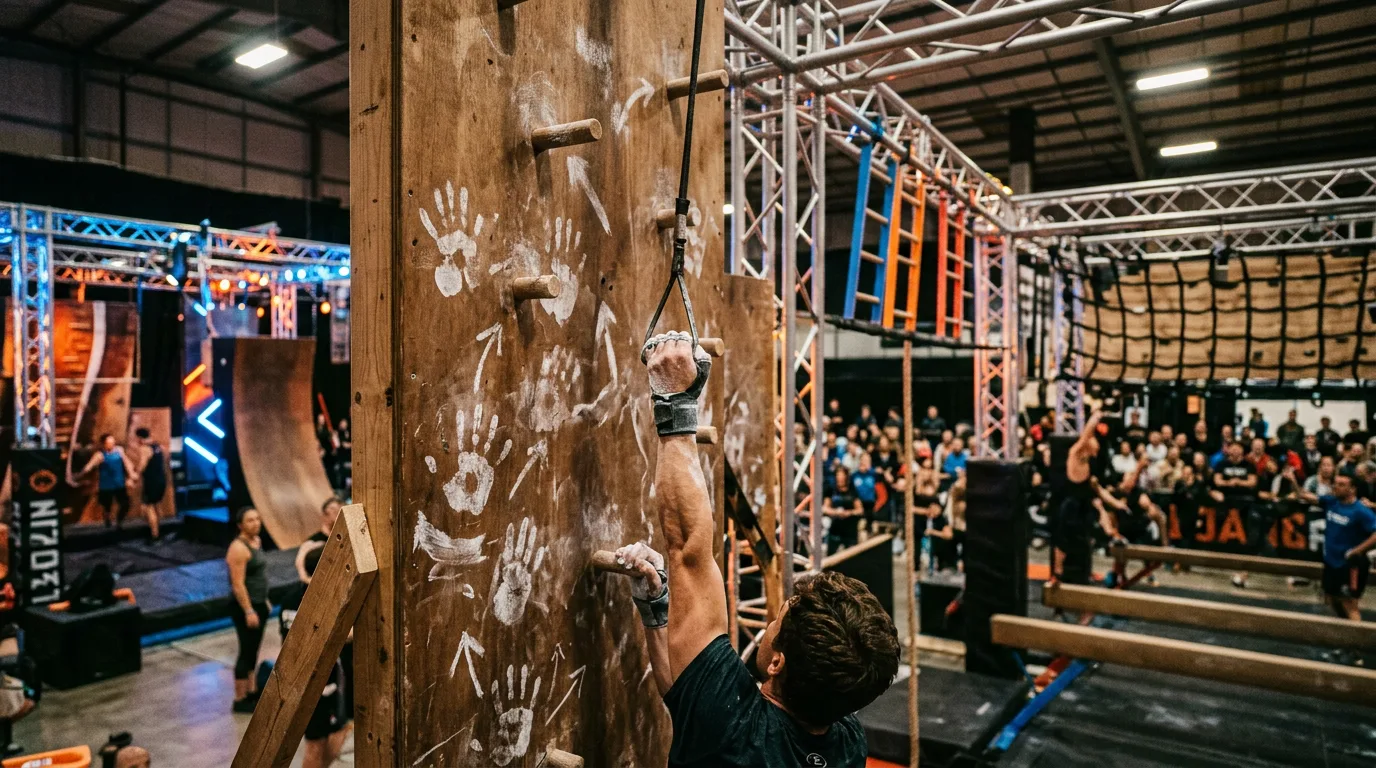
The Dynamic Grip Challenge
Parkour and ninja warrior training share a fundamental demand that separates them from most other sports: you must grip a wide variety of surfaces in rapid succession, often at full speed, with no time to adjust your hand position. A single ninja warrior course run might require gripping a smooth metal bar, swinging to a textured rock hold, catching a spinning wheel, and laching to a rope — all within 30 seconds. Each surface has a different friction coefficient. Each grip transition happens under momentum. And your hands get progressively wetter with every obstacle.
Traditional athletes train on one surface. Climbers grip rock or plastic holds. Gymnasts grip bars and rings. Weightlifters grip knurled barbells. Parkour athletes and ninja warriors grip everything — and the surface changes mid-run. Concrete walls for wall runs. Metal railings for cat leaps. Brick edges for precision landings. Wooden fences for vaults. Rubber-coated obstacles in ninja gyms. Steel pipes on competition courses. No other sport demands grip adaptability across this many surface types.
The hands are the constant. Your body weight transfers through your palms and fingers on every obstacle. A missed catch on a lache means a fall. A slipped palm on a wall run means an aborted attempt. Sweaty hands — from exertion, nerves, or summer heat — reduce friction on every single surface you touch. Liquid chalk creates a moisture-absorbing base layer that maintains friction across surface changes, giving you consistent hand contact from the first obstacle to the last.
Surface-by-Surface Grip Breakdown
Understanding how liquid chalk interacts with different surface types helps you decide when it helps most and where technique matters more than grip product.
Metal bars and pipes: The bread and butter of ninja warrior courses. Salmon ladders, lache bars, and hanging obstacles use round steel or aluminum pipes. Liquid chalk excels here — smooth metal plus dry hands equals reliable friction. The chalk layer prevents the thin film of sweat that causes your hands to rotate on the bar during a swing. Apply to palms and wrap-around fingers. This is where you notice the biggest difference between chalked and unchalked hands.
Textured climbing holds: Many ninja gyms incorporate climbing-style holds for traversals and upper body obstacles. Polyurethane holds already provide texture, so chalk adds less relative improvement than on smooth metal. It still helps by managing moisture — wet hands on textured holds create a slippery film that the texture alone cannot overcome. Apply normally; the chalk fills micro-pores in your skin to create a flatter, drier contact surface.
Rope and fabric obstacles: Rope climbs, cargo nets, and fabric wraps rely more on hand strength and technique than surface friction. Liquid chalk provides a moderate benefit by keeping hands dry, which prevents rope fibers from becoming slick against wet skin. Do not over-apply — too much chalk on rope can actually reduce friction by creating a powdery barrier between your skin and the fibers.
Concrete and brick (outdoor parkour): These porous surfaces provide natural friction and absorb moisture on their own. Chalk provides minimal extra grip on dry concrete. Where it helps is managing YOUR moisture — keeping your palms dry on a hot day when you are running precision jumps on narrow concrete ledges. The margin between a secure landing and a slipped foot is small enough that dry hands make a difference.
Spinning and rolling obstacles: Cannonball runs, rotating logs, and spinning wheels add a dynamic element where your grip must adapt to a moving surface. Liquid chalk helps by ensuring your initial grab is secure. Once the obstacle is rotating, your grip strength and technique determine whether you hold on — no amount of chalk compensates for weak finger strength on a 360-degree log roll.
Applying Chalk for Obstacle Course Training
Obstacle training has a rhythm that affects when and how you apply chalk. Unlike a climbing session where you chalk between individual problems, a ninja course run requires continuous grip across multiple obstacles without pausing. Your application strategy must account for this.
Pre-run application: This is the critical moment. Apply a generous coat to both palms, between all fingers, and on the first two finger pads of each hand. Rub hands together for 10 seconds after the chalk feels dry to work the magnesium carbonate into your skin's texture. Then clap your hands once — any excess powder falls off, leaving a bonded grip layer. You want the chalk IN your skin, not sitting on top of it where it transfers to the first bar you grab.
Training session management: A typical ninja gym session lasts 90-120 minutes. Apply chalk at the start, reapply after 30-40 minutes (or whenever your first missed grip happens — that is your early warning), and again in the final 30 minutes when fatigue compounds sweat production. Three applications cover a standard session.
Competition run prep: For ninja warrior competitions, you get one shot. Apply chalk in the staging area 2-3 minutes before your run. Do a test grip on a pull-up bar or railing to confirm coverage and rub off any excess. Your hands should feel dry and slightly textured — not powdery. If the venue is outdoors in summer heat, apply slightly heavier than normal. Adrenaline and heat will accelerate sweat production, and you need the chalk layer to absorb that moisture before it reaches the bar surface.
Top Liquid Chalk Picks for Parkour & Ninja Athletes
Ninja and parkour athletes need grip that lasts through consecutive obstacles without reapplication. Fast dry time matters when you are chalking up between sets on a tight training schedule. Here are the products that meet those demands.
Spider Chalk Black Widow 4oz
The top pick for ninja athletes. Grip-Lock nano-resin formula provides 40-55 minutes of continuous grip — enough to cover a full competition course and most training sets without reapplication. The 4 oz compact size fits in a gym bag. At one of the priciest in its class pricing, it is the best balance of grip duration and portability for obstacle course work.
Liquid Grip 8oz Bottle
The competition-approved choice. NCAA and NFHS approval means it has passed independent safety and residue testing. The rosin-enhanced formula provides tackier grip than pure magnesium carbonate, which helps on smooth metal bars where maximum friction matters. At mid-range for its category pricing, the cost is justified for serious competitors.
EVMT Brands Liquid Chalk
The training workhorse. At above average for its category pricing for a 50ml bottle, it is affordable enough to use daily without worrying about cost. Fast 10-15 second dry time gets you back on the obstacles quickly. Grip lasts 25-35 minutes — just right for most training sets. The compact size clips to a chalk bucket or gym bag.
Spider Chalk White Widow 8oz
The endurance option. At up to 60 minutes of grip duration, this is the longest-lasting formula we have reviewed. For extended ninja training sessions or back-to-back competition runs, the extra grip time means fewer chalk breaks. The 8 oz size is bigger than a gym bag needs, but the per-application cost is lower over time. Best for athletes who train in long blocks.
Parkour-Specific Considerations
Outdoor parkour introduces variables that indoor ninja training does not. Temperature, humidity, rain, and surface contamination (dirt, moss, algae on outdoor surfaces) all affect grip. Here is how to manage them.
Summer heat: Concrete and metal surfaces absorb heat and can become hot enough to affect grip comfort. Liquid chalk does not provide thermal insulation, but the dry layer prevents sweat from pooling against a hot surface. Apply before your run and expect shorter grip duration — heat accelerates sweat production. Reapply more frequently than you would indoors.
Rain and dampness: Liquid chalk is not waterproof. Rain washes it off. In light drizzle, a fresh application buys you 10-15 minutes of usable grip. In steady rain, chalk is functionally useless on outdoor surfaces. If you train outdoors in wet weather, focus on technique (vault grips, cat leap hand placement, precision landing foot work) rather than relying on grip products. Rosin-enhanced formulas like Liquid Grip resist moisture better than pure magnesium carbonate.
Dirty or dusty surfaces: Outdoor rails, walls, and ledges accumulate dust, dirt, and moisture. Chalk on your hands does not help if the surface itself is slippery with grime. Before a precision landing or cat leap on an unfamiliar surface, sweep it with your shoe or check the texture with a test grip. Chalk manages YOUR moisture; it does not clean the obstacle.
Competition Day Strategy for Ninja Warriors
Competition runs on a ninja warrior course are a different beast from training. You get one attempt, the clock is running, and adrenaline sends sweat production through the roof. Grip strategy matters as much as obstacle technique.
Staging area preparation: Apply your first chalk layer 15-20 minutes before your heat. This gives the chalk time to bond to your skin and lets any excess moisture evaporate. Apply a second, thinner layer 3-5 minutes before your run starts. Two layers create a thicker moisture barrier than one heavy application.
Chalking during the course: On television shows like ANW, there are no chalk stations between obstacles. In gym-hosted competitions, some events allow a chalk bucket at the start line. Apply your chalk before the buzzer, and rely on it lasting through the entire run. For courses that take over 3 minutes, longer-lasting formulas (Spider Chalk, Liquid Grip) provide a margin of safety.
Mental preparation: Wet hands from nerves are real. Pre-competition anxiety increases palmar sweating in most people. Apply chalk early enough that the adrenaline sweat hits an already-chalked surface. If you wait until the last 30 seconds to chalk, your hands may already be too sweaty for the chalk to adhere properly.
Building Grip Strength Alongside Chalk Use
Liquid chalk improves grip friction, not grip strength. The strongest chalk in the world will not help if your forearms fatigue after three obstacles. Ninja warriors who perform consistently invest in dedicated grip training alongside their obstacle practice.
Dead hangs: Hang from a pull-up bar for time. Start with 30 seconds, build to 2 minutes. Use chalk during dead hang training to simulate competition conditions — you want your strength to develop under the same friction conditions you will compete in.
Towel hangs: Drape a towel over a pull-up bar and hang from the towel. This thickens the grip surface and builds finger strength for rope and fabric obstacles. Do NOT use chalk for towel hangs — the point is to train your grip in a low-friction environment so that chalked competition grips feel comparatively easy.
Pinch grip training: Many ninja obstacles require pinching narrow ledges or small holds. Train with pinch blocks or plate pinches. Use chalk during pinch training because the reduced surface area makes moisture especially punishing.
The combination of grip strength training and liquid chalk creates a compound advantage: your hands can hold more weight AND your skin maintains friction longer. Neither alone is sufficient for competitive ninja performance — both together close the gap between you and athletes who are naturally dry-handed.
Common Questions About Chalk for Ninja & Parkour
Is liquid chalk allowed on American Ninja Warrior courses?
ANW allows liquid chalk on most obstacles. Producers sometimes restrict chalk on specific surfaces (warped wall, cannonball alley) for visual or safety reasons. Regional qualifiers and gym-hosted competitions typically allow full chalk use. Always confirm with event organizers before your run — rules vary by venue and production requirements.
Does liquid chalk work on wet or sweaty obstacles?
Liquid chalk absorbs existing moisture and creates a dry barrier. On obstacles that are already wet from previous competitors or outdoor rain, it helps but cannot fully compensate. Apply a thicker coat before wet obstacles and expect reduced grip duration. Rosin-enhanced formulas like Liquid Grip hold up better on damp surfaces than pure magnesium carbonate products.
How often should you reapply during a ninja warrior course?
Most course runs take 2-4 minutes. A single pre-run application of quality liquid chalk covers an entire run. For training sessions lasting 60-90 minutes, reapply every 30-40 minutes or whenever you feel grip starting to slip. Between obstacle attempts during training, a quick palm rub-together refreshes the existing chalk layer without a full reapplication.
Can liquid chalk replace climbing chalk bags for parkour?
For outdoor parkour where you encounter concrete, brick, and metal surfaces, liquid chalk is cleaner and more practical than a chalk bag bouncing on your hip. For indoor climbing-style ninja obstacles, some athletes prefer the ability to re-chalk between attempts using a chalk bag. Many ninja athletes carry both: liquid chalk as the base layer and a small chalk bag for quick top-ups between obstacle sets.
Does liquid chalk damage ninja warrior obstacles or gym equipment?
Magnesium carbonate can leave white residue on dark-colored obstacles and textured grips. Most ninja gyms expect chalk use and clean equipment regularly. Outdoor parkour surfaces — concrete walls, metal rails, brick edges — are unaffected by chalk residue. If your gym restricts chalk, grip enhancers like Chalkless CLEAR leave zero visible residue.
Choose Your Chalk and Start Training
Parkour and ninja warrior demand more grip versatility than any other sport. You are transitioning between surfaces at speed, under fatigue, and with no time to adjust. Liquid chalk gives your hands a consistent friction baseline across every surface type — metal bars, climbing holds, ropes, and concrete edges.
For competition-focused ninja athletes, Spider Chalk Black Widow provides the best combination of grip duration and portability. For daily training where cost matters, EVMT Brands at affordably priced pricing keeps you chalked without watching the budget. And for outdoor parkour in mixed conditions, Liquid Grip with its rosin-enhanced formula handles moisture better than standard magnesium carbonate.
Our Pick for Ninja Athletes
Spider Chalk Black Widow — 40-55 minutes of Grip-Lock nano-resin hold, compact enough for the gym bag, and proven on metal bars.
Check Price on AmazonGet Our Top 3 Picks
Get our top 3 picks for your budget — one email, then only updates.
Only when something changes. Unsubscribe anytime.