Liquid Chalk for Kids & Youth Athletes: A Parent's Guide
Safety, ingredient concerns, and age-appropriate products — a parent's guide to liquid chalk for young gymnasts, climbers, and athletes.
Why Young Athletes Use Grip Chalk
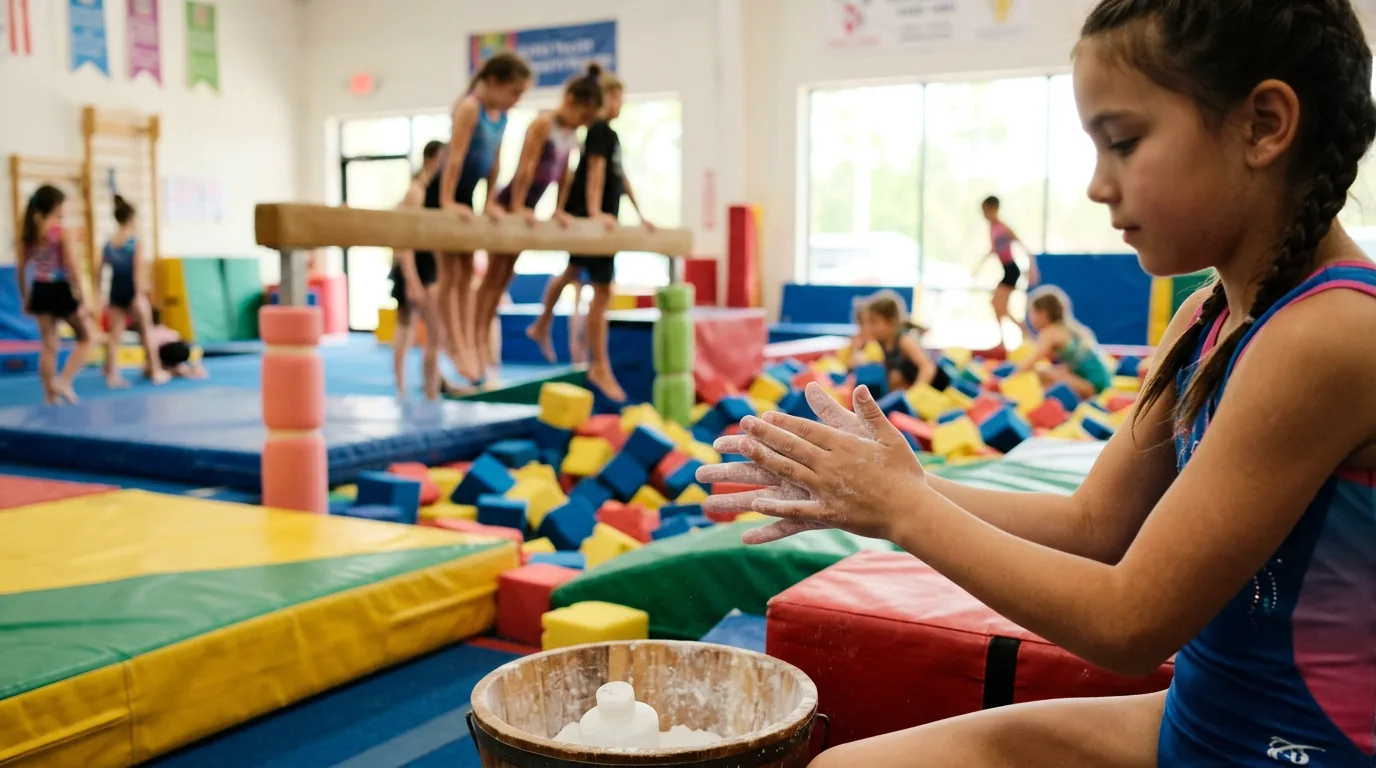
If your child participates in gymnastics, rock climbing, ninja warrior classes, or youth weightlifting, you have probably encountered chalk already. The white powder on your kid's hands after practice, the chalk dust in the gym bag, the mysterious white streaks on their clothes. Chalk is standard equipment in these sports, and for good reason: it absorbs moisture from the palms, creating a dry grip surface that prevents slipping on bars, holds, and equipment.
Liquid chalk is the modern version of that same tool. Instead of loose powder that creates dust clouds, liquid chalk suspends magnesium carbonate in an alcohol solution. The child squeezes a small amount onto their palms, rubs their hands together, and the alcohol evaporates in 10-20 seconds. What remains is a thin, dry chalk layer bonded to the skin. No dust, no mess in the gym bag, and more even coverage than a child can typically achieve with powder chalk.
For parents, the shift from powder to liquid often raises questions. What is in this stuff? Is the alcohol safe for my 8-year-old's skin? Can they use too much? Are there ingredients I should avoid? This guide answers those questions with specific ingredient analysis, age-appropriate recommendations, and practical advice for making liquid chalk a normal part of your child's training kit.
Ingredient Safety: What Parents Need to Know
Every liquid chalk formula contains two base ingredients: magnesium carbonate and a carrier alcohol. Beyond that base, some formulas add supplementary ingredients. Here is what each one does and what to watch for.
Magnesium carbonate (MgCO3): This is the active grip ingredient. It is a naturally occurring mineral classified as Generally Recognized as Safe (GRAS) by the FDA. It appears in food products as an anti-caking agent (E504), in antacid tablets, and in cosmetics. On skin, it absorbs moisture. It does not penetrate the skin barrier. It is non-toxic if accidentally ingested in the small amounts present in a chalk application. This is the same mineral used in traditional gym chalk blocks — liquid chalk just delivers it in a more controlled format.
Isopropyl alcohol (or ethanol): The carrier liquid that evaporates during the drying phase. The amount per application is approximately 1-2 milliliters. The alcohol evaporates completely within 10-20 seconds of rubbing. Once dry, no liquid alcohol remains on the skin. The practical safety concern is during application: the liquid alcohol can sting if it contacts broken skin, cuts, or hangnails. It can cause eye irritation if a child touches their eyes before the chalk dries. And it is flammable before it evaporates — keep bottles away from open flames (not a typical gym concern, but relevant at home).
Rosin (colophony): Found in some formulas (Liquid Grip, PowerGrip). Rosin is a natural tree resin that adds tackiness. It is a known allergen — approximately 3-6% of the general population has a rosin sensitivity, and rates may be higher in children with eczema or atopic dermatitis. Symptoms include contact dermatitis: redness, itching, and small blisters at the application site. If your child has a history of adhesive tape reactions (Band-Aid rashes), they may be rosin-sensitive. Avoid rosin-enhanced formulas for sensitive-skin children.
Honey: Found in SPORTMEDIQ and PowerGrip formulas. Honey acts as a humectant and secondary grip agent. It is skin-safe and non-allergenic for most children. Rarely, a child with a severe bee-related allergy could react — but this is uncommon with topical application. Honey-containing formulas tend to feel smoother on application, which younger children may prefer over the gritty feel of pure magnesium carbonate.
Fragrances: SURVIVOR uses an orange fragrance; SPORTMEDIQ has a light fresh scent. Fragrances are the most common cause of cosmetic contact dermatitis in children. If your child has fragrance-sensitive skin, choose an unscented formula (EVMT, Medi Chalk, Spider Chalk, or any pure magnesium carbonate product).
Age-Appropriate Application Guide
Teaching a child to apply liquid chalk properly prevents waste, avoids the "too much chalk" problem, and builds good training habits. The approach varies by age.
Ages 5-7 (Pre-competitive / recreational): A parent or coach should apply the chalk. Squeeze a pea-sized drop onto your own finger, then dot it onto the center of each of the child's palms. Have them rub their hands together for 10 seconds while you count aloud. Check that the coat is thin and even — if white residue transfers when they touch a dark surface, they have too much. Wipe excess with a towel. At this age, the child does not need to touch the bottle.
Ages 8-10 (Beginning competitive): Teach the child to dispense their own chalk under supervision. Show them how much a "pea-sized" amount looks like — squeeze a practice dot onto a piece of paper so they can see the target volume. Have them squeeze the same amount onto one palm, then rub both palms together. Supervise the first few applications to catch over-dispensing. Store the bottle in your bag, not theirs, until they have consistent technique.
Ages 11-13 (Competitive youth): At this age, most young athletes can manage their own chalk application. They should understand: how much to use (small amount), when to apply (before bars/rings/climbing, not continuously), when to reapply (when grip starts to feel slick, usually after 30-40 minutes), and how to store the bottle (upright, cap closed, away from heat). Let them keep the bottle in their own gym bag with the understanding that they are responsible for not wasting it.
Ages 14+ (Advanced competitive): Full autonomy. They understand their sport's chalk needs, their own sweat patterns, and which formula works for them. Your role shifts from applicator to purchaser — make sure they have chalk when they need it and that they are using a formula appropriate for their sport and skin type.
Sport-by-Sport Guide for Youth Athletes
Different youth sports have different chalk needs, different rules, and different considerations for young hands.
Youth gymnastics: The most common reason parents encounter liquid chalk. Bars (uneven bars, high bar, parallel bars) and rings require dry hands for safe grip. Most gymnastics gyms already provide a communal chalk bowl — liquid chalk is a personal alternative that provides more consistent coverage on small hands. USA Gymnastics permits both powder and liquid chalk. Coaches often prefer liquid because it reduces airborne dust near judging stations and keeps the gym cleaner. Apply before each bars rotation, not continuously throughout practice.
Youth rock climbing: Indoor climbing gyms are where most kids first encounter chalk. Liquid chalk is usually preferred by gym management because it creates less dust that settles on holds (changing their texture) and less mess on the walls and floors. For youth climbers, a single application before a route attempt lasts through the climb. Between attempts, rub hands together to refresh the layer — a full reapplication is rarely needed for routes under 5 minutes.
Youth ninja warrior / obstacle courses: The fastest-growing youth sport involving chalk. Ninja gyms welcome chalk use because the obstacles require grip. Liquid chalk is ideal for the multi-surface grip demands of obstacle courses (bars, ropes, holds). Apply before each course run or every 30 minutes during open gym sessions. Most ninja gyms stock chalk — but having your own bottle ensures your child is not sharing communal products.
Youth weightlifting: Sanctioned by USAW for athletes as young as 10 in the Youth division. Liquid chalk is permitted in all USAW competitions. Young lifters doing snatch and clean-and-jerk need dry hands for the hook grip and overhead stability. Apply before each heavy set. One bottle lasts months for a youth lifter who trains 2-3 times per week.
Youth baseball / softball: Batting grip and fielding. Liquid chalk works under batting gloves to extend glove grip life, and on bare hands for fielders. Little League and ASA do not prohibit liquid chalk, though pine tar is more traditional for bat grip. For youth players, the advantage of liquid chalk is no visible residue on the bat handle and no need to carry a pine tar rag that gets everything sticky.
Choosing the Right Product for Your Child
Not every liquid chalk formula is appropriate for young athletes. Here are our recommendations based on ingredient safety, application ease, and value for family budgets.
SPORTMEDIQ Pro Grade Liquid Chalk
Best for sensitive skin. The honey-and-fragrance formula applies like lotion — smoother and less harsh than alcohol-forward competitors. The 250ml bottle lasts 3-6 months of youth training at mid-range for its category pricing. The light fresh scent is pleasant without being overpowering for a child. A reliable choice for gymnasts and climbers ages 7+.
EVMT Brands Liquid Chalk
Best compact option for gym bags. The 50ml bottle is small enough for a child's bag and the fast 10-15 second dry time means less waiting between turns. At above average for its category pricing, it is affordable if the bottle gets lost (which happens with kids). Fragrance-free — just magnesium carbonate and alcohol. A solid all-around choice for ages 8+.
OUTTDOZ Liquid Chalk
Best for teams and multi-sibling families. Available in packs of up to 30 bottles. If you have multiple kids in gymnastics or climbing, the bulk pricing is unmatched. Each 60ml bottle has a carabiner clip that attaches to a gym bag. At mid-range for its category pricing per bottle, losing one is not a budget crisis. Simple formula with no fragrances or rosin.
Chalkless Grip Enhancer CLEAR
Best for kids with skin sensitivity. No alcohol, no magnesium carbonate — the patented silica compound bypasses the two most common irritation sources. Zero residue and no smell. The downside is mid-range for its category pricing for a small 8g tube, but for children with eczema or dermatitis who cannot tolerate traditional chalk, this is the only option that works without triggering their skin.
Ingredients to Avoid for Young Athletes
Most liquid chalk formulas are safe for children, but some ingredients warrant extra attention in a youth context.
Rosin / colophony: Found in Liquid Grip and PowerGrip. Rosin is the most common contact allergen in adhesive products. Children with a history of adhesive tape reactions should avoid rosin-containing chalk. If you are unsure, do the wrist patch test described above. Adults can tolerate mild rosin sensitivity — children are more likely to complain and avoid chalk entirely if it irritates them.
Strong fragrances: SURVIVOR's orange scent is pleasant but synthetic fragrances are the second most common cause of cosmetic contact dermatitis. For children under 10, fragrance-free formulas are a safer default. The alcohol smell of unscented chalk fades in seconds — it is less pleasant during application but causes zero ongoing skin issues.
Unknown additives: Some budget brands list vague ingredients like "binding agents" or "proprietary blend" without specifying the compounds. For an adult, this is a marketing choice. For a child whose skin is more permeable and reactive than adult skin, choose brands that fully disclose their ingredients: SPORTMEDIQ, EVMT, Spider Chalk, and Chalkless all provide complete ingredient lists.
Skin Care After Training
Repeated liquid chalk use dries the skin. Adult athletes develop calluses that protect against this. Children's hands are softer and more prone to drying, cracking, and irritation. A simple post-training skin care routine prevents problems.
Wash hands after practice: Soap and warm water remove the chalk layer completely. Cold water is less effective — the magnesium carbonate bonds to skin oils, and warm water helps dissolve that bond. Have your child wash their hands before getting in the car to prevent chalk transferring to clothes, seats, and everything else they touch.
Moisturize after washing: A fragrance-free hand cream (Cetaphil, CeraVe, or Aquaphor) applied after training restores moisture to the skin. This is especially important for children who train 3+ times per week. The combination of chalk drying and the friction of bars and holds can create painful dry cracks along the finger creases if skin is not maintained.
Monitor for callus development: Young gymnasts and climbers develop calluses on their palms and fingers. Normal calluses are smooth, firm, and painless. Problematic calluses are raised, ragged, or catching on rough surfaces. If a callus starts to peel or tear, file it smooth with a pumice stone (gently — children's skin is thinner) and moisturize. A torn callus on a child's hand hurts enough to make them avoid the bars for days.
Hand rips: Gymnasts call them "rips" — when friction tears the skin on the palms. Liquid chalk can actually reduce rip frequency by providing a smoother grip surface (less skin drag on the bar). But if a rip does occur, do not apply liquid chalk to the open wound — the alcohol will sting intensely. Wait for the skin to close before reapplying chalk. Many young gymnasts wear cloth or leather grips on bars to prevent rips entirely.
Practical Tips for Parents
Managing liquid chalk as part of your child's sports equipment is simpler than it looks. A few practical considerations keep things running smoothly.
Storage: Keep the bottle upright with the cap sealed. Liquid chalk can separate if left sitting for weeks — shake before use. Store at room temperature. Do not leave the bottle in a hot car — heat can cause the alcohol to expand and the bottle to leak. In winter, cold does not damage the formula but makes it thicker — warm it in your hands for 30 seconds before dispensing.
Travel: The 50ml bottles from EVMT, Medi Chalk, and OUTTDOZ are all under the TSA 3.4 oz (100ml) liquid limit for carry-on bags. If your child competes at travel meets, the chalk goes in the quart-size liquids bag. Larger bottles (250ml) must go in checked luggage. See our liquid chalk travel rules guide for complete airline and TSA details.
Sharing and hygiene: Communal chalk buckets in gyms are touched by every hand in the facility. Personal liquid chalk bottles are more hygienic. Teach your child not to share their bottle directly (squeezing onto another child's hands) — this prevents cross-contamination. If their team wants shared chalk, the parent-applied method (squeeze onto your finger, dot onto each child's palms) is more controlled than passing a bottle around.
Budget planning: A 50ml bottle lasts 2-4 weeks for a child training 2-3 times per week (longer for younger kids with smaller hands). A 250ml bottle lasts 3-6 months. At affordably priced pricing for a 50ml bottle, liquid chalk costs less per month than a single sports drink. For multi-child families, the bulk packs from OUTTDOZ reduce per-bottle cost to roughly the same as the cheapest single-bottle options.
What Youth Coaches Say About Liquid Chalk
Coaches in youth gymnastics, climbing, and ninja programs increasingly recommend liquid chalk over powder. The reasons are practical.
Dust control is the primary driver. Powder chalk creates airborne particles that coat every surface in a gym. Over time, this dust settles into equipment joints, ventilation systems, and the lungs of everyone in the building. Liquid chalk produces zero airborne particles. For gyms with young children — some of whom have asthma or allergies — the air quality difference is meaningful.
Application consistency is the second factor. A 7-year-old dipping their hands into a powder chalk bucket creates an uneven, clumpy mess. Half the chalk falls on the floor. The other half is packed between their fingers where it does nothing useful. Liquid chalk distributes evenly across small palms with a simple rub. The result is better grip from less product.
Equipment maintenance also factors in. Powder chalk accumulates in bar wraps, landing mats, and foam pits. It accelerates wear on synthetic materials and requires regular cleaning. Liquid chalk leaves a thin film on bars that wipes off with a damp cloth. Gym owners notice the difference in maintenance costs.
Questions Parents Commonly Ask
At what age can kids start using liquid chalk?
Most youth gymnastics programs introduce chalk (powder or liquid) around age 6-7 when athletes begin training on bars and rings. There is no official minimum age set by a governing body. The practical threshold is when the child can follow application instructions: dispense a small amount, rub hands together, wait for it to dry, and avoid touching their face or eyes. Younger children should have a coach or parent apply it for them.
Is the alcohol in liquid chalk safe for children?
The alcohol (typically isopropyl or ethanol) in liquid chalk is a carrier that evaporates within 10-20 seconds of application. By the time the chalk is dry, no liquid alcohol remains on the skin. The amount per application is small — about 1-2ml of formula. The primary safety concern is ingestion or eye contact during application, which is why adult supervision is recommended for younger children.
Can liquid chalk cause skin reactions in kids?
Magnesium carbonate and isopropyl alcohol can dry the skin with repeated use. Children with eczema, sensitive skin, or dermatitis may experience irritation, redness, or cracking. Test on a small patch of skin first. If irritation occurs, try a hypoallergenic formula (SPORTMEDIQ with honey) or a silica-based grip enhancer (Chalkless CLEAR). Moisturize hands after training sessions with a fragrance-free lotion.
Do youth gymnastics competitions allow liquid chalk?
USA Gymnastics and most national federations permit liquid chalk in competition. Many competitions prefer liquid chalk over powder because it produces less airborne dust around equipment and judges. Coaches typically apply chalk for younger athletes during warmups. Check with the meet director for any venue-specific restrictions, as some facilities prohibit all chalk types.
How much liquid chalk should a child use per application?
A pea-sized drop for each hand is enough for most children. Small hands need less product than adult palms. Over-application creates a thick, flaky layer that actually reduces grip — and wastes product. Teach kids the "less is more" principle: one small squeeze, rub together until dry, done. If the hands feel powdery or leave white marks on surfaces, they used too much.
Should I choose liquid chalk or powder chalk for my young athlete?
Liquid chalk is generally better for youth athletes because it produces less mess, applies more evenly on small hands, and creates a consistent grip layer. Powder chalk requires more technique to apply effectively — dipping into a chalk bowl and distributing evenly is harder for small hands. Liquid chalk also stays in the bottle when not in use, whereas powder chalk buckets can become a mess in a gym bag.
Get Your Young Athlete Started
Liquid chalk is a safe, practical grip tool for youth athletes in gymnastics, climbing, ninja warrior, and other hand-intensive sports. The ingredients are well-understood, the safety profile is strong for children who can follow basic application instructions, and the performance benefit — dry, consistent grip — translates directly to confidence on bars, holds, and obstacles.
For most families, EVMT Brands at affordably priced pricing is the practical starting point: fragrance-free, fast-drying, compact, and affordable enough to replace without stress if it gets lost. For sensitive skin, SPORTMEDIQ with its honey-based formula is gentler on young hands. And for children with eczema or dermatitis, Chalkless CLEAR avoids both alcohol and magnesium carbonate entirely.
Our Pick for Youth Athletes
EVMT Brands — fragrance-free, compact 50ml, fast 10-15 second dry time, and affordable enough to replace if lost at practice.
Check Price on AmazonGet Our Top 3 Picks
Get our top 3 picks for your budget — one email, then only updates.
Only when something changes. Unsubscribe anytime.