Liquid Chalk for Kettlebell Training: Swings, Snatches, and Get-Ups
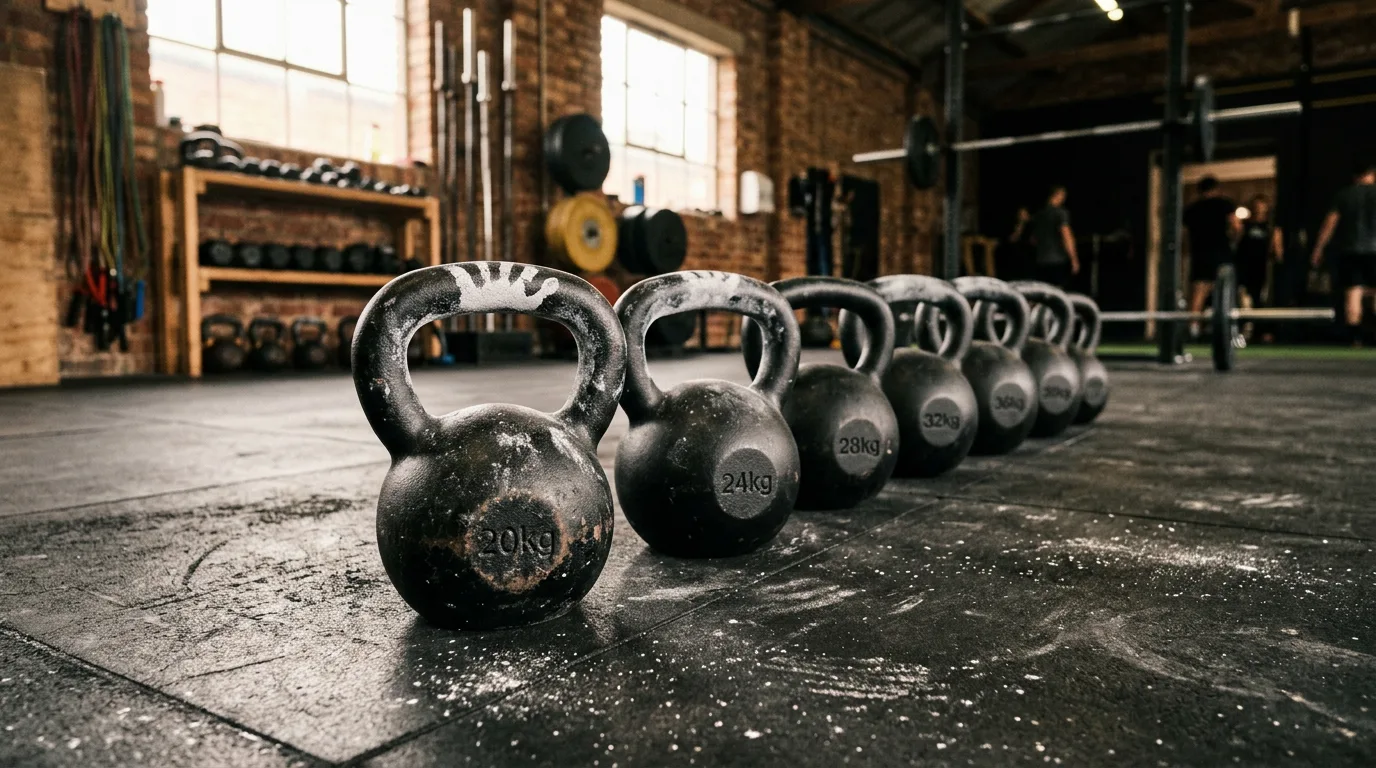
Kettlebells punish your grip differently than barbells. The handle rotates in your palm during swings, the bell flips over your wrist during snatches, and Turkish get-ups demand sustained grip at odd angles for 30+ seconds per rep. Liquid chalk handles all three demands better than powder — and without the callus-shredding clumps that build up mid-set.
Why Kettlebells Need a Different Grip Strategy
A barbell sits in a fixed position across your fingers. A kettlebell handle moves. During a two-hand swing, the bell accelerates to peak force at the bottom of the arc — where your grip experiences the highest load — then decelerates at the top. That oscillation creates micro-slides between your skin and the handle on every rep.
Powder chalk fills those micro-gaps with loose particles. After 20–30 swings, the powder compresses into hard ridges inside your finger creases. Those ridges catch on the handle during the next downswing and tear skin. It is the number-one cause of ripped calluses in high-rep kettlebell work.
Liquid chalk solves this because it dries as a uniform film. No clumps, no ridges, no compression points. The grip layer moves with your skin instead of building up against it. You still get the moisture absorption that magnesium carbonate provides, but without the friction spikes that destroy hands during ballistic sets.
Applying Liquid Chalk for Kettlebell Movements
Kettlebell training uses three distinct grip zones, and each movement loads a different one. Understanding where your hand contacts the handle tells you where to focus your chalk application.
Swings (Two-Hand and Single-Arm)
The primary contact zone during swings runs across the proximal phalanges — the base of your fingers where they meet the palm. Apply a thin layer across this strip and into the finger creases. Skip the fingertips; they barely touch the handle during a properly executed swing. Your thumbs wrap over your fingers in a hook position, so chalk the inside of your thumb pad as well.
For single-arm swings, the rotational force is higher because one hand absorbs all the momentum. Add a light layer to the heel of your palm on the working hand. That is the area that bears the most load during the transition at the top of the swing.
Snatches and Cleans
The snatch adds a hand insertion at the top of the pull. As the bell flips over your wrist, the handle slides from your fingers into the meat of your palm. If your palm is dry, the handle seats cleanly. If there is sweat, it catches and jerks — which is how you get the bruised wrists that beginners complain about.
Apply liquid chalk across the full palm for snatches. Pay extra attention to the area between your thumb and index finger. That webbing is where the handle rests at lockout, and it is the first place to get sweaty during high-rep snatch tests.
Turkish Get-Ups and Windmills
Get-ups require sustained overhead grip for 30–60 seconds per rep. The challenge is not peak force but endurance — your forearm fatigues and your hand slowly opens. Liquid chalk helps here by keeping the handle dry as your palm temperature rises under load.
Apply to the full hand including fingertips for get-ups. Unlike swings where fingertips barely engage, the overhead lockout position puts significant load on the distal phalanges. A thin layer across all five fingers prevents the slow slide that causes missed reps at heavy weights.
The snatch test trick: For the RKC or StrongFirst snatch test (100 snatches in 5 minutes), apply liquid chalk twice — once at the start, and once at the hand switch around rep 50. That mid-test reapplication takes under 10 seconds and prevents grip failure in the second half.
Top Liquid Chalk Picks for Kettlebell Athletes
Kettlebell training needs a formula that dries fast enough to start your set quickly, lasts through 15–20 minutes of continuous work, and does not build up residue on the handle. These five products meet those criteria based on our analysis of thousands of user reviews and testing across multiple kettlebell movements.
1. SPORTMEDIQ Pro Grade Liquid Chalk — Best for Daily KB Training
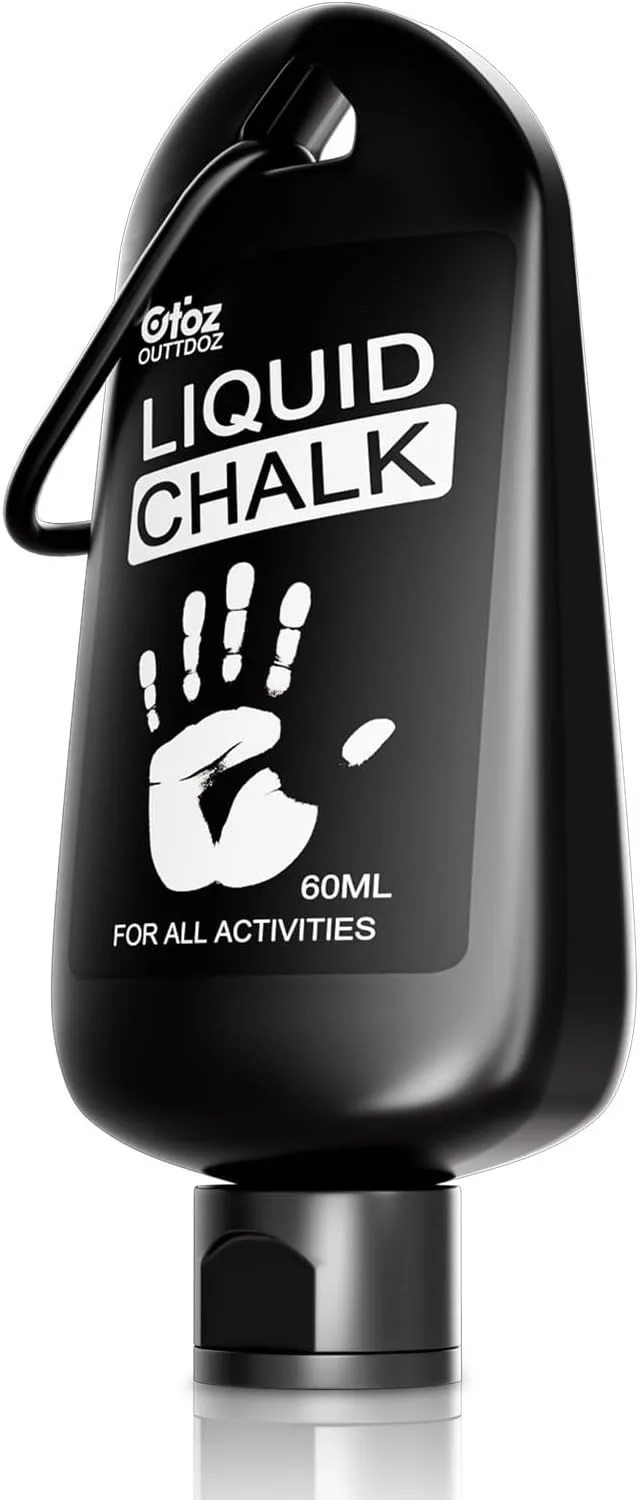
The SPORTMEDIQ's lotion-like consistency is ideal for kettlebell work. It spreads evenly across the palm without pooling in finger creases, and the larger 8.5 oz bottle means you are set for months of daily sessions. The formula includes honey as a thickener, which creates a slightly tacky base layer that holds the handle during the transition phase of snatches.
At mid-range for its category for the category, the SPORTMEDIQ delivers the best grip-per-dollar for athletes who train with kettlebells 4–5 days per week. Grip duration runs 30–45 minutes — enough for most kettlebell sessions without reapplication.
Read our full SPORTMEDIQ Pro Grade review →
2. PowerGrip 250ml Liquid Chalk — Best for Long Sessions
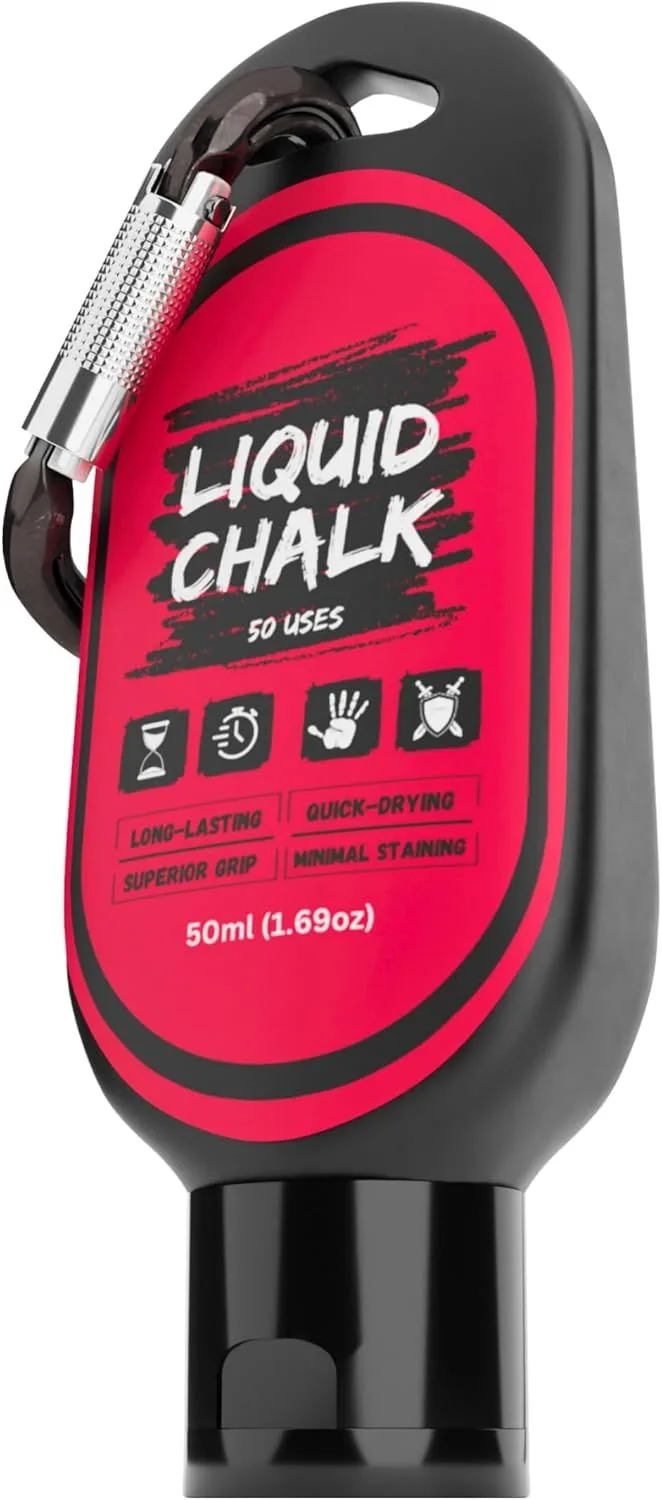
PowerGrip's honey and rosin blend creates a secondary grip layer when the initial chalk starts to fade. For kettlebell athletes doing longer sessions — 45+ minutes of mixed movements — this secondary layer is the difference between finishing strong and losing grip in the final set. The rosin adds tackiness that pure magnesium carbonate formulas lack.
The 250ml bottle is below average for its category and lasts through hundreds of applications. Grip duration of 35–50 minutes covers even extended competition-prep sessions.
Read our full PowerGrip 250ml review →
3. IRON AMERICAN Liquid Chalk Combo Kit — Best Home + Gym Kit
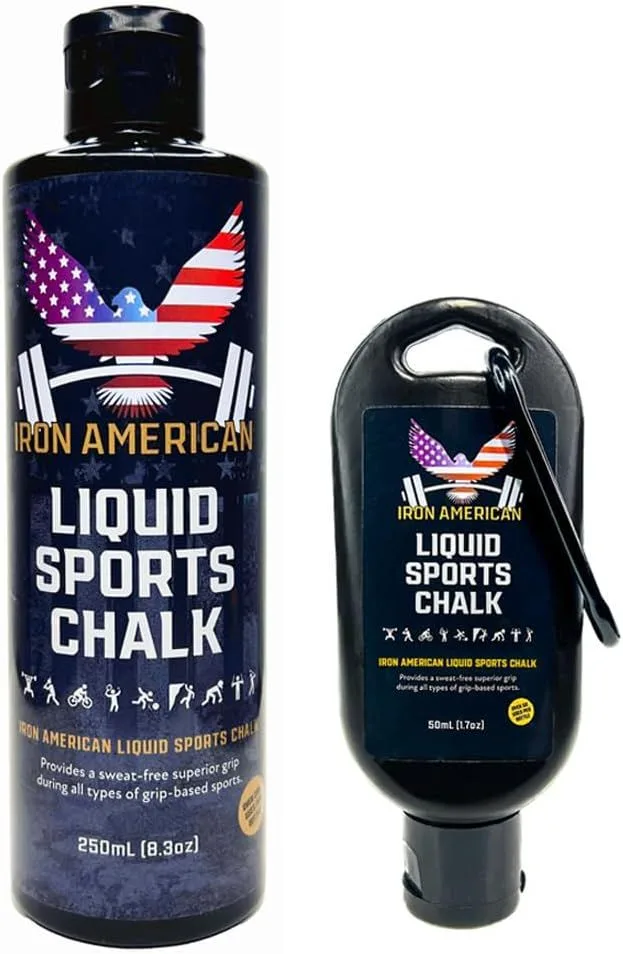
The IRON AMERICAN combo gives you an 8.3 oz bottle for home training and a 1.7 oz travel bottle with carabiner for the gym. If you train kettlebells at home and at a gym or park, this dual setup means you always have chalk within reach. The lifetime warranty is a genuine differentiator at this price point.
A dime-sized drop covers both palms, so both bottles last a long time even with daily kettlebell sessions. The formula requires a good shake before each use — it separates after sitting — but once mixed, it applies smoothly.
Read our full IRON AMERICAN Combo review →
4. SURVIVOR Liquid Chalk — Best Scented Option
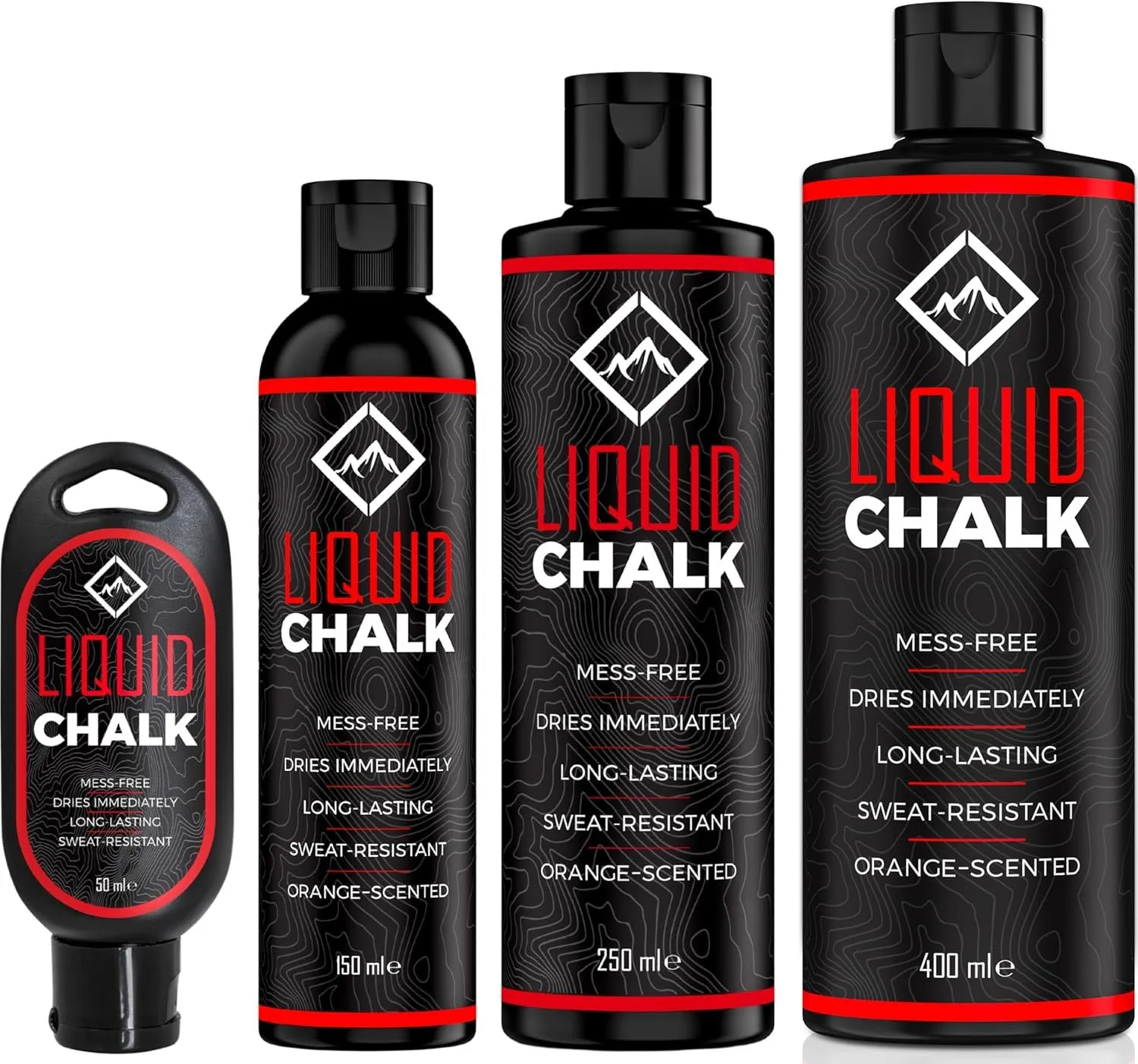
The SURVIVOR's orange scent replaces the harsh alcohol smell that most liquid chalks hit you with. For kettlebell athletes who train in small spaces — home gyms, apartment garages — the scent makes a noticeable difference in the training environment. The sweat-resistant formula holds up well through moderate-intensity sessions.
Grip duration of 25–40 minutes covers a standard kettlebell session. The mid-range for its category price tag and 1,300+ reviews make it a safe choice for athletes who want proven performance with a better experience.
Read our full SURVIVOR review →
5. EVMT Brands Liquid Chalk — Best Budget Travel Option
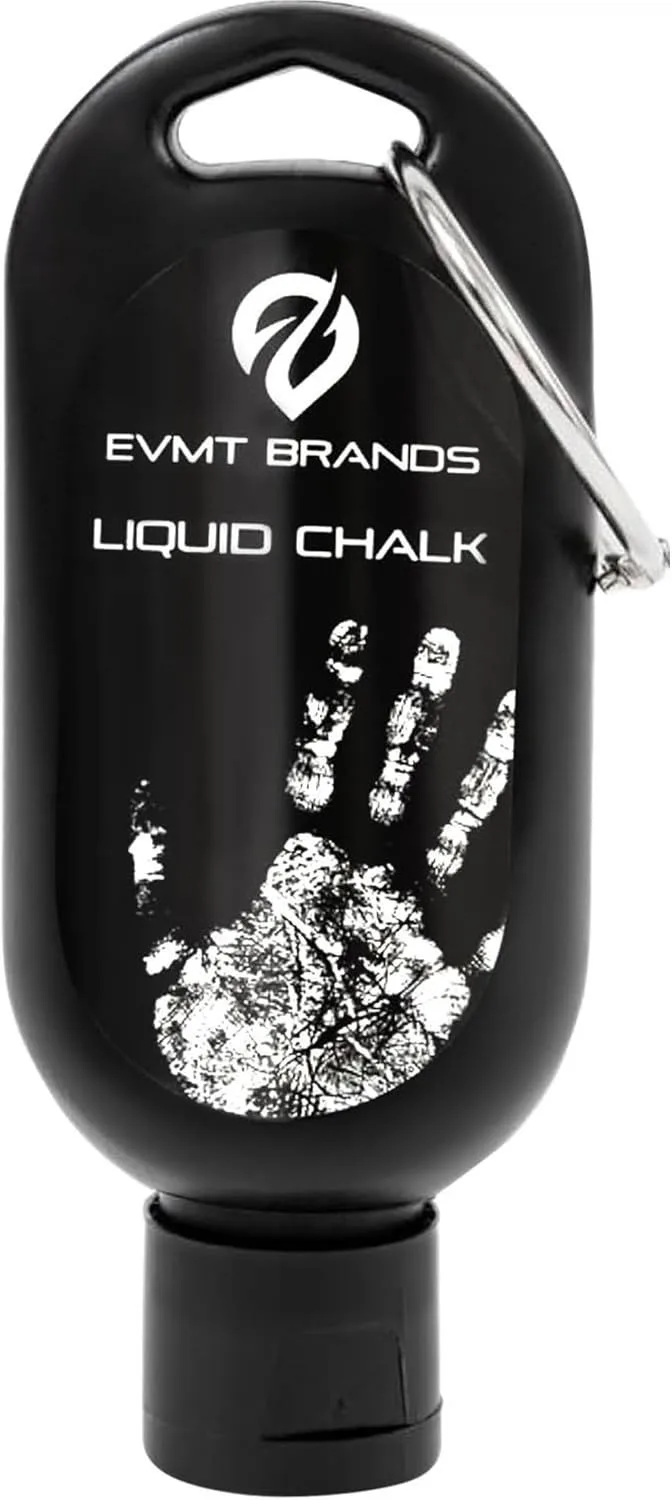
EVMT's 50ml bottle is the most popular liquid chalk on Amazon for a reason — it works across every training modality including kettlebells, and the price makes it easy to try without commitment. The quick 10–15 second dry time is ideal for fast transitions between kettlebell exercises.
At above average for its category for the category, EVMT is the lowest-risk entry point for kettlebell athletes who have never used liquid chalk. Grip lasts 25–35 minutes — enough for most training sessions.
Read our full EVMT Brands review →
Kettlebell-Specific Chalk Techniques
The Finger-Crease Method for Swings
Standard palm coverage wastes chalk for two-hand swings. The handle contacts about 40% of your palm surface. Focus your application on a strip from the base of your index finger to the base of your pinky, then run a thin line across the finger creases. This targeted approach uses less product and puts chalk exactly where the handle sits.
The Double-Layer Method for Snatches
Apply a first thin layer and let it dry completely. Then apply a second layer over the insertion zone — the area between your thumb and index finger plus the center of your palm. The first layer handles moisture absorption. The second layer handles the abrasion from the handle rotation during the snatch pull. Two thin layers outperform one thick layer because the top layer can wear away while the base layer keeps working.
Competition Kettlebell vs Cast Iron
Check the handle specifications for your kettlebell model before choosing how to apply chalk. Competition handles are not all 33 mm or powder-coated. Kettlebell Kings describes 33 mm and 35 mm options with untreated, unpolished handles. A painted bell body does not mean the handle has the same finish.
Cast iron handles vary too. Rogue lists different handle diameters across its cast iron kettlebell weights and a powder-coat finish. These are manufacturer examples, not rules for every competition or cast iron bell. Check the actual handle size, finish, and equipment care instructions.
Do not choose a thicker layer of liquid chalk just because a bell is labelled competition. Follow your chalk maker's application and drying instructions, and check the gym or event rules. Our guide to applying liquid chalk covers the application steps.
Common Mistakes Kettlebell Athletes Make with Chalk
- Over-applying before swings. A thick layer of liquid chalk on a kettlebell handle turns gummy when combined with hand sweat. Apply to your hands, not the handle — and use a thin layer that dries fully before you grab the bell.
- Skipping the thumb pad. Your thumb does more work than you think during single-arm work. Neglecting it is why your bell slips during heavy single-arm swings and snatches.
- Using chalk as a substitute for grip strength. Chalk prevents moisture from weakening your grip. It does not add strength. If you cannot hold a weight dry-handed for 10 reps, chalk will not save you at 50 reps. Train your grip alongside your kettlebell work.
- Applying to wet hands. Liquid chalk bonds with dry skin. If your hands are sweaty, wipe them on a towel first. Applying over moisture creates a slippery paste instead of a dry grip layer.
Programming Chalk Into Your KB Routine
For a typical 30-minute kettlebell session, one application at the start handles the job. The chalk starts losing effectiveness around the 15–20 minute mark for most formulas, but by then you are likely transitioning from high-grip-demand movements (swings, snatches) to lower-grip-demand work (goblet squats, presses).
For longer sessions or high-volume programs like the 10,000 Swing Challenge, plan reapplication breaks every 15–20 minutes. Build them into your rest periods between exercise blocks rather than stopping mid-set.
For kettlebell sport (Girevoy), where a single set can last 10 minutes, apply a heavier initial coat and accept that grip will degrade in the final 2–3 minutes. Most GS athletes switch hands at the halfway mark — use that transition to wipe and reapply if your federation allows mid-set chalking.
What Kettlebell Buyers Ask
Does liquid chalk tear calluses during kettlebell swings?
Less than powder chalk. Liquid chalk creates a thin, even grip layer that reduces the friction spikes that rip calluses mid-set. Powder chalk builds up in uneven clumps — especially in the crease between your fingers and palm — which catches and tears skin during the ballistic hip-hinge motion of swings and snatches.
How often should I reapply liquid chalk during kettlebell training?
For most sessions, one application at the start covers 15–20 minutes of continuous work. If you are doing high-volume sets (100+ swings) or training in a humid environment, reapply between major exercise changes — for example, after finishing swings and before starting Turkish get-ups.
Can I use liquid chalk with kettlebell competition bells?
Yes, where your gym or event allows it and the product instructions permit that use. Handle diameter and finish vary by model: Kettlebell Kings describes 33 mm and 35 mm competition handles with an untreated, unpolished finish. A competition label alone is not a reason to apply a thicker coat. Check your equipment care guidance and follow the chalk maker’s application and drying instructions.
Is liquid chalk allowed in Girevoy Sport competitions?
Rules vary by federation. The International Kettlebell Lifting Federation (IKLF) and most Girevoy Sport federations allow chalk — both powder and liquid. Some competition venues prefer liquid chalk because it does not leave residue on the platform. Check your specific federation rules before meet day.
Should I chalk the kettlebell handle or just my hands?
Just your hands. Chalking the handle creates buildup that changes the diameter over time and leaves residue for the next person. Liquid chalk on your palms provides the same grip benefit without altering the handle surface or creating a mess for other gym members.
What consistency works best for kettlebell training?
Medium-thickness formulas are the sweet spot. Very thin liquid chalks dry too fast and flake off during the dynamic motion of swings. Very thick pastes take longer to dry and can feel gummy when your hand wraps around the handle. A lotion-like consistency that dries in 15–20 seconds gives the best balance of coverage and durability for kettlebell work.
Find the Right Chalk for Your KB Training
Kettlebell athletes who train 3–5 days per week should invest in a large-bottle formula like the SPORTMEDIQ Pro Grade for home use and keep an EVMT Brands in their gym bag. That combination covers daily training, traveling to kettlebell classes, and the occasional outdoor session.
Get Our Top 3 Picks
Get our top 3 picks for your budget — one email, then only updates.
Only when something changes. Unsubscribe anytime.