Liquid Chalk for Home Gyms: Zero Dust, Zero Cleanup, Full Grip
A home gym solves every problem except one: the chalk cloud. Block chalk turns your garage into a snowglobe. Powder settles on equipment, mirrors, vehicles, and whatever else shares the space. Your partner steps on chalky flooring in socks and tracks white footprints through the house. Liquid chalk eliminates this entirely — same grip, no airborne particles, and a cleanup that takes 30 seconds instead of 30 minutes.
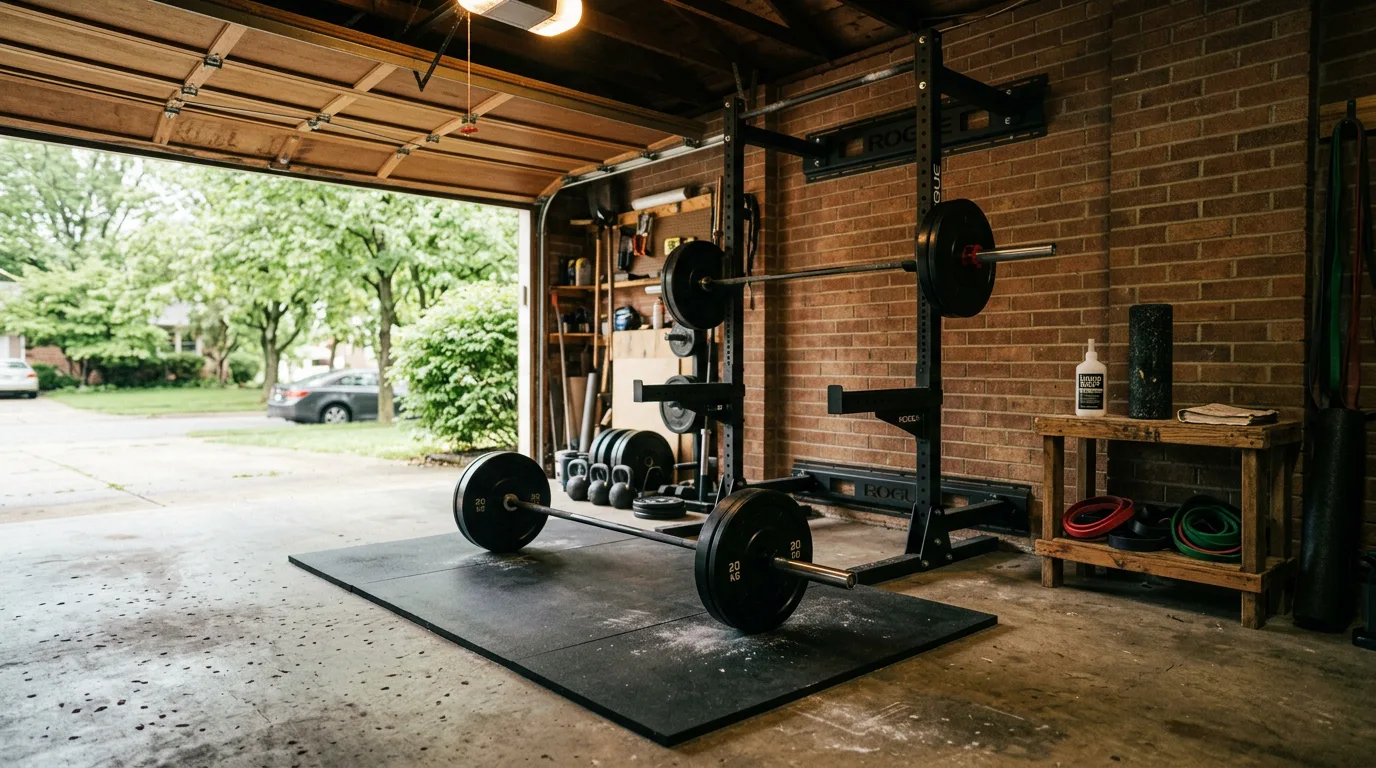
The Chalk Dust Problem in Enclosed Spaces
Commercial gyms ventilate chalk dust through industrial HVAC systems. Your garage gym does not. When you rub a chalk block between your palms, fine magnesium carbonate particles become airborne and hang in the air for 15-30 minutes. In a typical two-car garage with the door closed, those particles settle on every horizontal surface within a 10-foot radius.
The dust accumulation is gradual enough that you stop noticing it — until you run a finger across a shelf and draw a line through a white film, or until your car's dashboard develops a permanent haze. HVAC systems with return vents in or near the garage pull chalk dust into ductwork and deposit it throughout the house. Filter changes become monthly instead of quarterly. If you share a garage with vehicles, tools, or storage, chalk dust coats everything impartially.
Liquid chalk bypasses this entirely. The magnesium carbonate is suspended in isopropyl alcohol. When you apply it to your palms, the alcohol evaporates and bonds the chalk to your skin. Nothing becomes airborne. Nothing settles on equipment. The only chalk residue is the thin layer on your hands and the faint marks that transfer to the bar during your set — both of which wipe clean in seconds.
Why Home Gyms Are the Ideal Setting for Liquid Chalk
Every advantage of liquid chalk is amplified in a home gym setting. In a commercial gym, you might tolerate the extra cost or the slightly longer application time because the facility provides chalk stations and cleaning staff. At home, you control the environment — and the environment benefits directly from a dust-free grip solution.
No Equipment Degradation
Chalk dust mixed with hand oils and sweat forms a paste in barbell knurling over time. In commercial gyms, barbells get cleaned periodically. In home gyms, you are the maintenance crew — and chalk paste buildup in knurling reduces grip quality faster than the chalk improves it. Liquid chalk deposits a thinner, more uniform layer that fills knurling grooves less aggressively. A post-session wipe with a brush keeps knurling sharp indefinitely.
Shared Space Compatibility
Most home gyms coexist with other uses — parked vehicles, laundry machines, storage shelving, workshop benches, or a kids' play area. Block chalk makes your training area hostile to everything else in the room. Liquid chalk confines the chalk to your hands and the equipment you touch. Train at 5 AM, wipe down the bar, and the space is back to multipurpose by 6 AM.
Indoor Air Quality
Magnesium carbonate dust is classified as a nuisance particulate — not immediately hazardous, but an irritant with repeated inhalation. In well-ventilated spaces, the exposure is negligible. In a closed garage during winter training (door shut, no ventilation), repeated chalk cloud exposure during a 90-minute session is enough to trigger coughing in sensitive individuals. Liquid chalk eliminates respirable dust entirely.
Basement and spare-room gyms: If your home gym is indoors (not a garage), liquid chalk is mandatory, not optional. Carpet absorbs chalk dust permanently. Drywall develops a white film that requires repainting to remove. Finished wood floors stain at the grain level. There is no practical way to use block chalk in a finished indoor space without causing cosmetic damage. Liquid chalk keeps the room clean and leaves no trace once you wipe the equipment.
Choosing the Right Format for Home Use
Home gym athletes face different priorities than gym-bag athletes. You are not carrying the bottle to a commercial gym, so portability is irrelevant. You are using it in the same space every day, so economy and cleanup matter more. Here is how to think about format selection for home use.
Large Bottles (200-250ml)
The most cost-effective option for daily home use. A 250ml bottle sits on a shelf in your gym and lasts 5-8 months for a single athlete training 4-5 days per week. The per-ounce cost is 40-60% lower than travel-size bottles. The only consideration: larger bottles with flip-top caps can dispense too much product in one squeeze. If your large bottle does not have a pump or narrow-tip nozzle, squeeze a small amount onto your fingertips first, then rub your palms together — this prevents over-application.
Invisible Formulas (Zero Residue)
If your home gym has dark-colored equipment (black barbells, dark rubber flooring, black bench pads), standard white liquid chalk leaves visible marks that require wiping after each exercise. Invisible formulas like Chalkless CLEAR leave zero visible residue — you can train and walk away without a cleanup step. The trade-off is a higher per-application cost, but for athletes who value a clean training space, the time savings on cleanup are worth the premium.
Pump Bottles vs. Squeeze Tubes
For home use, pump bottles are more convenient than squeeze tubes. A pump sits on a shelf at arm height and dispenses a consistent amount with one press. Squeeze tubes require two hands and tend to dispense inconsistent amounts. If your preferred formula comes in a squeeze tube, transfer it to a small pump bottle from a drugstore — the repackaging takes 60 seconds and saves frustration over 200+ applications.
Top Liquid Chalk Picks for Home Gym Athletes
These five products were selected for home gym priorities: economy for daily use, low mess, equipment compatibility, and grip performance across the movements common in home training (barbell lifts, pull-ups, kettlebells, dumbbells).
1. SPORTMEDIQ Pro Grade Liquid Chalk — Best Value for Daily Training
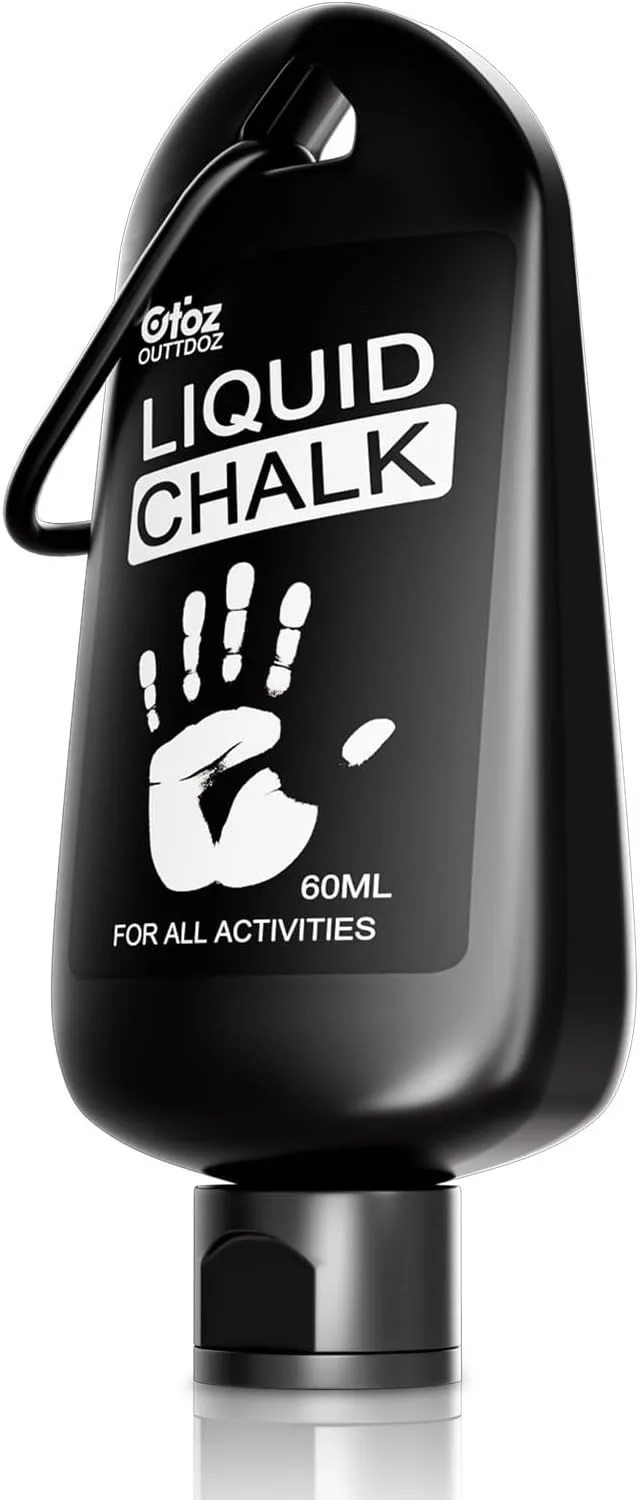
The SPORTMEDIQ 8.5 oz bottle is built for home gym life. At mid-range for its category, the large format delivers the lowest per-application cost of any formula we tested. The lotion consistency applies cleanly — no drips, no globs, no mess on the gym floor. Grip duration runs 30-45 minutes, covering most home workouts without reapplication. The light scent dissipates within seconds, which matters when your gym is 20 feet from the kitchen. Over 3765 Amazon reviews confirm the formula consistency is reliable batch to batch.
Read our full SPORTMEDIQ Pro Grade review →
2. Chalkless Grip Enhancer CLEAR — Cleanest Formula for Indoor Spaces
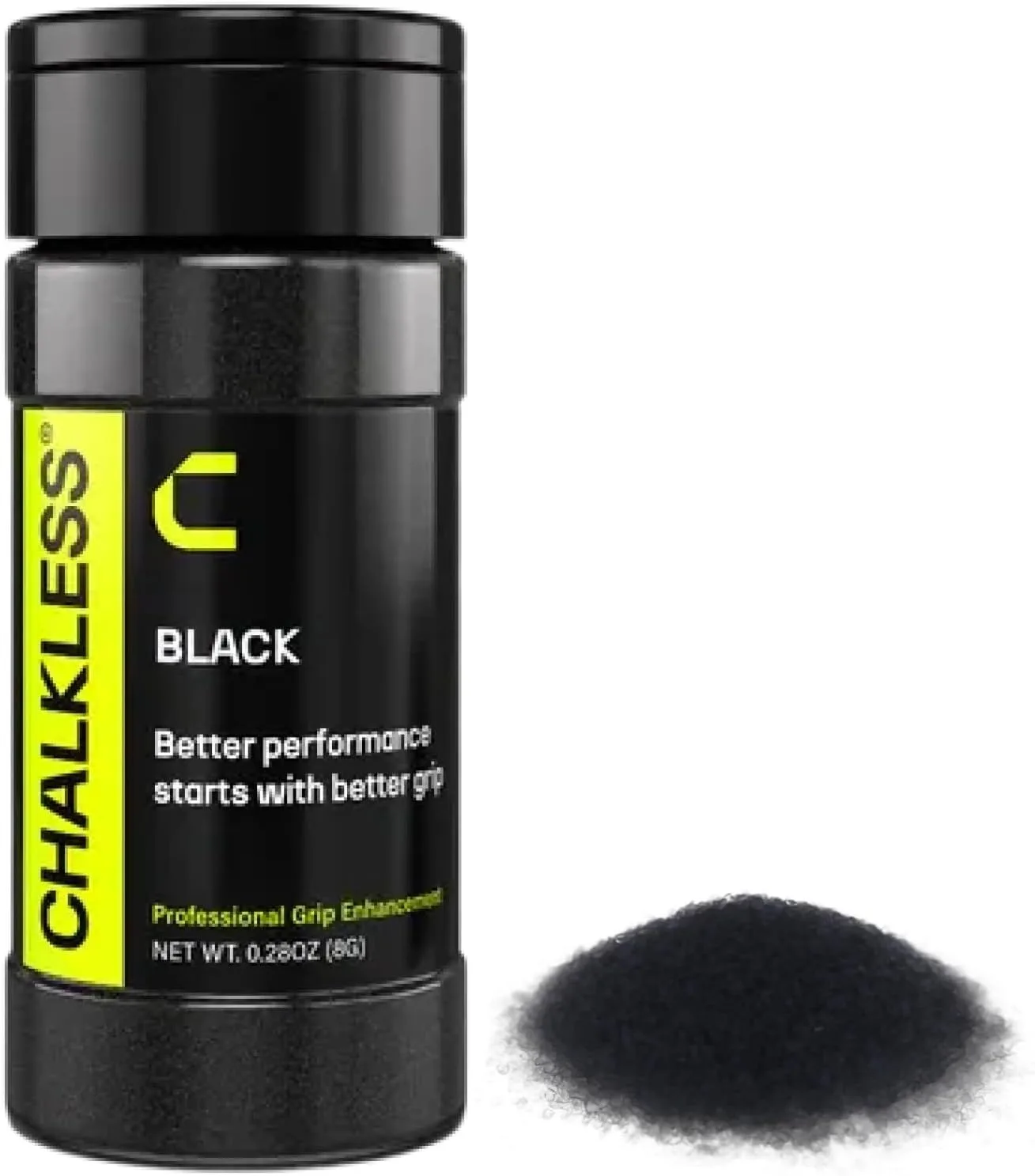
For home gyms where cleanliness is the top priority, the Chalkless CLEAR leaves zero visible residue on any surface. No white marks on the barbell. No chalk transfer to bench pads. No dusty footprints on rubber flooring. The silica-based formula provides grip through a completely different mechanism than magnesium carbonate — it creates micro-friction rather than absorbing moisture. At mid-range for its category, it costs more per application than standard liquid chalk, but the zero-cleanup trade-off is worth it for athletes who train in basement or spare-room gyms where chalk residue would be unacceptable.
Read our full Chalkless CLEAR review →
3. Chalkless Grip Enhancer BLACK — Invisible on Dark Equipment
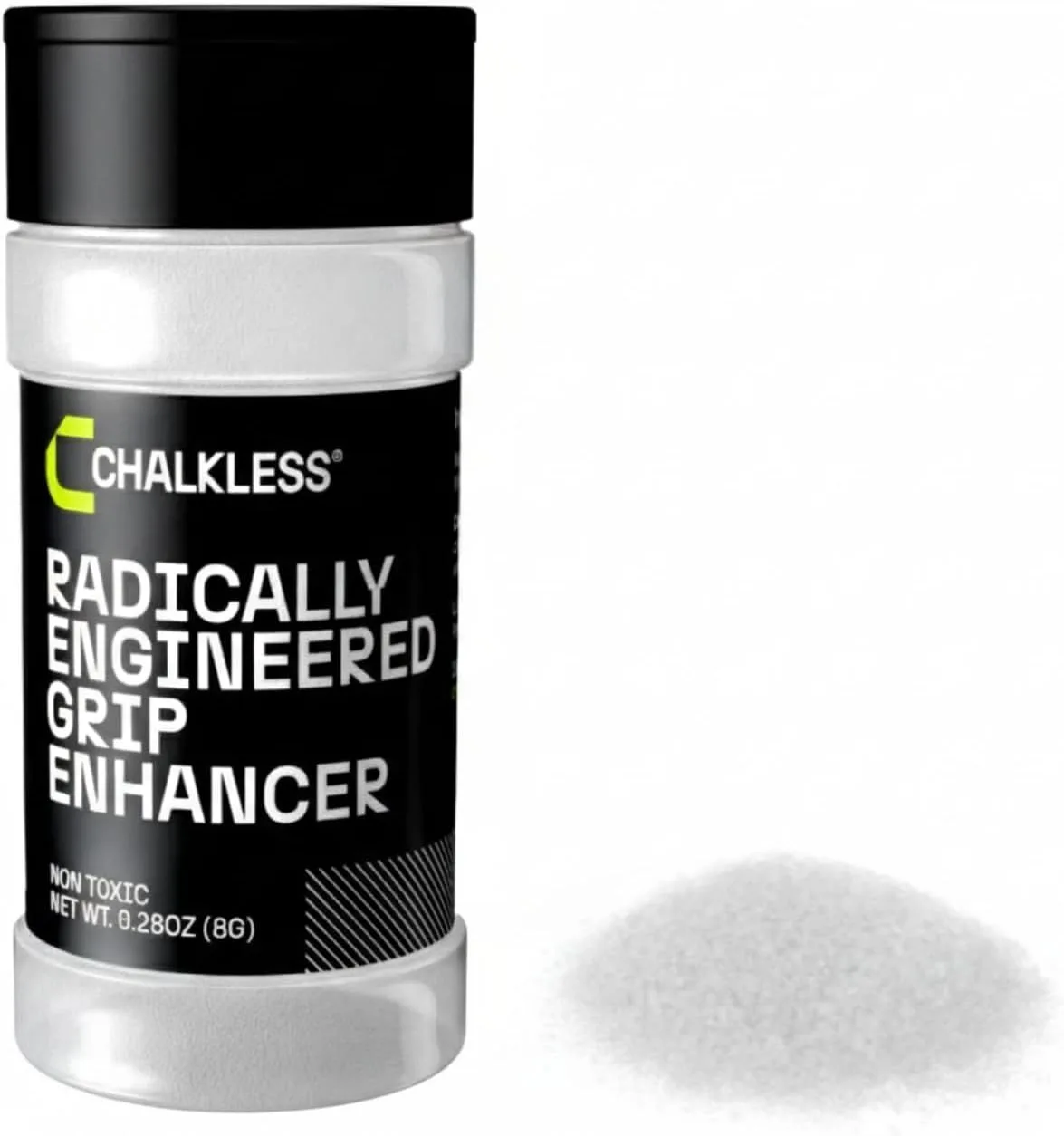
If your home gym runs all-black — black bars, black plates, black bench — the Chalkless BLACK matches the equipment aesthetic. Standard white chalk shows on every piece of dark equipment you touch. The BLACK formula provides the same silica-based grip as the CLEAR version but with a dark tint that blends into dark surfaces. At mid-range for its category, it shares the premium pricing of the CLEAR. For all-black home gym setups, the visual integration is worth the extra cost.
Read our full Chalkless BLACK review →
4. Spider Chalk White Widow 8oz — Best Grip Duration for Long Sessions
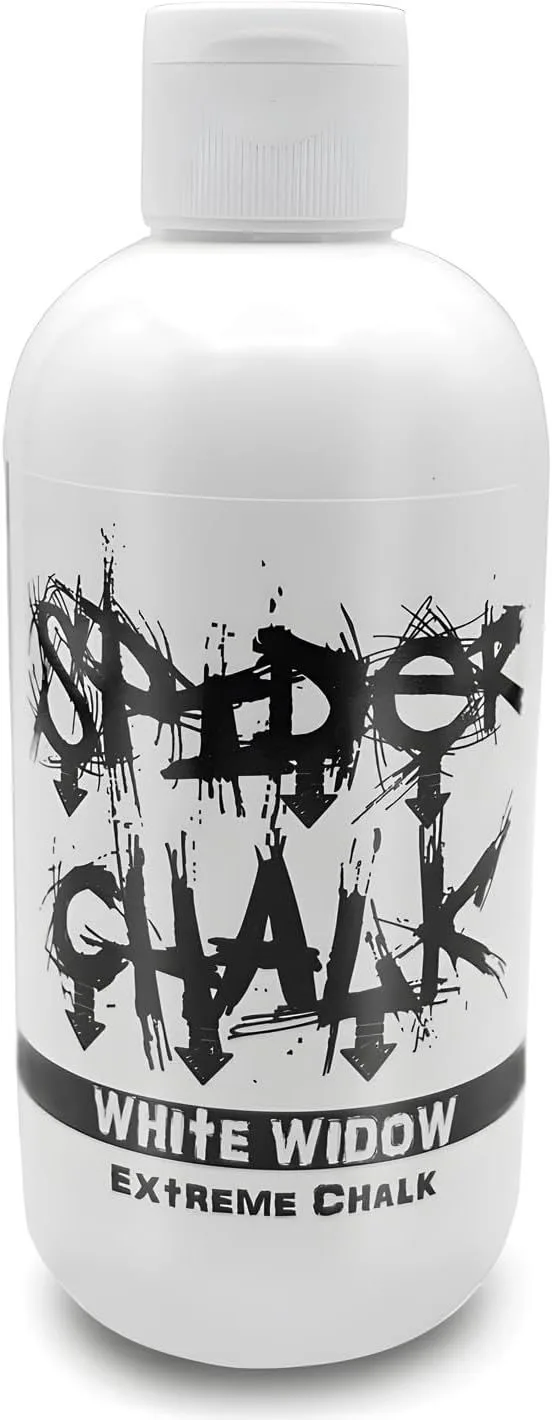
Home gym sessions tend to run longer than commercial gym visits — no commute pressure, no closing time. The White Widow's nano-resin formula provides 35-50 minutes of grip from a single application, covering even 90-minute sessions with just one reapplication. At mid-range for its category, the 8 oz bottle delivers 400+ applications. The white residue does require a post-session equipment wipe, but the extended grip duration means you spend less time reapplying and more time training.
Read our full Spider Chalk White Widow review →
5. EVMT Brands Liquid Chalk — Best Compact Option for Small Spaces
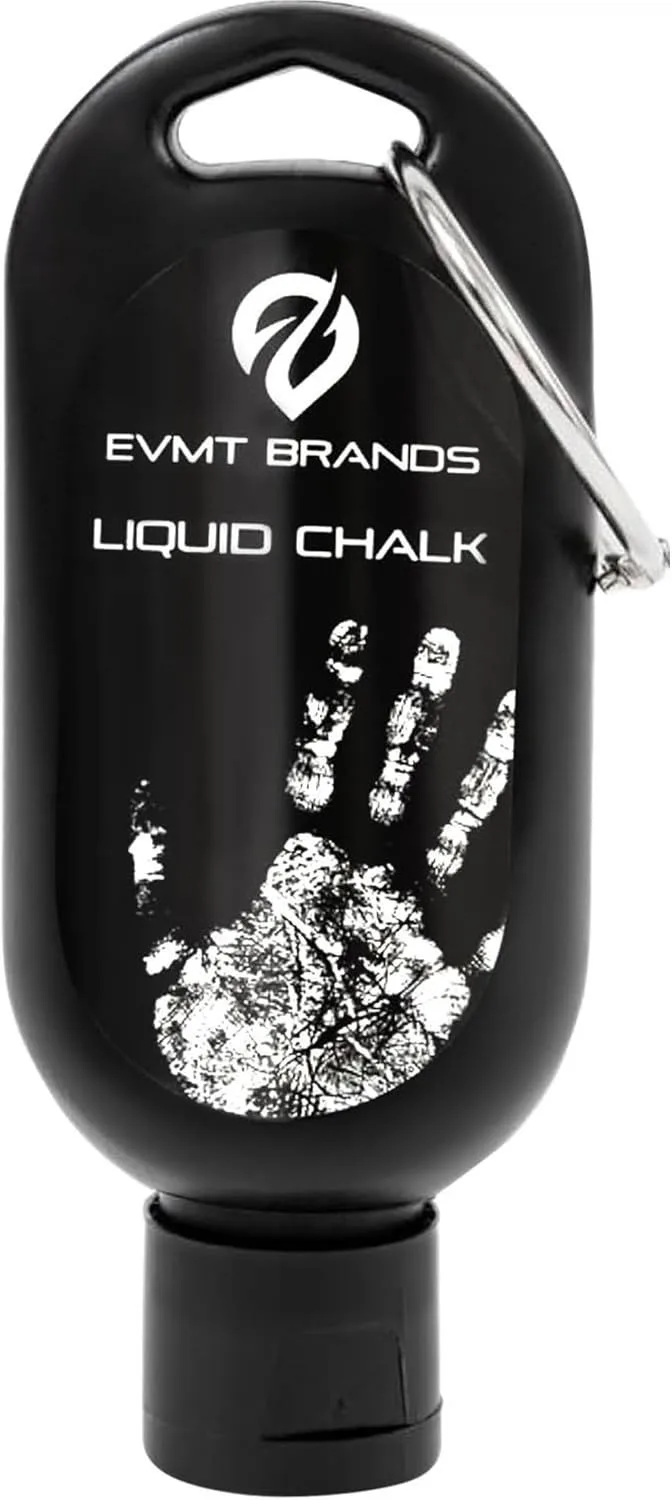
Not every home gym has shelf space for a large bottle. The EVMT 50ml fits in a drawer, on a windowsill, or clipped to a rack. At above average for its category, the small bottle is an affordable entry point if you are transitioning from block chalk and want to test the liquid format before committing to a large bottle. The 10-15 second dry time is the fastest among standard formulas, and the grip holds for 20-30 minutes — enough for most strength-focused sessions. For a solo lifter training 3-4 days per week, the 50ml bottle lasts about 6 weeks.
Read our full EVMT Brands review →
Equipment Maintenance With Liquid Chalk
Barbells and Pull-Up Bars
After each session, run a stiff nylon brush through the knurling to clear chalk residue. This takes 15 seconds per bar. Once a week, wipe the bar shaft and sleeves with a rag lightly oiled with 3-in-1 oil or a dedicated barbell conditioner. This two-step routine prevents chalk from combining with hand oils and oxidizing into a hard paste that dulls knurling grip over time. Stainless steel barbells require less maintenance than bare steel or zinc-coated bars — a damp cloth after each session is sufficient.
Dumbbells and Kettlebells
Rubber-coated dumbbells and powder-coated kettlebells are the easiest to maintain. A damp microfiber cloth removes all chalk transfer in one wipe. Chrome dumbbells show more residue and require the brush-then-oil treatment similar to barbells. Cast iron kettlebells with no coating are the most maintenance-intensive — the porous surface absorbs chalk, and regular oiling with a thin coat of mineral oil keeps the handle from developing a chalky, rough texture.
Rubber Flooring and Horse Stall Mats
Liquid chalk itself does not damage rubber flooring. The small amount of chalk that transfers from your hands to the floor through contact or drips is cosmetic, not structural. A weekly mop with warm water and a mild detergent keeps rubber mats clean. For textured mats with deep grooves, a stiff-bristle push broom before mopping dislodges chalk particles from the texture. Avoid bleach-based cleaners on rubber — they degrade the material over time.
Seasonal Considerations for Garage Gyms
Summer Heat and Humidity
A closed garage in July can exceed 100°F with humidity above 60%. Both conditions work against chalk performance. Heat increases palm sweating, and humidity slows alcohol evaporation during application. In these conditions, apply thinner layers and expect to reapply 30-40% more frequently than in a climate-controlled space. Opening the garage door improves ventilation and reduces temperature, but may introduce additional humidity depending on your climate. A box fan pointed at the lifting area helps both comfort and chalk dry time.
Winter Cold
Cold liquid chalk is thicker and harder to dispense. If your garage drops below 50°F, bring the chalk bottle inside 10-15 minutes before training so the formula returns to room temperature and flows normally. Cold hands also affect application — blood vessel constriction reduces palm surface temperature, which slows alcohol evaporation. Rub your hands together vigorously for 10 seconds before applying chalk to warm the skin surface. The good news: cold air is dry, so chalk grip duration is longer in winter than in summer.
Dust and Debris
Garage gyms accumulate dust, pollen, and outdoor debris that settles on equipment between sessions. A thin layer of environmental dust on a barbell under your chalked hands reduces grip by creating a slippery intermediary layer. Wipe your bar handles with a dry cloth before each session to remove accumulated dust. This 10-second step makes a measurable difference in grip quality — the chalk bonds to clean steel, not to a dust film on top of steel.
Chalk storage: Store liquid chalk at room temperature, upright, with the cap tightly sealed. Extreme heat (above 110°F) can cause alcohol to expand and leak from bottles. Extreme cold (below 32°F) can cause the magnesium carbonate to settle and clump. If your garage is not climate-controlled, keep the chalk bottle inside the house and carry it out for each session. A small insulated bag works as a portable storage solution.
Home Gym Chalk Questions
Does liquid chalk leave residue on home gym equipment?
Less than powder chalk, but yes — a thin white film can appear on barbells, pull-up bars, and dumbbells after use. The residue wipes clean with a damp cloth in seconds. On textured rubber flooring, chalk particles can settle into grooves and require a brush or mop to remove fully. Chalkless CLEAR and Chalkless BLACK leave zero visible residue on equipment, making them the cleanest options for home use. Standard white liquid chalk leaves visible marks on black or dark-colored equipment that are easy to clean but noticeable if you skip the post-workout wipe-down.
Will liquid chalk damage rubber flooring or horse stall mats?
No. Liquid chalk is magnesium carbonate suspended in isopropyl alcohol. The alcohol evaporates within seconds of application to your hands, and the magnesium carbonate that transfers to equipment or flooring is chemically inert. It will not degrade rubber, vinyl, powder-coated steel, or concrete. The only surface to watch is unfinished wood — chalk can settle into wood grain and leave a permanent white residue if not wiped promptly. For finished or sealed wood platforms, a damp cloth cleanup after training prevents any buildup.
How do I clean liquid chalk off a home gym barbell?
Wipe the knurling with a stiff nylon brush (an old toothbrush works) after each session. This pushes chalk out of the knurling grooves. Follow with a lightly oiled rag (3-in-1 oil or barbell oil) to condition the steel and prevent rust. For stainless steel or cerakote barbells, a damp cloth is sufficient — these finishes resist chalk buildup. For bare steel or zinc-coated bars, the brush-then-oil routine prevents chalk from mixing with hand oils and creating a paste that dulls the knurling over time.
Is liquid chalk better than gym chalk blocks for a garage gym?
For home use, liquid chalk is better in every practical way. Chalk blocks generate airborne dust that settles on every surface in the room — mirrors, TV screens, fans, speakers, vehicles parked nearby. The dust gets into HVAC systems and requires regular filter changes. Liquid chalk produces zero airborne particles because the chalk bonds to your skin during the alcohol evaporation phase. Nothing becomes airborne. The grip performance is comparable — the cleanup savings are the difference.
Can I use liquid chalk on wooden lifting platforms?
Yes. Apply the chalk to your hands, not the platform surface. The small amount of chalk that transfers from your feet or dropped bars is minimal and wipes off sealed wood easily. Unsealed plywood platforms may absorb chalk into the grain over time — seal the platform top with polyurethane or use a rubber mat section for the standing area. The alcohol in liquid chalk evaporates before it touches wood, so there is no risk of alcohol damage to the finish.
How much liquid chalk does a home gym athlete use per month?
A typical home gym lifter training 4-5 days per week uses about 30-50ml of liquid chalk per month with standard application. A 250ml bottle lasts 5-8 months for one person. Heavy sweaters who reapply mid-session may use 60-80ml per month. At that rate, a large bottle is the most economical choice — the per-ounce cost of a 250ml bottle is 40-60% lower than travel-size 50ml bottles. For shared home gyms with two lifters, a 250ml bottle lasts about 3 months.
Keep Your Gym Clean and Your Grip Strong
For most home gym athletes, the SPORTMEDIQ Pro Grade large bottle is the best starting point — affordable daily use with minimal residue. If cleanup is your top concern and you train indoors, the Chalkless CLEAR eliminates residue entirely. And if you train long sessions in a garage gym, the Spider Chalk White Widow covers 90-minute workouts with a single application.
Get Our Top 3 Picks
Get our top 3 picks for your budget — one email, then only updates.
Only when something changes. Unsubscribe anytime.