Liquid Chalk for Gymnastics: Apparatus-by-Apparatus Breakdown
Gymnastics places unique demands on grip because each apparatus has a different surface — smooth steel on high bar, textured leather on rings, suede on beam, and spring-loaded carpet on floor. A gymnast's chalk strategy cannot be one-size-fits-all. Liquid chalk provides a controlled, mess-free base coat that works across apparatus while keeping the training facility cleaner than traditional chalk buckets. This guide breaks down how liquid chalk functions on every apparatus, how it interacts with grips and guards, and which formulas suit the precision that gymnastics demands.
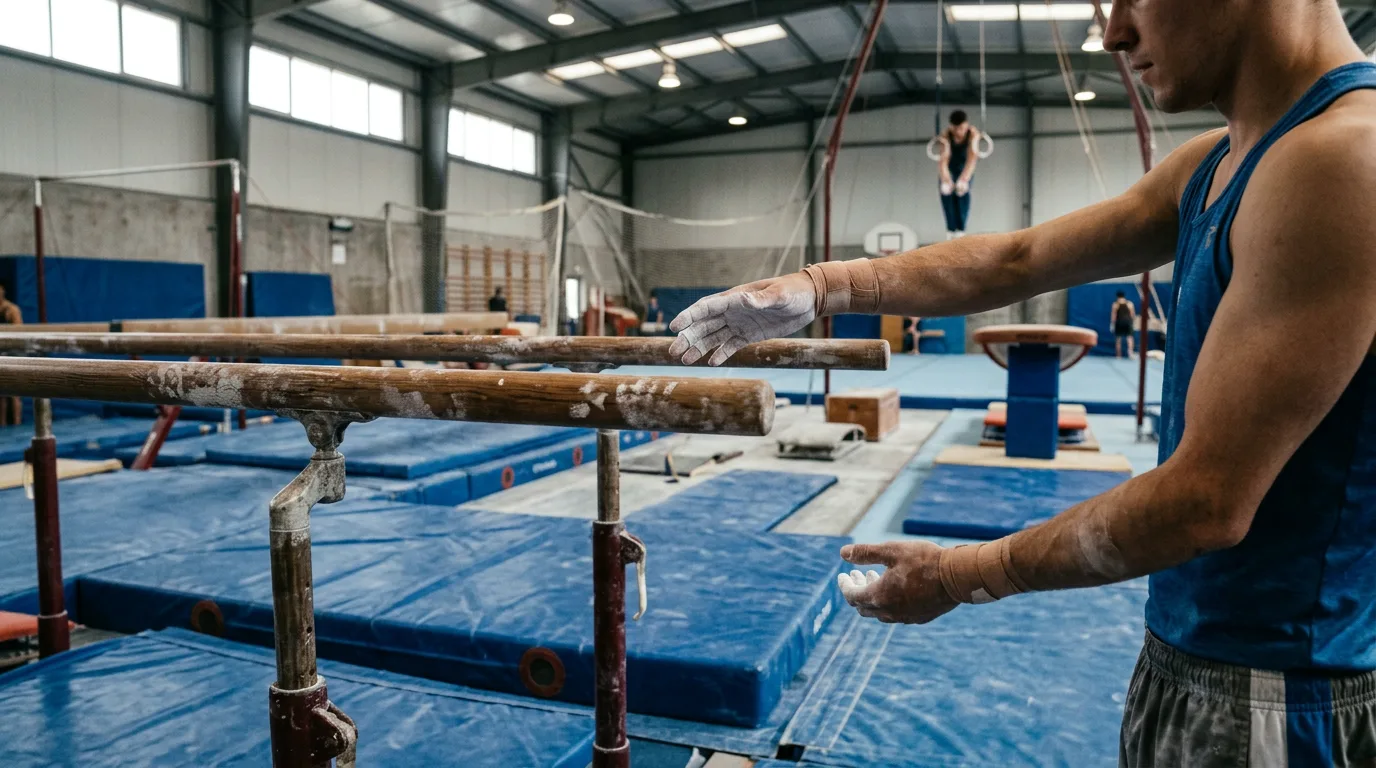
The Gymnast's Chalk Problem
Walk into any gymnastics training center and you will see chalk — on the floor, in the air, on every surface within ten meters of the apparatus. Block chalk buckets produce dust clouds that coat cameras, irritate airways, and settle on beam surfaces where it becomes a hazard rather than a help. The chalk dust problem is so acute that many facilities run industrial air filtration specifically because of magnesium carbonate particulate.
Liquid chalk addresses the airborne particle issue directly. Because the magnesium carbonate is suspended in alcohol and applied wet, there is no dust generation during application. The chalk bonds to the skin when the alcohol evaporates, leaving a thin film rather than loose particles. For facilities managing air quality, this matters — especially those with younger athletes whose developing lungs are more sensitive to sustained particulate exposure.
But the switch from block chalk to liquid is not straightforward in gymnastics. Different apparatus have evolved different chalk cultures. High bar specialists want thick, visible chalk coatings. Beam workers want minimal chalk that does not contaminate the suede surface. Floor athletes want enough grip for tumbling takeoffs without slippery chalk-dusted landings. Understanding these differences is what makes liquid chalk useful rather than disruptive in a gymnastics context.
Uneven Bars and High Bar: Where Grip Is Everything
Bar events demand more from chalk than any other apparatus. Giants, release moves, and pirouettes generate centrifugal force that tries to tear your hands off the bar with every revolution. The friction between your hands — or your grips — and the steel rail is the only thing preventing a fall from two meters above the mat.
Most competitive bar workers use dowel grips, and the chalk interaction changes with grips in play. Liquid chalk applied to bare palms before putting on grips creates an anti-slip layer between skin and leather. This prevents the internal rotation that causes finger blisters — the grip stays locked to your hand position while the external leather surface contacts the bar. After putting on grips, some gymnasts apply additional block chalk to the grip exterior for maximum bar friction.
For recreational gymnasts or those training kip progressions and simple circling elements without grips, liquid chalk applied directly to palms provides sufficient friction for the skill level. The bonded film holds through 5-10 swings before needing reapplication. At higher skill levels — flyaway releases, Tkatchev elements — the forces involved typically require the grip-plus-chalk combination rather than liquid chalk alone on bare skin.
Still Rings: Grip Under Static and Dynamic Load
Rings combine the grip demands of bars with sustained static holds that bars do not require. An iron cross holds your entire bodyweight through a friction grip on wooden or plastic ring surfaces while your arms extend horizontally. A maltese hold demands the same friction at an even more demanding angle. Sweat during these multi-second holds creates progressive grip degradation that can turn a 3-second hold into a 1.5-second wobble.
The traditional rings chalk approach involves block chalk mixed with water or honey to create a paste that dries into a thick, tacky coating. This method works but is messy and time-consuming. Liquid chalk provides a cleaner alternative for training sessions where the paste method is overkill. Apply a double coat — first application, dry 30 seconds, second application, dry again — to build thickness similar to paste without the sticky mess.
For strength hold training (cross progressions, lever work, planche on rings), liquid chalk as a sole grip solution works well. These movements are slower and controlled, with less centrifugal force than swinging elements. The consistent film resists the gradual sweat buildup during 30-60 second hold attempts. For full ring routines incorporating swings into strength — the competitive rings event — the paste-and-block method typically supplements the liquid base for the dynamic portions.
Vault and Floor: The Takeoff Factor
Vault is the fastest apparatus — you sprint down a runway, hurdle onto a springboard, contact the table with your hands for a fraction of a second, and launch into the air. That hand contact on the vault table lasts approximately 0.15-0.30 seconds. In that window, your hands must grip the leather surface firmly enough to redirect your momentum upward and generate rotation for the flip or twist.
A sweaty palm hitting the vault table produces a micro-slide that costs both height and control. The difference is measurable: vault coaches report that consistent chalk application correlates with 5-10cm higher post-flight peaks in training because the gymnast pushes off the table with confidence rather than tentative contact born from past slipping experiences. Liquid chalk's thin, bonded layer provides that consistent friction without leaving thick chalk deposits on the table surface that build up between cleanings.
Floor exercise involves hands contacting the spring floor during tumbling passes — round-offs, back handsprings, and front handsprings generate hand contacts at high speed. The carpet surface of a spring floor provides some friction, but sweaty hands on carpet produce the same micro-slide as on vault. Liquid chalk on the hands addresses tumbling takeoffs. Some floor workers also apply a light coat to their feet for improved traction during dance elements and leaps, though this is more common on hard-surface training floors than on spring floors.
Balance Beam: Precision Over Power
Beam is the apparatus where chalk strategy is most counterintuitive. Heavy chalk application creates problems rather than solving them. The beam surface is covered in suede or synthetic chamois — a material designed to provide balanced friction for bare feet. Thick chalk deposits on the beam surface reduce friction for the next gymnast who mounts, and even for the same gymnast during later portions of the routine when she steps on a chalked section.
Liquid chalk for beam is about light, targeted application. A thin coat on the balls of the feet and arches improves traction during leaps and turns without depositing visible chalk on the beam cover. For hand contacts during back walkovers and back handsprings, a light palm application provides the brief friction needed for the 0.2-second hand contact without leaving a white handprint that disrupts foot traction.
Competition beam routines last 70-90 seconds. One liquid chalk application before mounting holds through the entire routine for both hand and foot contacts. Chalk bags are not carried onto the beam — there is nowhere to put one — so the pre-mount application must last. This is where liquid chalk's bonding advantage over loose chalk is most apparent. Block chalk applied to feet before beam falls off during the mount and first few elements. Liquid chalk's bonded layer survives the full routine.
Top Liquid Chalk Picks for Gymnasts
Gymnastics needs a formula that applies thin, dries fast, and does not leave excessive residue on apparatus surfaces. These picks match those requirements across different apparatus demands and training frequencies.
SPORTMEDIQ Pro Grade Liquid Chalk — Best for Bar Work
High magnesium carbonate concentration that creates a firm, dry base under dowel grips. The formula is thick enough to build a solid friction layer on palms without multiple coats. At premium, the large bottle suits daily training use where a gymnastics team shares a single bottle at the chalk station.
Check Price on AmazonEVMT Brands Liquid Chalk — Best for Vault and Floor
Quick-drying, thin application that suits the fast hand contacts of vault and tumbling. Does not leave thick deposits on the vault table or spring floor surface. The compact size at affordably priced works for gym bags and competition travel kits where space is limited and the bottle needs to survive being thrown into a bag between events.
Check Price on AmazonMedi Chalk Liquid Chalk — Best for Beam and Sensitive Skin
Gentle formula that applies thin — ideal for beam where heavy chalk deposits are counterproductive. The low-residue finish leaves minimal marks on suede beam covers and spring floor carpet. At budget-friendly, it suits gymnasts with sensitive skin who train daily and need a formula that does not dry out their hands over multiple weekly sessions.
Check Price on AmazonLiquid Grip 8oz Bottle — Best for Rings Training
The grippy formula bonds well for the sustained static holds that rings demand. Can be double-coated to build thickness approaching traditional chalk paste without the mess. At premium, the bottle size handles the higher volume needed for ring work where thicker application is standard. Works well under leather ring grips.
Check Price on AmazonHand Care and Skin Management for Gymnasts
Gymnastics is one of the hardest sports on hands. Bar work creates calluses along the finger base and palm crease. Rips — where a callus tears off during a giant or flyaway — can sideline a gymnast for a week or more. Liquid chalk's alcohol base adds another stressor to already-taxed skin. Managing this requires a deliberate post-training routine.
After training, wash hands with mild soap and warm water to remove all chalk residue. Apply a gymnastics-specific hand balm or a general moisturizer with beeswax or lanolin — these ingredients seal moisture into the skin without leaving a greasy film that persists to the next session. Avoid petroleum jelly the night before training because it creates a barrier that chalk cannot penetrate, making your next chalk application ineffective.
Callus management is the most important long-term hand care practice. File calluses flat after showers using a pumice stone or fine-grit sandpaper. Never tear calluses — this creates uneven, vulnerable skin that is more likely to rip during bar work. Liquid chalk bonds more uniformly to smooth, flat calluses than to rough, peaked ones. A rip prevention strategy built around flat calluses, daily moisturizing, and proper chalk application keeps gymnasts on the apparatus instead of nursing torn hands.
Training Facility Considerations
Gymnastics facilities face unique chalk management challenges. A busy gym with 50-100 athletes per session generates substantial chalk dust from traditional block chalk buckets. This dust settles on beam surfaces (creating hazards), coats video equipment (impairing training film review), and accumulates in HVAC systems (increasing maintenance costs and reducing air quality).
Several competitive gymnastics programs have transitioned to liquid chalk for daily training, reserving block chalk for competition preparation and specific apparatus needs. The reported benefits include 40-60% reduction in facility cleaning time, measurably improved air quality readings, and reduced chalk consumption per athlete. The upfront cost per ounce is higher for liquid chalk, but the reduced waste (no chalk dust lost to air) and reduced cleaning labor often offset the product cost difference.
For home gymnastics setups — garage beam, backyard high bar — liquid chalk is the clear choice. No dust clouds in enclosed spaces, no white residue on basement equipment, no chalk tracked through the house on feet and clothes. The mess difference between block and liquid is most dramatic in residential settings where the training space doubles as living space.
Competition Day Protocol
Meet day adds logistics that training does not. Multiple events, warm-up rotations, and shared apparatus mean your chalk application must be efficient and considerate of other competitors. Liquid chalk fits the meet-day workflow because it travels easily, applies quickly, and does not contaminate apparatus surfaces for the next rotation.
Pack a travel-size bottle in your grip bag alongside your grips, wrist supports, and beam shoes. Apply during the warm-up rotation for each event — this is the standard chalk-up timing that judges and event staff expect. Do not apply during the actual competition rotation unless the rules specifically allow apparatus-side chalk use (this varies by meet level and governing body).
For all-around competitors rotating through four events in sequence, a single travel-size bottle lasts the entire meet. One application per event, four events, roughly 2ml per application — a 50ml bottle covers multiple competitions. The compact size and no-mess application make liquid chalk the most practical meet-day grip solution.
Common Questions About Chalk in Gymnastics
Can gymnasts use liquid chalk on uneven bars and rings?
Liquid chalk works well as a base coat under dowel grips on bars and rings. Apply to your palms before putting on grips — the chalk layer prevents your hand from sliding inside the grip during giants and release moves. Without grips, liquid chalk alone may not provide enough friction for high-bar giants or iron cross holds where gymnasts traditionally use a thick block chalk coating combined with honey or spray.
Does liquid chalk work on balance beam?
On beam, the primary contact points are feet and occasionally hands during acrobatic elements. Liquid chalk applied to the feet — specifically the balls and arches — improves traction on the suede beam cover without affecting the leather underneath. For hand contacts during back handsprings and aerials, a light palm application provides brief friction. Heavy application on beam is counterproductive — too much chalk makes the suede cover slippery for the next gymnast.
Is liquid chalk FIG-approved for competition?
The FIG (International Gymnastics Federation) Code of Points allows chalk (magnesium carbonate) on all apparatus. Liquid chalk falls under this rule since the active ingredient is the same. Competition-specific restrictions apply to additives — honey, rosin, and spray adhesives have separate rules per apparatus and competition level. Pure magnesium carbonate liquid chalk is universally accepted at FIG-sanctioned events.
Why do some gymnastics coaches prefer block chalk over liquid?
Block chalk allows gymnasts to build thick layers quickly — important for high bar where a visible white coating is standard practice. Block chalk also combines with water or honey to create a tacky paste for rings. Liquid chalk applies a thinner, more uniform coat that works differently. The preference is often about the amount of chalk transferred rather than the grip quality. Many coaches now recommend liquid as the base with block for supplemental buildup on specific apparatus.
How does liquid chalk interact with gymnastics grips and guards?
Apply liquid chalk to your palms before putting on dowel grips. The chalk creates friction between your skin and the inside of the grip, preventing internal slippage that causes blisters on the fingers. Some gymnasts also apply a thin coat to the outside of leather grips. On beam guards and vault finger supports, liquid chalk underneath keeps the guard from shifting during high-impact landings.
Should young gymnasts use liquid chalk or block chalk?
For gymnasts under 10, block chalk is often simpler — they dip their hands in the chalk bucket and go. Liquid chalk requires a 30-second drying period that younger athletes sometimes do not wait out. For older juniors and teens training compulsory and optional routines, liquid chalk is appropriate as a base coat, particularly on vault runway approaches where sweaty hands cause hesitation before the horse. Adult supervision during application is recommended for any athlete under 12.
Chalk Up for Every Apparatus
From bar giants to beam turns, the right liquid chalk keeps your grip consistent without the dust and mess of traditional chalk buckets. Start with our top pick for gymnastics training.
Check Price on AmazonGet Our Top 3 Picks
Get our top 3 picks for your budget — one email, then only updates.
Only when something changes. Unsubscribe anytime.