Liquid Chalk for Climbing: Indoor, Outdoor, and Competition
Climbing is a sport where the difference between sending and falling often comes down to a few millimeters of skin friction on a hold. Liquid chalk creates a bonded magnesium carbonate layer on your fingertips that resists moisture better than loose powder, leaves less residue on holds and rock surfaces, and eliminates the chalk cloud that hangs in indoor gym air. This comprehensive guide covers bouldering, sport climbing, and trad — explaining where liquid chalk excels, where a chalk bag still wins, and which formulas match each climbing discipline.
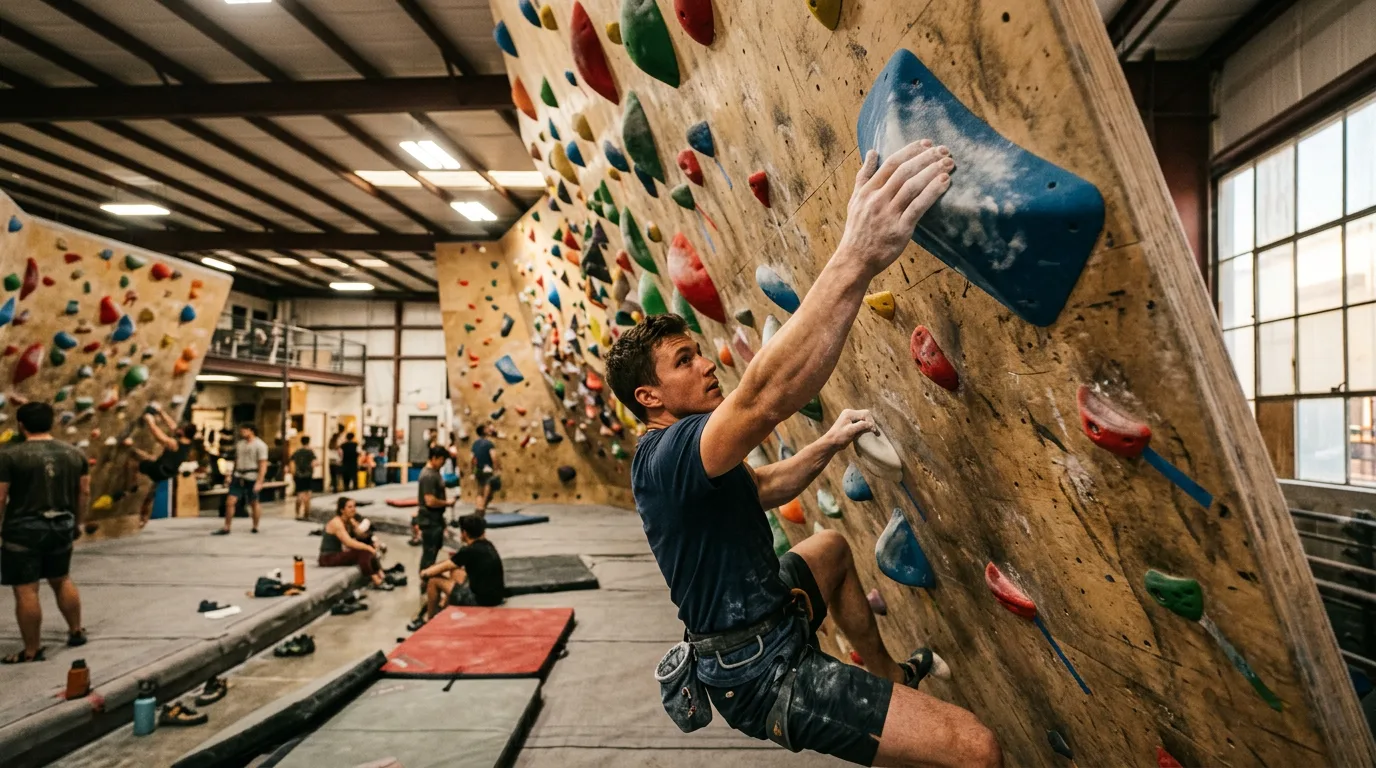
Liquid Chalk Fundamentals for Climbers
Every climber knows standard chalk — the white powder that coats your hands, fills your chalk bag, and settles in a fine layer over everything within a 3-meter radius. Liquid chalk delivers the same active ingredient (magnesium carbonate) through a different mechanism. The magnesium carbonate is suspended in isopropyl alcohol. When applied, the alcohol evaporates in 10-25 seconds, bonding the chalk particles directly to your skin's surface texture.
This bonding is the fundamental difference. Loose chalk sits on top of your skin and transfers to everything you touch — holds, rock, clothing, your belayer. Liquid chalk locks into the ridges and pores of your skin, so more of the chalk stays on your hands where it belongs. The result is a longer-lasting grip with less chalk transfer to climbing surfaces.
For climbers, the implications are practical. Less chalk on holds means less buildup that actually reduces friction on plastic holds in the gym. Less chalk on rock means better environmental ethics at outdoor crags. Longer-lasting grip means fewer chalk breaks mid-route. And zero airborne dust means climbing gyms can maintain better air quality for both climbers and staff.
Discipline Breakdown: Bouldering, Sport, and Trad
Bouldering
Bouldering is the ideal use case for liquid chalk. Problems are short — 4-10 moves on average — and each attempt starts from the ground. You can apply fresh chalk before every attempt without the inconvenience of dipping into a chalk bag mid-problem. A single application lasts through multiple burns on the same problem, and the bonded layer holds up even as your hands warm up from repeated attempts.
At indoor bouldering gyms, liquid chalk is often the preferred format. Gym owners appreciate the absence of chalk dust, and many facilities that have banned loose chalk still allow (or encourage) liquid alternatives. For competition bouldering, liquid chalk is standard among athletes in the isolation zone — you apply before walking to the wall, and the clock starts with your grip already set.
For outdoor bouldering, liquid chalk reduces the visible chalk marks on rock that some climbing communities find objectionable. You will still leave some residue — any chalk does — but the transfer is measurably less than loose powder. Carry a brush regardless, and clean your tick marks after each session.
Sport Climbing
Sport climbing introduces the time factor. A 25-meter route at a moderate grade takes 5-15 minutes to climb. At your redpoint level, the pump builds with each clip, and sweaty hands compound the difficulty. Liquid chalk applied at the ground provides a moisture-resistant base layer that lasts through most single-pitch sport climbs without a mid-route chalk break.
The hybrid approach dominates among serious sport climbers: liquid chalk as a base layer on the ground, plus a small chalk bag on the harness for mid-route touch-ups. The liquid base handles the moisture component — your hands stay drier at the surface even as you sweat. The loose chalk provides a quick dry-friction boost at rest stances before crux sequences. This combination outperforms either format alone.
For onsight attempts, where every second of rest matters, liquid chalk is faster than fumbling with a chalk bag at a no-hands rest. You apply once on the ground, your grip is set for the climb, and you avoid the time cost of chalking mid-route. Some climbers report that eliminating chalk breaks on onsight attempts allowed them to move through marginal rest positions faster, before the pump arrived.
Trad Climbing
Trad climbing has the longest duration of any discipline, with multi-pitch routes lasting hours. Liquid chalk alone cannot cover a full multi-pitch day — you will need a chalk bag for the sustained effort. But liquid chalk still plays a role as the ground-level base layer and as a supplement at belay stations between pitches.
At the base, apply liquid chalk to set the moisture barrier before starting pitch one. At each belay, consider reapplying if conditions are warm or the next pitch is a crux. The liquid layer resets your hand surface and provides a fresh foundation for the loose chalk you will use mid-pitch. The small form factor of a 50ml travel bottle fits in a harness gear loop or a small crack in the anchor area.
Indoor vs Outdoor: Different Chalk Demands
Indoor and outdoor climbing present different surfaces, conditions, and etiquette expectations. Your chalk approach should change accordingly.
Indoor climbing walls use polyurethane or fiberglass holds with textured surfaces. These holds are engineered for friction, and chalk enhances that built-in texture. But excessive chalk buildup on indoor holds actually reduces friction — the chalk fills in the texture that provides grip. Liquid chalk deposits less material per application than loose powder, which keeps holds cleaner and grippier for longer. Many indoor climbers report that their gym sessions improved after switching from loose chalk because the holds felt grippier with less buildup.
Outdoor climbing surfaces vary enormously. Sandstone, granite, limestone, basalt, and schist all have different textures, porosities, and friction coefficients. The choice between liquid and loose chalk depends partly on the rock type. Smooth limestone pockets and polished granite slopers demand maximum friction — apply liquid chalk heavier on these surfaces. Rough sandstone and sharp granite edges are inherently grippy and require only a light application.
Temperature affects chalk performance more than most climbers realize. Cold rock (below 10°C/50°F) is naturally grippier because sweat production drops. In cold conditions, a light liquid chalk application is often sufficient for the entire session. Hot rock (above 30°C/86°F) compounds the sweat problem — your hands are wet, the rock radiates heat into your skin, and chalk degrades faster. In hot conditions, apply heavier and reapply more frequently.
Top Chalk Formulas for Climbers
Climbing values different properties than gym lifting. Climbers need fast dry times (you are about to grab a hold), moderate tackiness (too much stick hinders dynamic movement), and minimal hold transfer. These five products align with those priorities.
1. Spider Chalk Black Widow — Best for Committed Climbers
Black Widow's Grip-Lock Technology with nano-resins delivers 40-55 minutes of continuous grip, which covers multiple burns on a boulder problem or a full sport climbing pitch with margin. The compact 4 oz bottle fits in a chalk bag pocket or harness loop. Made in the USA with skin-friendly ingredients that do not crack fingertip skin during multi-day climbing trips.
At mid-range, this is a mid-range option. With 588 reviews at 4.5 stars, the climber community has validated the formula. The nano-resin bond outlasts basic magnesium carbonate on extended sessions, which is where less expensive formulas start to break down.
Read our full Spider Chalk Black Widow review | Check Price on Amazon
2. EVMT Brands Rock Climbing Variant — Best Budget Climbing Chalk
EVMT offers a "Rock Climbing" formula variant specifically tuned for climber needs — a faster dry time and lighter residue than their weightlifting version. The 50ml bottle clips to a harness or chalk bag zipper. At affordably priced, the cost of entry is lower than most climbing-specific chalk products.
Over 3121 reviews at 4.6 stars, with thousands of those coming from the climbing community specifically. Grip duration of 25-35 minutes is adequate for bouldering sessions and single-pitch sport climbing. For longer outings, bring a chalk bag as a supplement.
Read our full EVMT Brands review | Check Price on Amazon
3. WARM BODY COLD MIND — Best for Clean Application
The 100% pure magnesium carbonate formula with zero additives produces the cleanest feel of any liquid chalk we tested. No rosin, no tackifiers, no fragrance — just chalk and alcohol. For climbers who dislike the sticky residue that rosin-enhanced products leave on holds, this is the purist option. The twin 50ml pack gives you one bottle for indoor sessions and one for the crag bag.
Designed by Olympic champion Oleksiy Torokhtiy, the formula prioritizes clean hand feel over maximum tackiness. At mid-range for the twin pack, the per-bottle cost is reasonable. Over 1071 reviews at 4.6 stars, with strong endorsement from the Olympic lifting community and growing adoption among climbers who value minimal hold contamination.
Read our full WARM BODY COLD MIND review | Check Price on Amazon
4. Chalkless CLEAR — Best for Chalk-Banned Facilities
Some climbing gyms have banned all visible chalk — liquid included. Chalkless CLEAR's silica silylate formula provides grip without any white residue. Your hands look and feel dry without any visible chalk on holds, hands, or clothing. At top-tier for 8g, the price per application is the highest in our catalog — but for the specific scenario of climbing at facilities that ban all chalk, nothing else works.
Over 826 reviews at 4.5 stars from athletes across climbing, gymnastics, and pole sports. The grip feel is different from traditional chalk — more of a dry friction than a powdery coating. Some climbers find it takes one or two sessions to adjust to the different tactile feedback.
Read our full Chalkless CLEAR review | Check Price on Amazon
5. Medi Chalk — Best Value for Gym Regulars
Medi Chalk's dual bonding agent formula with carabiner clip delivers solid grip at the lowest cost in our catalog. At budget-friendly, you can experiment with liquid chalk without commitment. The carabiner attaches directly to your harness or chalk bag for convenient access between problems.
Over 2609 reviews at 4.5 stars confirm baseline performance. Grip duration of 15-25 minutes works for indoor bouldering sessions where you are climbing, resting, and climbing again. For outdoor days or sustained sport climbing, the shorter grip window may require more frequent reapplication.
Read our full Medi Chalk review | Check Price on Amazon
Environmental Ethics: Chalk and Leave No Trace
The climbing community has a long-running conversation about chalk and its impact on rock surfaces. White chalk marks on dark rock are visible from hundreds of meters away. Tick marks on specific holds telegraph beta to other climbers (welcome at some crags, unwelcome at others). Excessive chalk buildup in cracks and on holds can permanently alter rock texture over time.
Liquid chalk sits on the less-impact end of this spectrum. Because the chalk bonds to your skin rather than sitting loosely on the surface, less material transfers to the rock with each touch. But "less" is not "none." You will still leave chalk marks on holds, especially on porous rock that absorbs chalk particles. The ethical standard is the same regardless of format: brush holds after climbing, remove tick marks before leaving, and follow local area guidelines about chalk use.
Some climbing areas, particularly in sensitive environments (national parks, protected sandstone formations, and traditional areas in the UK), restrict or discourage chalk use entirely. Check the local ethics before applying any chalk — liquid or otherwise. When chalk is restricted, alternatives like Chalkless CLEAR (which leaves no visible residue) may be acceptable, though you should confirm with local access organizations.
Skin Care for Climbers Who Use Liquid Chalk
Climbing skin is an investment. The tips of your fingers develop a thin, tough layer of skin that provides friction on holds. Too thick, and the skin glazes over and becomes slippery. Too thin, and the skin splits on sharp holds. Liquid chalk interacts with this skin cycle in ways that matter.
The alcohol in liquid chalk is a drying agent. Over a multi-day climbing trip with frequent application, the alcohol strips oils from your skin faster than your body replaces them. The result is cracked, fissured fingertips that grip worse than healthy skin and hurt on every hold. Counter this with an after-session skin care routine: wash with mild soap, apply a climbing-specific balm (ClimbOn, Rhino Skin, or Joshua Tree), and let your skin recover overnight.
On rest days, use a fine-grit sandpaper (400 grit) or a pumice stone to gently sand your fingertips. This removes the glazed top layer of skin and exposes fresh, grippy skin underneath. Combined with a balm for moisture, the sand-and-balm cycle keeps your skin in the optimal zone: tough enough to handle sharp rock, thin enough to provide maximum friction, and hydrated enough to resist cracking.
Climber Questions About Liquid Chalk
Can liquid chalk fully replace a chalk bag for outdoor climbing?
Does liquid chalk leave visible marks on outdoor rock?
Is liquid chalk better for indoor or outdoor climbing?
How does rock type affect liquid chalk performance?
Why do some climbing gyms ban loose chalk but allow liquid?
Should I chalk between every boulder problem at the gym?
Send With Confidence
Every climb comes down to the connection between your skin and the surface — whether it is a plastic hold in a gym or a limestone crimp 20 meters off the deck. Liquid chalk gives you a consistent, long-lasting grip layer that respects the rock, the gym environment, and your climbing partners. Try a bottle, find your formula, and stop wondering whether your hands will hold.
Check Price on AmazonGet Our Top 3 Picks
Get our top 3 picks for your budget — one email, then only updates.
Only when something changes. Unsubscribe anytime.