Liquid Chalk for Calisthenics: Muscle-Ups, Levers, and Advanced Bar Work
Calisthenics pushes bodyweight training into territory where grip is the limiting factor — not strength. A front lever hold demands sustained grip for 5–15 seconds at full body tension. A muscle-up requires your hands to rotate from pull to push on the bar without slipping. And planche progressions load your wrists at angles that generate surprising amounts of palm sweat. Liquid chalk addresses all three without the mess that gets you banned from public parks.
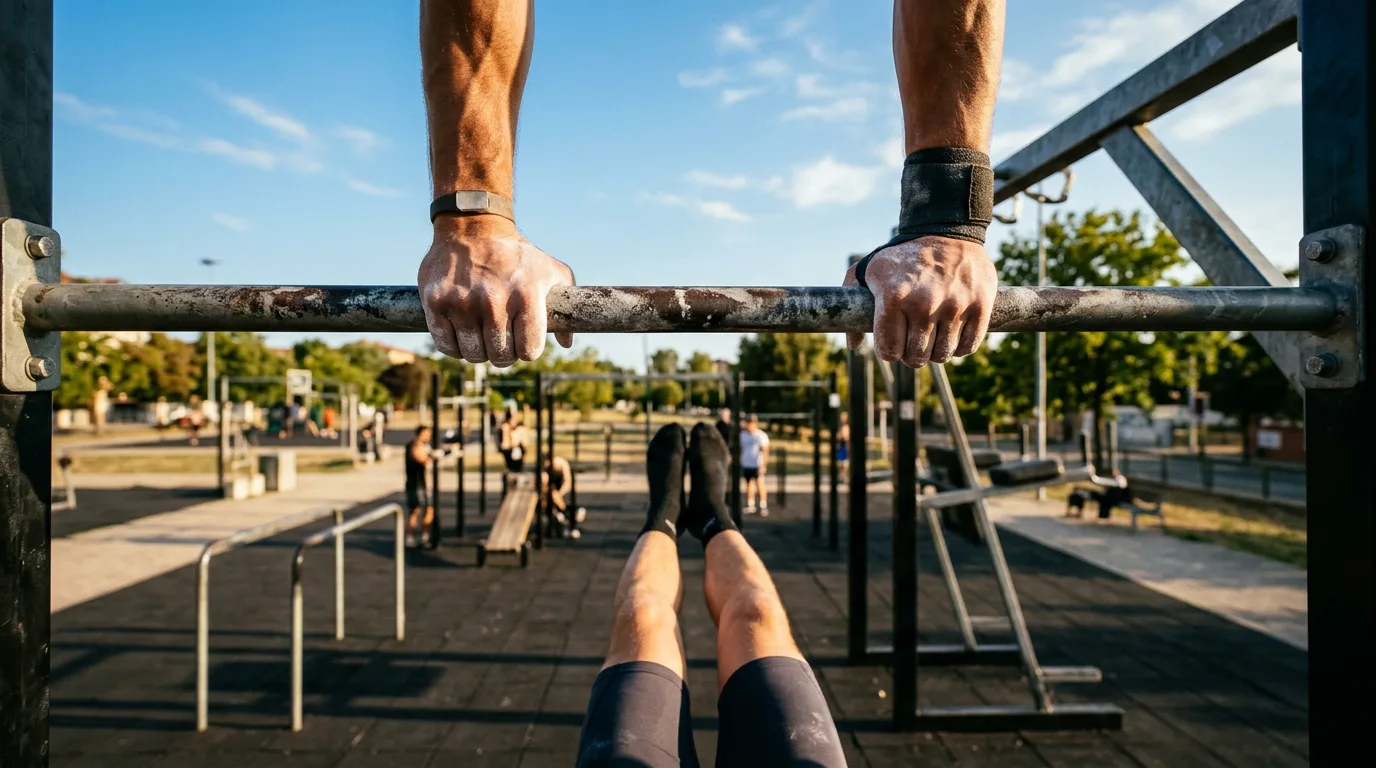
Where Grip Fails in Advanced Bodyweight Movements
Beginners lose grip during high-rep pull-up sets. Advanced athletes lose grip during static holds and dynamic transitions — two very different failure modes that require different chalk strategies.
Static Holds: The Slow Slide
During a front lever, back lever, or planche hold, your hands do not move on the bar. But your palm temperature rises as you maintain full-body tension, which triggers localized sweating at the palm surface. Over a 10–15 second hold, that moisture creates a thin film between your skin and the bar. You do not feel it happening until the bar starts to slide — and by then the hold is over.
Liquid chalk combats this by absorbing moisture as it forms. The magnesium carbonate layer acts as a buffer between your sweat glands and the bar surface, buying you an extra 5–8 seconds of secure grip on static holds. That is the difference between a 10-second front lever and a 15-second front lever for many athletes.
Dynamic Transitions: The Grip Shift
The muscle-up is the signature calisthenics movement, and the transition is where it breaks down. As you pull above the bar, your wrists must rotate from a false grip or overgrip position to a dip support position — all while your bodyweight passes over the bar. If your palms are wet, the rotation stalls. Your hands slip backward instead of rotating forward, and you either fall back below the bar or catch yourself in an awkward position that strains your wrists.
Chalk does not make the transition easier from a strength perspective. But it allows the rotation to happen smoothly because friction between your palm and the bar remains consistent through the movement arc. Dry hands rotate; wet hands stick and skip.
False grip and chalk: If you use a false grip for strict muscle-ups on rings, apply chalk to the heel of your palm and the wrist crease. The false grip loads these areas more than a standard overgrip, and they are the first places to get slippery. A thick coat on the wrist crease can add 2–3 extra reps before the false grip fails.
Movement-by-Movement Application Guide
Pull-Up Variations and Muscle-Ups
For strict pull-ups, chalk the proximal phalanges (base of fingers) and the finger creases. The bar sits in this zone for a standard overhand grip. For muscle-ups, extend the application to the full palm and the heel, since the transition requires the bar to roll across your entire hand.
For kipping and butterfly pull-ups — common in high-rep calisthenics circuits — add chalk to the fingertips. The dynamic swing motion shifts the bar toward the distal phalanges at the bottom of the kip, and sweaty fingertips are why the bar escapes during rep 15 of a fast set.
Front Lever and Back Lever
Both levers load your grip in a support position where your bodyweight hangs below the bar. The grip demand is moderate compared to a heavy deadlift — you are holding your bodyweight, not 2–3x bodyweight. But the duration is the challenge. Apply a thin, even coat across the full palm. Thick applications are wasted on static holds because the excess chalk flakes off as your hands warm up.
Planche Progressions
Planche work on parallettes or the floor loads your wrists at extreme extension angles. The contact surface is the heel of your palm and the base of the fingers. Apply chalk to these two areas specifically. The fingertips do not contact the surface during a planche, so chalking them wastes product.
On the floor, liquid chalk also prevents your hands from sliding on smooth surfaces. This is one of the few movements where chalk improves floor grip rather than bar grip.
Human Flag and Other Advanced Holds
The human flag splits your grip into a push hand (top) and a pull hand (bottom) on a vertical pole. The bottom hand bears most of the lateral load and slips first. Apply a thick layer of chalk to the bottom hand — specifically the thumb pad, index finger, and palm center where the pole sits. The top hand needs less chalk because it is primarily pushing, and the contact point is the heel of the palm against the pole.
Best Liquid Chalk for Calisthenics Athletes
Calisthenics athletes need portable chalk (training happens at parks, gyms, and home setups), fast dry times (you chalk between sets, not between exercises), and formulas that do not leave heavy residue on bars and rings. These five options cover the range from budget to premium.
1. Spider Chalk Black Widow 4oz — Best for Advanced Bar Athletes
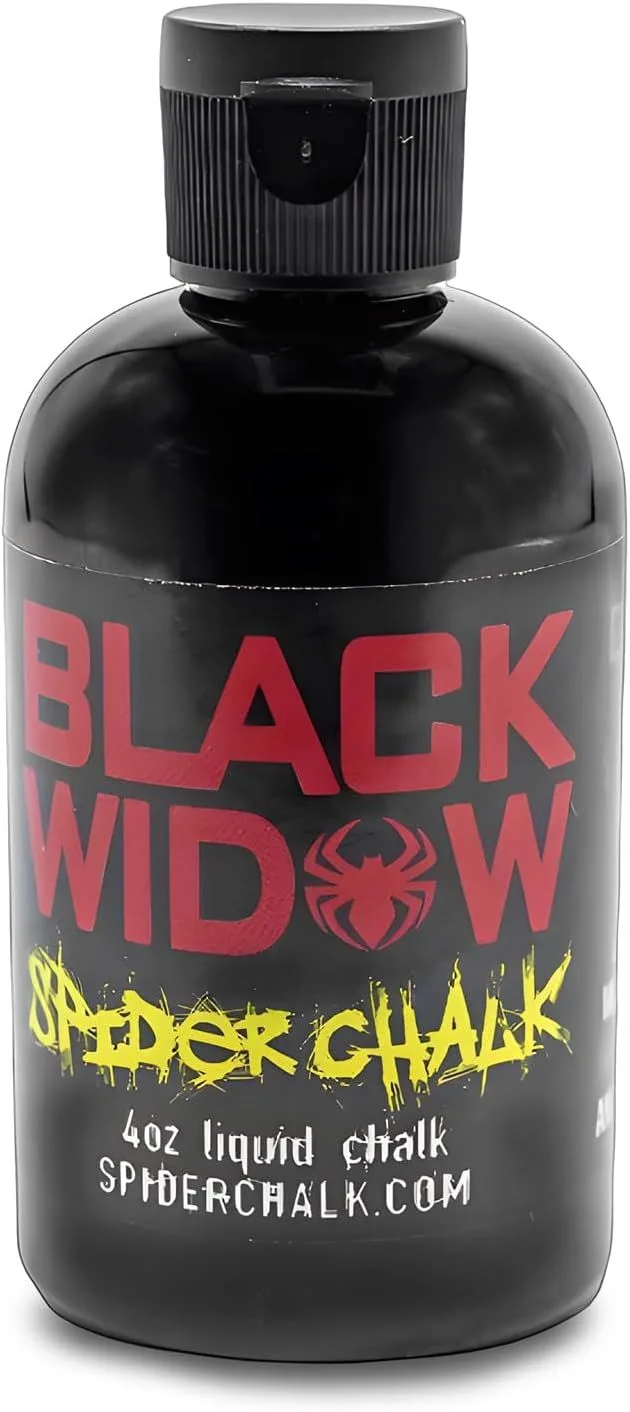
The Grip-Lock Technology in Spider Chalk's Black Widow provides 40–55 minutes of continuous grip — enough for an entire skills session without reapplication. The 4 oz size fits in a park workout bag, and the nano-resin formula creates a tackier grip than standard magnesium carbonate products. For athletes working on muscle-ups, levers, and flags where grip duration is the limiting factor, this is the top pick.
At one of the priciest in its class, it is a mid-range investment with a longer grip duration than competitors at the same size.
Read our full Spider Chalk Black Widow review →
2. EVMT Brands Liquid Chalk — Best All-Around Value
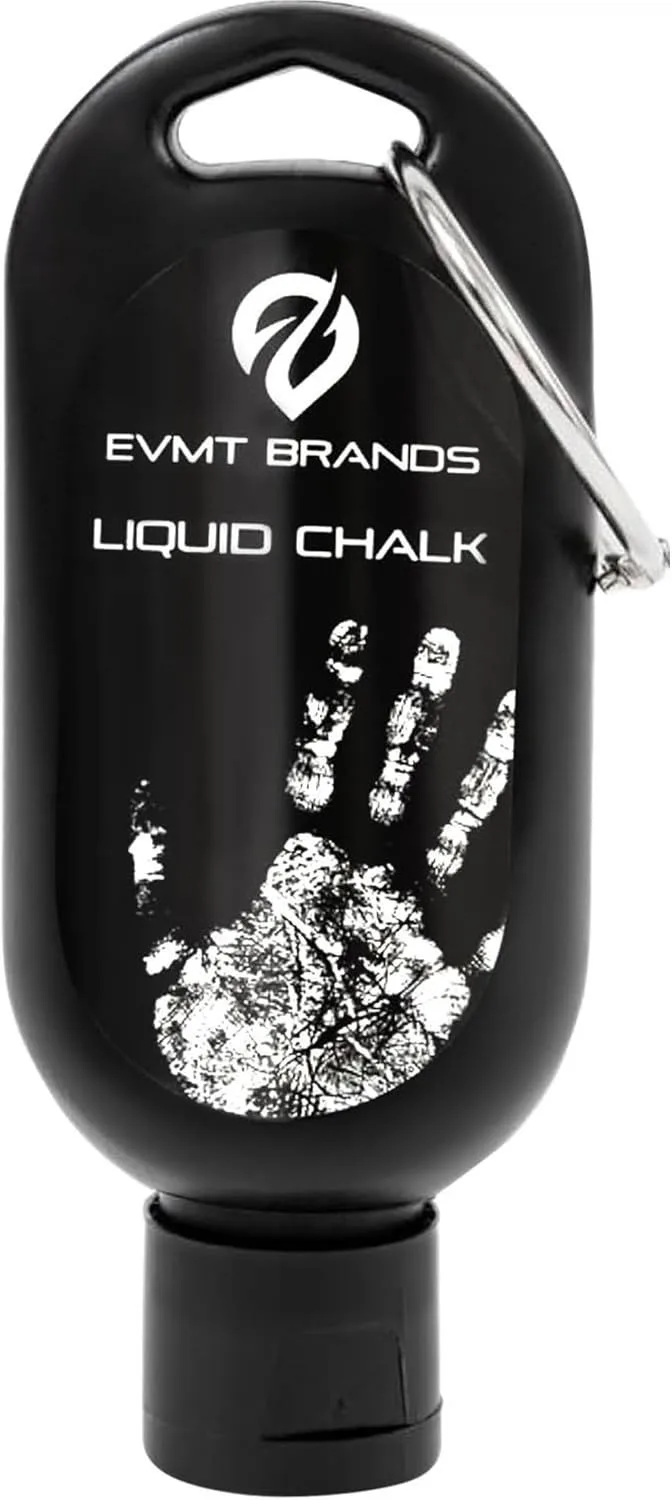
EVMT's 50ml bottle is the most-reviewed liquid chalk on Amazon with 3,100+ ratings across multiple sport variants. The quick 10–15 second dry time is ideal for circuit-style calisthenics where you are moving between stations with short rest. At above average for its category, it is an easy trial for athletes who have never used chalk for bodyweight training.
Read our full EVMT Brands review →
3. PowerGrip 50ml Travel Liquid Chalk — Best Extended Grip Formula
PowerGrip's honey and rosin blend provides a secondary tacky layer after the initial chalk wears off. For long park sessions — 60+ minutes of mixed bar work, ring work, and floor skills — this backup layer prevents the sudden grip drop-off that basic formulas cause around the 25-minute mark. The 50ml bottle is compact and the formula feels like real chalk after drying.
At mid-range for its category, it costs more per ml than budget options, but the extended grip justifies the difference for serious athletes.
Read our full PowerGrip 50ml review →
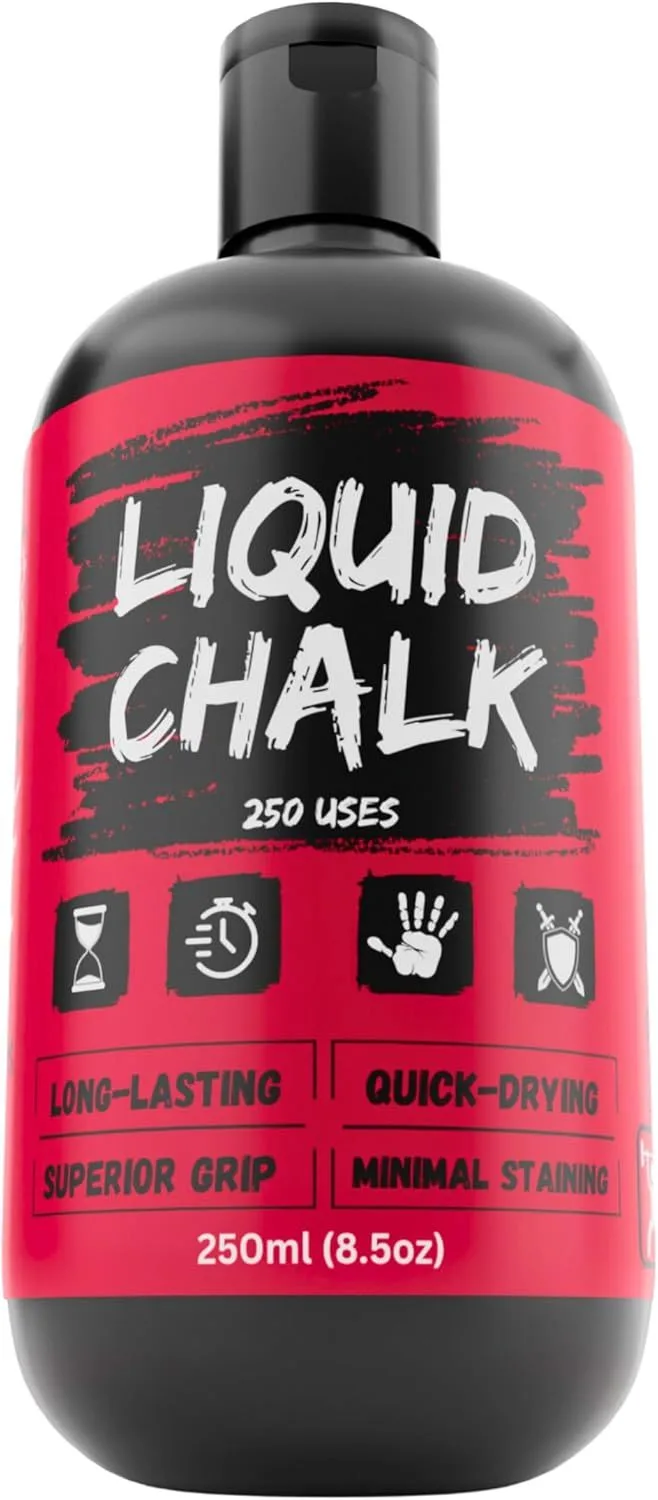
4. SPORTMEDIQ Pro Grade Liquid Chalk — Best for Home Setup
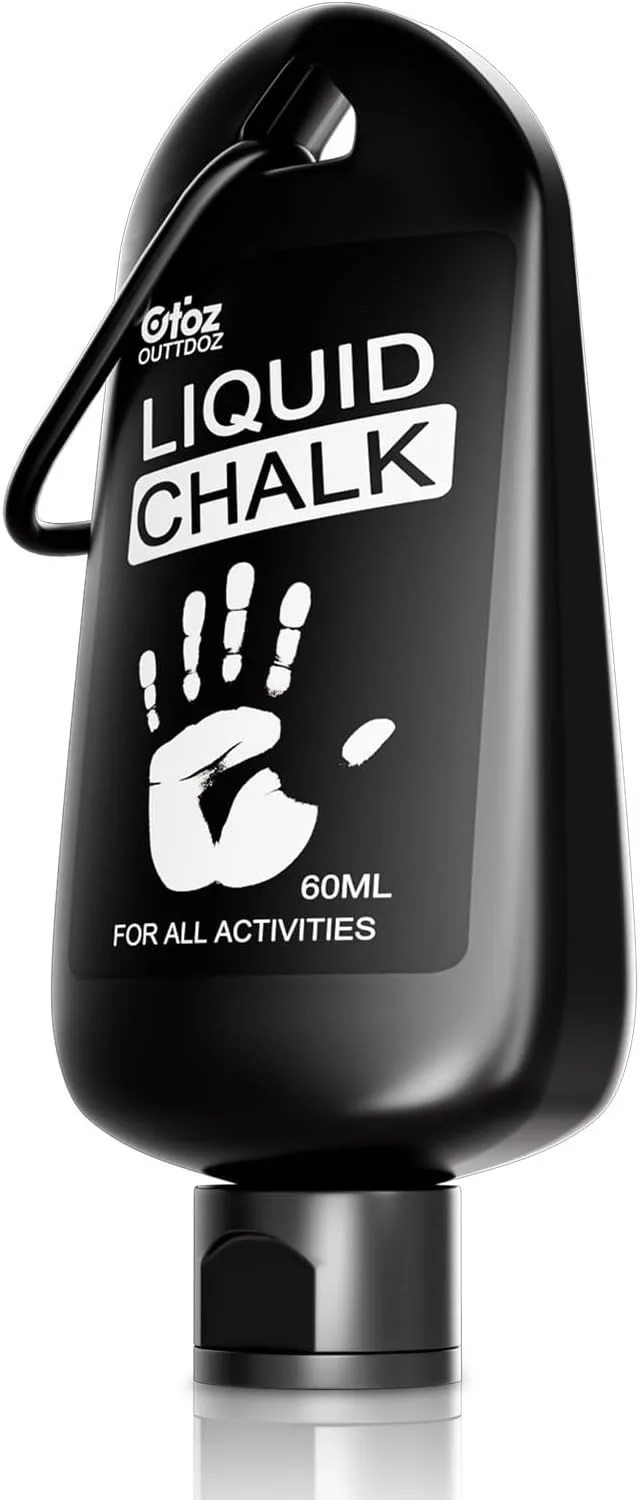
If you train calisthenics at home — pull-up bar, rings, parallettes — the SPORTMEDIQ's large 8.5 oz bottle stays next to your setup and lasts months. The lotion consistency applies evenly without dripping, which matters when you are chalking up next to living room furniture. The light fragrance is a bonus for indoor training.
At mid-range for its category, it is the best volume-per-dollar option for athletes who use chalk daily.
Read our full SPORTMEDIQ Pro Grade review →
5. Chalkless Grip Enhancer CLEAR — Best for Residue-Free Training
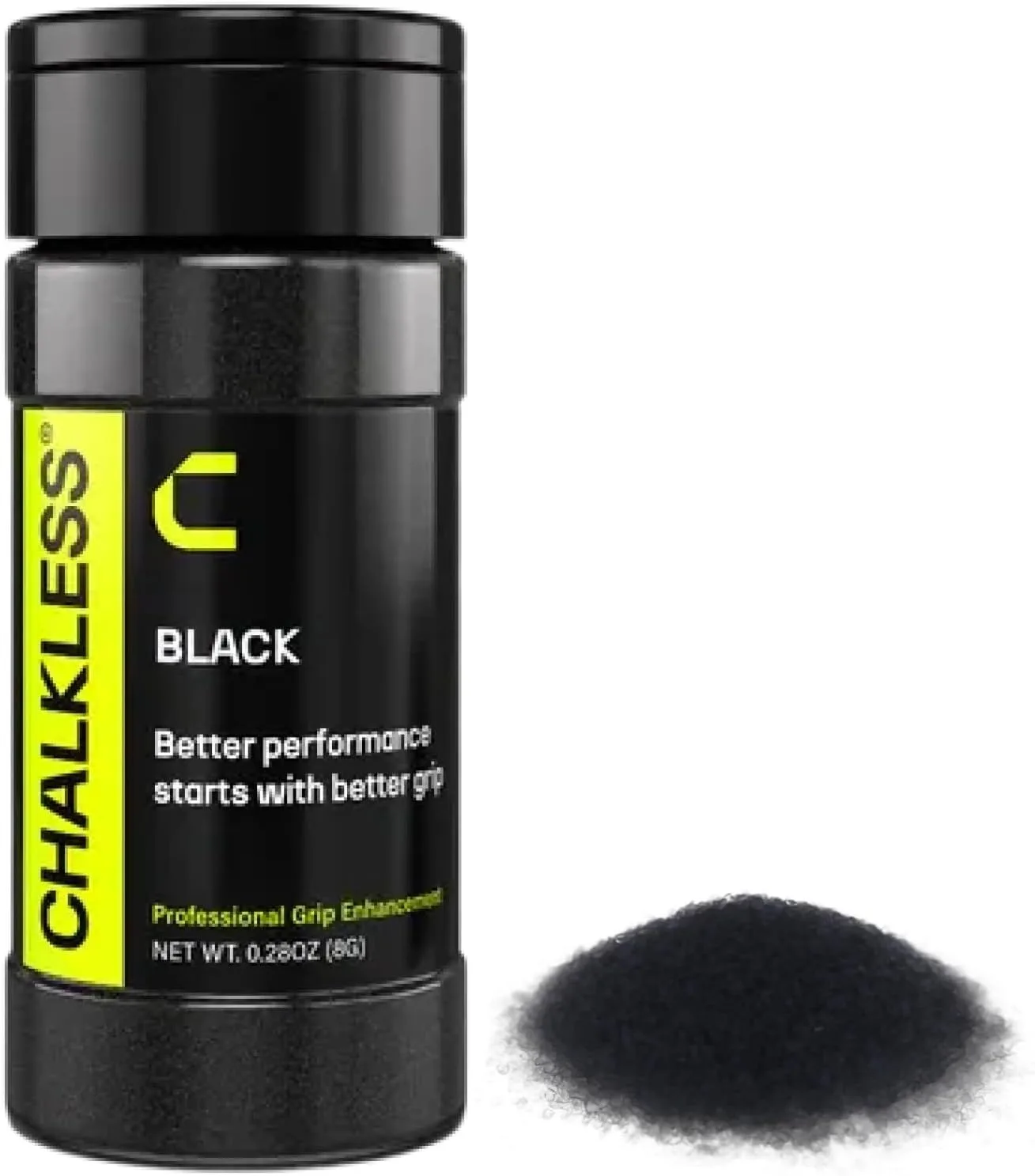
The Chalkless CLEAR is not traditional chalk — it uses a patented silica silylate compound that provides grip with zero visible residue. For calisthenics athletes who train at public parks or shared gym equipment and want to leave bars and rings completely clean, this is the only option that delivers real grip without any white marks.
At mid-range for its category, it is the most expensive option per gram, but the invisible formula fills a niche that no liquid chalk can match.
Read our full Chalkless CLEAR review →
Outdoor Training and Park Etiquette
Calisthenics parks are shared spaces. Powder chalk is banned at most public parks because it stains concrete, coats equipment, and triggers complaints from non-athletes. Liquid chalk is the accepted alternative — it leaves minimal residue and does not create dust clouds.
Even with liquid chalk, wipe the bars with a towel after your session. A thin chalk residue builds up over multiple training sessions from multiple athletes. Taking 30 seconds to clean the bar after you finish is the difference between a park that stays open for training and one that posts a "no chalk" sign.
Protecting Your Hands During High-Rep Sets
Calisthenics athletes develop calluses differently than barbell athletes. Pull-up calluses form at the base of the fingers. Muscle-up calluses form across the mid-palm from the transition. Ring work creates calluses in the finger creases. Each callus pattern presents a different tear risk.
- File calluses flat before training. Raised callus ridges catch on the bar during dynamic movements. A pumice stone or callus shaver used once a week keeps the surface smooth enough that liquid chalk can do its job without competing against friction ridges.
- Apply chalk to dry, filed skin. Chalking over raised calluses does not prevent tears — the ridge still catches. Chalking over filed, flat calluses creates a protective layer that works with your skin instead of against it.
- Skip gloves for skill work. Gloves reduce proprioception — your ability to feel the bar position in your hand. For muscle-ups, levers, and flags, you need that feedback. Use chalk instead of gloves for any movement where bar feel matters.
Calisthenics Chalk Questions
Does liquid chalk help with muscle-ups?
Yes. The transition phase of a muscle-up — the moment your grip shifts from a pull to a push on top of the bar or ring — is where most grip failures occur. Liquid chalk keeps your palms dry through this transition, preventing the slip that causes missed muscle-ups. Apply to the full palm and the base of the fingers, not just the fingertips.
Can I use liquid chalk on gymnastic rings?
Absolutely. Rings present a unique challenge because they rotate freely, meaning your grip must control both the force and the ring orientation simultaneously. Liquid chalk dries to a uniform layer that works well on the textured surface of wooden and plastic rings. For metal rings, apply a slightly thicker coat since the smooth surface provides less natural friction.
Is liquid chalk better than grips for bar work?
They serve different purposes. Grips (leather or rubber hand guards) protect against tears during high-rep kipping movements. Liquid chalk improves friction between your skin and the bar. Many advanced calisthenics athletes use both — chalk underneath grips for maximum protection and grip on high-volume days, and chalk alone for skill work where they want to feel the bar directly.
How does liquid chalk affect skin grip on parallettes?
On parallettes — especially metal ones with smooth surfaces — liquid chalk makes a noticeable difference. The magnesium carbonate layer adds friction between your palm and the bar surface, preventing the slow slide that happens during holds like the L-sit or planche. Wooden parallettes have natural grip from the grain, so chalk helps less there but still manages moisture.
Will liquid chalk leave marks on outdoor pull-up bars?
Minimal marks compared to powder chalk. Liquid chalk leaves a faint white residue that wears off with use and rain. Powder chalk leaves visible clouds and thick deposits. If you train at public calisthenics parks, liquid chalk is the more responsible option — other athletes and park maintenance crews will appreciate the reduced mess.
How often do I reapply during a calisthenics session?
For skill-focused sessions with rest between sets, one application lasts 20–30 minutes. For high-volume circuit-style training with minimal rest, expect to reapply every 15 minutes. The constant gripping combined with sweat buildup from sustained effort breaks down the chalk layer faster than strength-focused work with longer rest periods.
Start Training with Better Grip
For most calisthenics athletes, the EVMT Brands is the low-risk starting point — affordable, portable, and proven across 3,100+ reviews. Once you experience the difference chalk makes on muscle-ups and static holds, upgrade to the Spider Chalk Black Widow for longer grip on demanding sessions.
Get Our Top 3 Picks
Get our top 3 picks for your budget — one email, then only updates.
Only when something changes. Unsubscribe anytime.