Is Liquid Chalk Allowed in Gyms? Policies & Alternatives
Most commercial gyms allow liquid chalk even when they ban powder chalk. The reason is practical: liquid chalk creates zero airborne dust, leaves minimal residue on equipment, and wipes off with a towel. But "most" is not "all," and gym policies vary widely between chains, individual locations, and management attitudes. Here is the full picture — which gyms allow it, how to ask, and what to use when the answer is no.
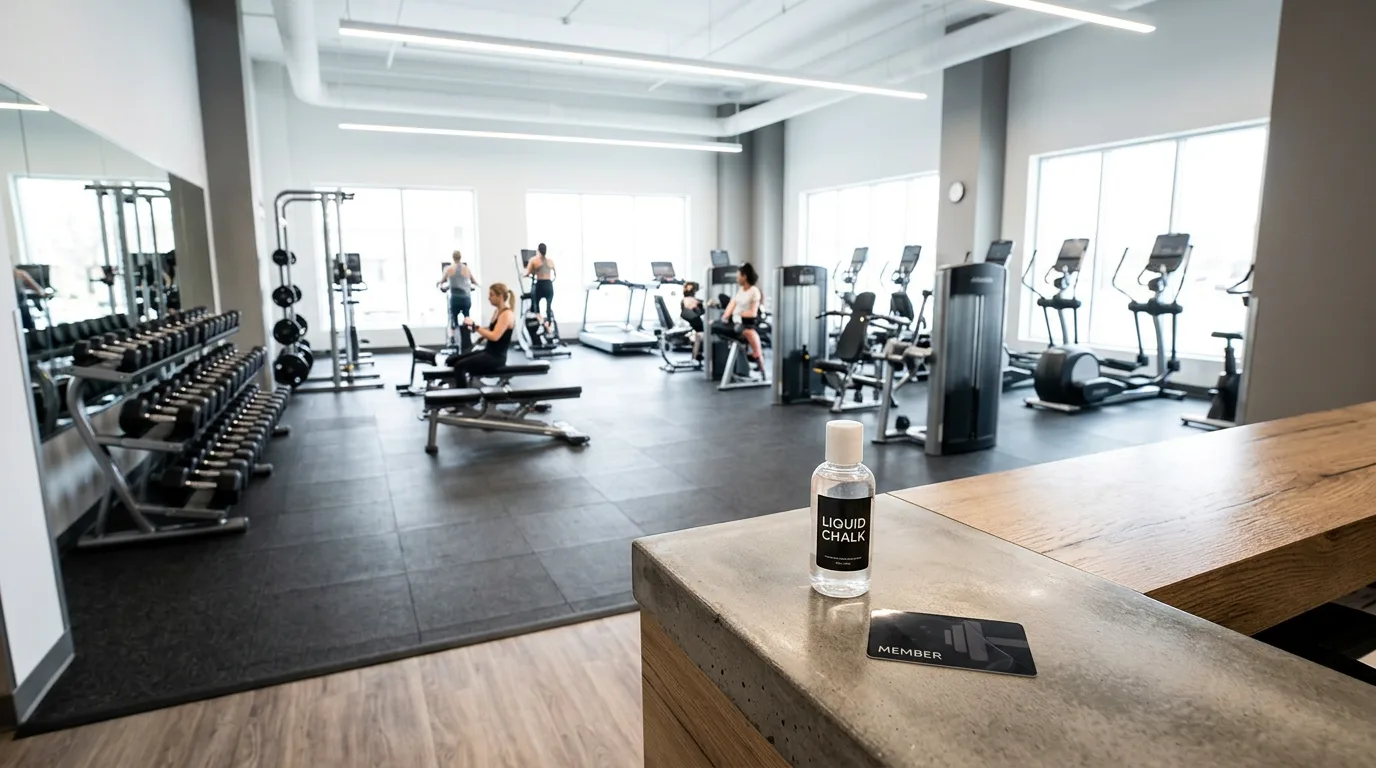
We surveyed gym policies across the largest US commercial chains and specialty fitness facilities. The picture is clearer than most athletes expect — with a few exceptions, liquid chalk is welcome in the vast majority of training environments where serious lifting happens.
Why Gyms Have Chalk Policies at All
Understanding the gym's perspective makes it easier to work within their rules — and easier to make the case for liquid chalk when the policy is ambiguous.
Cleanup costs: Powder chalk creates visible dust on every surface within a 10-foot radius. Airborne chalk settles on equipment, mirrors, floors, rubber mats, and HVAC intake filters. Cleaning chalk dust is a daily labor cost. HVAC filter replacement from chalk accumulation is a quarterly maintenance cost. For a gym operating on thin margins, these add up.
Member complaints: The general fitness population — people using treadmills, cable machines, and group fitness rooms — do not use chalk and do not want to breathe chalk dust or find white residue on machines. Commercial gyms serving a broad demographic balance the needs of serious lifters against the preferences of their larger casual membership base.
Liability: Chalk dust on smooth flooring (tile, polished concrete, vinyl) creates a slip hazard. A member slipping and falling on a chalky floor is a lawsuit waiting to happen. This concern is less relevant for gyms with rubber flooring throughout, but many commercial facilities have mixed flooring types.
Equipment wear: Powder chalk packed into cable pulleys, machine guide rails, and electronic display screens accelerates equipment wear. The chalk particles are mildly abrasive — fine in barbell knurling (where abrasion improves grip), problematic in moving mechanical parts (where abrasion increases friction and wear).
Liquid chalk solves all four of these problems. No airborne dust, minimal surface residue, no floor hazard, and no mechanical contamination. This is why the majority of gyms that ban powder chalk still welcome liquid chalk — the objections disappear when the mess disappears.
Gym Chain Policies: Who Allows What
Policies vary by chain and sometimes by individual location. What follows reflects corporate-level policies and commonly reported member experiences. Always verify with your specific location — a franchise owner may set rules that differ from the corporate default.
Liquid Chalk Typically Allowed
24 Hour Fitness: Most locations allow liquid chalk. Powder chalk is generally prohibited. Some locations with dedicated free weight areas are more permissive about chalk use in those sections. Ask at the front desk — staff are usually aware of the policy and will confirm that liquid chalk is fine.
Gold's Gym: Lifting-oriented culture. Most Gold's locations are chalk-friendly for both liquid and powder, especially in the free weight area. Some franchise locations in shopping centers or mixed-use buildings have stricter policies. The brand's heritage is bodybuilding, and chalk is part of that culture.
LA Fitness: Corporate policy leans toward allowing liquid chalk while discouraging powder. Individual location enforcement varies. Members report that liquid chalk is virtually never an issue at LA Fitness — the staff focus on towel-wiping and reracking, not chalk monitoring.
Lifetime Fitness: Despite the premium positioning and clean facility standards, most Lifetime locations allow liquid chalk. The gym caters to serious athletes alongside general fitness members, and liquid chalk fits their cleanliness standards. Some locations provide chalk in designated lifting areas.
YMCA / YWCA: Policies vary by location. Larger Y facilities with dedicated weight rooms typically allow liquid chalk. Smaller locations with limited equipment may not have a formal chalk policy. Ask — many Y staff members are unfamiliar with liquid chalk and will allow it once they see a clean demonstration.
Stricter Policies — Liquid Chalk May or May Not Be Allowed
Planet Fitness: The most restrictive major chain. Corporate policy does not officially permit any chalk products. The Lunk Alarm culture signals that heavy lifting — and the tools that accompany it — is not the target demographic. Some members report using liquid chalk without issues at certain locations, but this is not guaranteed and depends on individual staff enforcement.
Anytime Fitness: Franchise-owned locations with widely varying policies. Some Anytime Fitness gyms are essentially boutique lifting gyms that welcome all chalk types. Others are small-format facilities that restrict chalk to protect equipment in tight spaces. Always ask at your specific location.
Crunch Fitness: Policies vary by franchise location. The Crunch brand sits between budget and mid-tier, attracting both casual members and serious lifters. Some locations provide chalk; others restrict it. Liquid chalk is generally more accepted than powder at locations that have restrictions.
Always Allowed (Specialty Facilities)
CrossFit affiliates (boxes): Chalk is part of CrossFit culture. Nearly every box has a chalk bucket for communal use and welcomes personal liquid chalk bottles. Many coaches actively encourage liquid chalk as a cleaner alternative to the communal bucket (which is a bacterial breeding ground).
Powerlifting and Olympic lifting gyms: Chalk is assumed. These facilities exist for serious strength athletes who need grip assistance. Powder chalk, liquid chalk, and chalk blocks are all standard. Many of these gyms provide chalk for members.
Climbing gyms: Chalk is mandatory equipment. Every climbing gym sells chalk products and expects climbers to use them. Liquid chalk is increasingly popular at climbing gyms because it creates less dust buildup on holds and walls. Some gyms now specifically recommend liquid chalk for indoor climbing.
Home gyms and garage gyms: Your gym, your rules. No policy to worry about. Liquid chalk is still the better choice for home gyms because it protects your equipment from the dust buildup that powder creates — and you are the one who has to clean it.
How to Ask Your Gym About Liquid Chalk
If your gym's chalk policy is unclear (no posted sign, no mention in membership agreement), asking correctly makes a difference. Gym staff often conflate "chalk" with "that white powder that gets everywhere" — and a blanket "no chalk" response may not account for liquid chalk at all.
Step 1 — Ask specifically about liquid chalk: Do not ask "Can I use chalk?" Ask: "Is liquid chalk allowed? It's the kind that comes in a squeeze bottle — no dust, no mess." The specific framing prevents the staff member from defaulting to the powder-chalk mental image.
Step 2 — If the answer is uncertain: Offer to show them the product. Pull out your bottle, explain that it dries on your hands and creates zero airborne dust, and demonstrate if they are willing. Most gym employees have never seen liquid chalk applied and do not realize it is a different product from the powder chalk bucket they are trained to prohibit.
Step 3 — If the answer is no: Ask if there is a specific concern you can address. If the concern is mess, explain the no-dust properties. If the concern is equipment damage, explain that liquid chalk leaves less residue than bare sweaty hands. If the policy is firm regardless of product type, respect it and move on to alternatives (see below).
Step 4 — Get the answer from a manager: Front desk staff often give conservative "no" answers to avoid getting in trouble. A gym manager has the authority to make exceptions and is more likely to understand the distinction between powder and liquid chalk. If the front desk says no but you believe the policy would allow liquid chalk with proper understanding, ask to speak with a manager at a convenient time.
Alternatives When Chalk Is Not Allowed
If your gym strictly prohibits all chalk products — liquid included — you still have options for improving grip.
Chalkless Products (Invisible Grip)
Chalkless BLACK and Chalkless CLEAR use silica silylate granules instead of magnesium carbonate. The result: invisible, odorless grip enhancement with zero chalk residue. No white marks on your hands, no residue on equipment, no visible evidence of use. In a strict no-chalk gym, Chalkless is the stealth option. The grip mechanism is different (hydrophobic barrier vs moisture absorption), but the practical effect — dry, secure grip — is the same.
The trade-off: Chalkless products cost more per application than standard liquid chalk, and the grip feel is distinctly different from traditional chalk. But if your gym policy leaves no room for traditional chalk products, Chalkless provides a compliant path to better grip.
Lifting Straps
For pulling movements (deadlifts, rows, pull-ups), lifting straps wrap around the bar and transfer grip load from your hands to your wrists. They solve the grip problem entirely — but they also remove grip training from the exercise. Most serious lifters use straps only for working sets above 80-85% and train grip separately. Straps are allowed at virtually every gym.
Lifting Gloves
Gloves add a grippy material layer between your skin and the bar. They work — to a point. The compressible material increases the effective bar diameter (making the grip harder, not easier, on exercises like deadlifts) and reduces proprioceptive feedback. For barbell training, gloves are generally inferior to chalk. For machine work, cable exercises, and general fitness, they are adequate.
Grip Trainers and Hand Strengthening
If your gym prohibits chalk and your grip fails before your target muscles do, the root cause may be grip strength — not friction. Dead hangs, farmer's walks, plate pinches, and dedicated grip trainers (Captains of Crush, IronMind) build the raw crushing and pinching strength that reduces reliance on friction aids. This is a long-term investment (grip strength develops over months, not days), but it addresses the underlying limitation rather than working around a policy constraint.
The Etiquette Factor
Even at chalk-friendly gyms, etiquette determines whether chalk remains welcome. A few bad actors chalking excessively and leaving white handprints on every surface can get chalk banned for everyone.
- Apply over a towel or your gym bag: Drips from the bottle land on your towel instead of the floor. A small consideration that gym staff notice and appreciate.
- Wipe equipment after use: A quick towel swipe removes chalk residue from barbells and dumbbells. This is basic gym etiquette that applies to sweat as well as chalk.
- Use the right amount: A dime-sized drop for both palms. Excessive application creates more transfer residue and no additional grip benefit. Over-chalking is the most common cause of equipment mess.
- Keep the bottle sealed between uses: An open bottle is a spill risk. Close the cap between sets.
- Do not apply near cardio equipment or group fitness areas: Even liquid chalk has a brief alcohol scent during application. Applying it in the free weight area is expected. Applying it next to someone on a treadmill is inconsiderate.
Building a Case for Your Gym
If your gym currently bans all chalk and you want to advocate for a policy change, here is the evidence-based case. Present this to a gym manager, not the front desk.
The mess argument: Liquid chalk creates zero airborne dust. The only residue is a faint white mark on gripped surfaces that wipes off with a dry towel. Offer a demonstration — apply liquid chalk to your hand and press it on the front desk counter. Then wipe the counter with a towel. The chalk removes completely in one pass.
The safety argument: Grip failure under load is a safety risk. A barbell slipping from sweaty hands during a deadlift or bench press can cause injury to the lifter and nearby members. Liquid chalk prevents grip failure without creating the mess associated with powder chalk.
The hygiene argument: Liquid chalk's alcohol carrier provides mild antimicrobial action with every application. Athletes using personal liquid chalk bottles instead of bare sweaty hands on shared equipment are actively improving equipment hygiene — not degrading it.
The industry argument: Roughly 80% of the 50 largest US commercial gym chains allow liquid chalk. The remaining 20% that restrict all chalk products are outliers in the industry, not the standard. Allowing liquid chalk aligns your gym with mainstream industry practice.
Present these points calmly and without urgency. You are offering information, not making demands. A manager who understands the distinction between powder and liquid chalk may update the policy — or may grant you an individual exception even if the public policy stays unchanged.
Gym Chalk Policy FAQ
Why do gyms ban chalk?
Gyms ban powder chalk because it creates airborne dust that coats equipment, mirrors, floors, and HVAC filters. The cleanup cost is real — chalk dust requires daily mopping and periodic deep cleaning. Liability concerns also play a role: chalk dust on floors creates a slip hazard, and inhaled chalk dust can irritate respiratory conditions.
Is liquid chalk really mess-free?
Compared to powder chalk, yes. Liquid chalk bonds to skin during the drying phase and does not become airborne. Some residue transfers to equipment through friction (you will see faint marks on barbell knurling), but there are no dust clouds. The residue wipes off with a towel. This is why 80% of commercial gyms that ban powder still allow liquid.
What if my gym says no to all chalk?
Three options: ask the front desk if they have tried liquid chalk (many staff don't know the difference from powder), switch to a granular product like Chalkless that is invisible and odorless, or switch to a more lifting-focused gym. If your current gym serves a general fitness demographic, their no-chalk policy likely reflects their clientele — and a specialized lifting gym may be a better fit for your training style.
Can I use liquid chalk at Planet Fitness?
Planet Fitness does not officially allow any chalk products, including liquid chalk. The Lunk Alarm culture discourages heavy lifting behaviors that typically accompany chalk use. Some members use liquid chalk discreetly without issues, but this varies by location and risks staff intervention. Chalkless products are the safest alternative at Planet Fitness — invisible, odorless, and undetectable.
Do CrossFit gyms allow liquid chalk?
Almost universally, yes. CrossFit boxes (affiliate gyms) cater to athletes who need grip assistance for pull-ups, deadlifts, kettlebell work, and barbell cycling. Most CrossFit gyms provide shared chalk buckets with powder chalk and welcome liquid chalk as a cleaner alternative. The culture is chalk-friendly by default.
Is liquid chalk allowed in powerlifting meets?
Yes. USAPL, USPA, IPF, and virtually all powerlifting federations allow liquid chalk in competition and warm-up areas. Many federations also allow powder chalk — liquid chalk is simply the cleaner option. Some meets provide chalk; others expect athletes to bring their own. Check the meet director's equipment rules for specifics.
Get Grip Tips Delivered
One email per week. Honest reviews, no spam.
Only when something changes. Unsubscribe anytime.