250ml for $10 vs 50ml for $7: When Does More Chalk Stop Being Better Value?
Quick Verdict: These two products serve fundamentally different athletes. Gradient Fitness wins on raw volume and sessions-per-dollar — you get 5x more chalk for roughly 1.4x the price. PowerGrip 50ml wins on grip quality, grip duration, and portability — the honey + rosin formula grips twice as long per application and fits in a pocket. Choose Gradient Fitness if you train at one location, sweat moderately, and want the cheapest path to chalked hands. Choose PowerGrip 50ml if you need reliable grip on the go, train hard enough to need 35+ minutes per application, or climb where grip failure means falling off the wall.
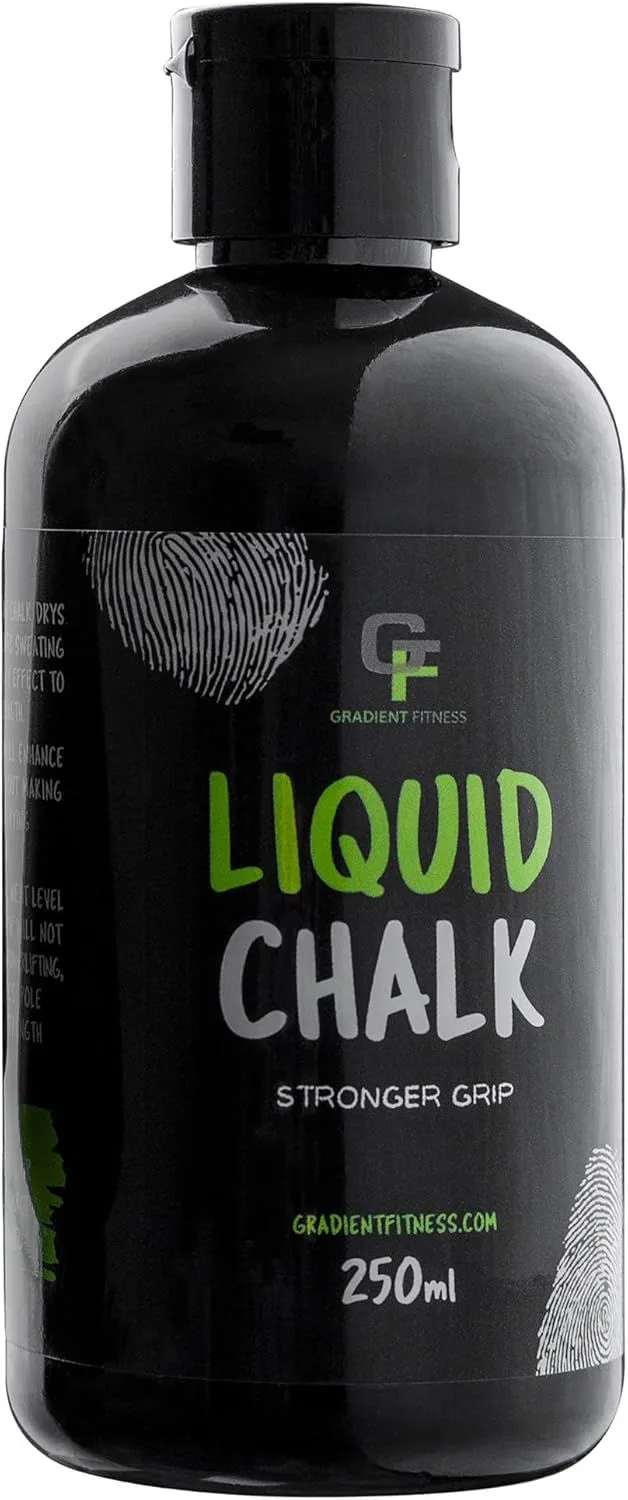
Gradient Fitness
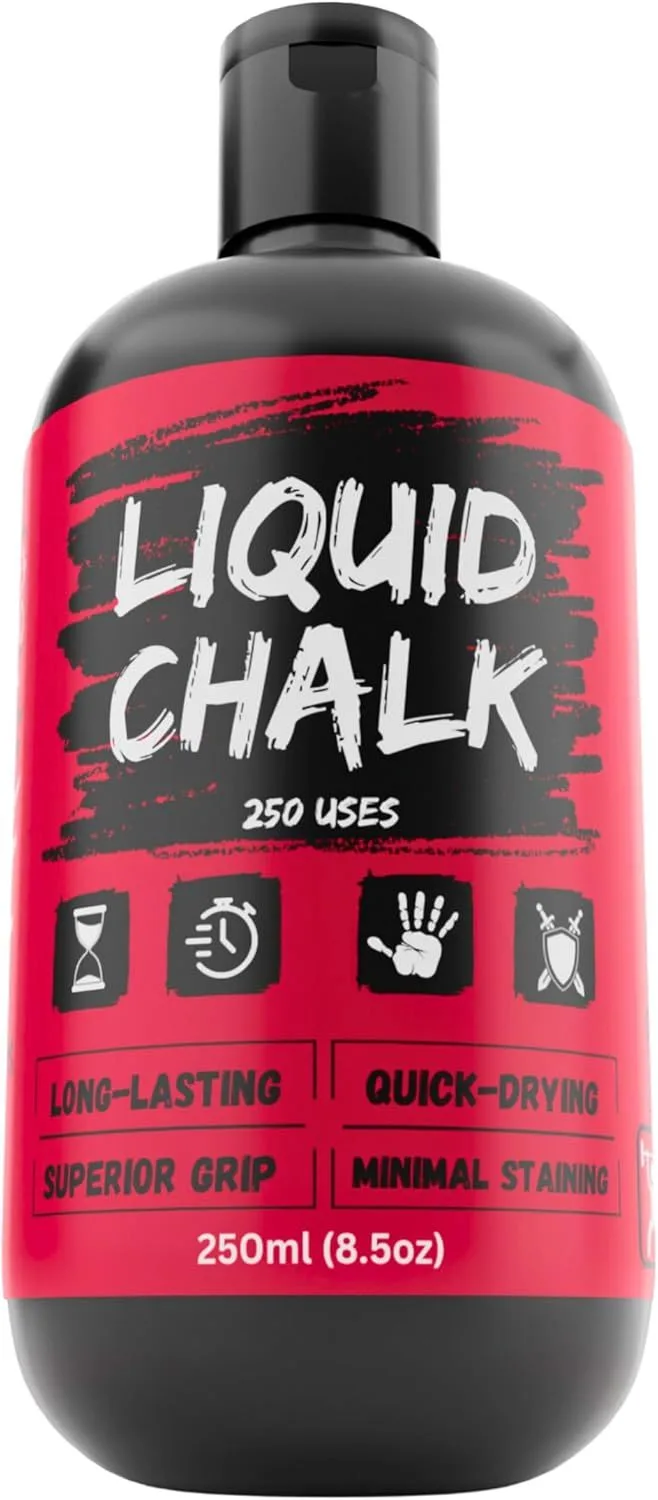
PowerGrip 50ml
Spec Sheet Comparison
| Feature | Gradient Fitness | PowerGrip 50ml |
|---|---|---|
| Price Range | $8–$15 | Under $8 |
| Volume | 250ml (~225 uses) | 50ml |
| Dry Time | 15–20 seconds | ~20 seconds |
| Grip Duration | 15–25 minutes | 35–50 minutes |
| Key Ingredients | Magnesium carbonate | Magnesium carbonate, honey, rosin |
| Scent | Mild alcohol | Mild |
| Made In | Not specified | Not specified |
| Check Price | Check Price |
This is not a standard matchup. Most comparisons pit two similar products against each other — same size, same category, similar price. This one crosses category lines entirely. Gradient Fitness is a 250ml sealed tube from the large-bottle category. PowerGrip 50ml is a pocket-sized squeeze bottle from the travel-compact category. They share exactly one thing: both are liquid chalk. Everything else — formula complexity, target user, use case, and value proposition — diverges sharply.
The comparison matters because real buyers face this exact decision. A gym-goer standing in front of Amazon with a $8–$15 budget sees Gradient Fitness offering 250ml and PowerGrip 50ml offering a fifth of that volume at a similar price. The instinct is to grab the bigger bottle. But volume is only part of the equation. What the chalk does on your hands, how long it stays effective, and where you can actually carry it determine the real value — not the number printed on the label.
Formula Complexity: One Ingredient vs Three
Gradient Fitness uses a single active ingredient: magnesium carbonate suspended in an alcohol carrier. Squeeze it on, the alcohol evaporates, and a layer of magnesium carbonate remains on your palms. It absorbs sweat and creates friction. Simple. Effective for moderate grip demands. And when it wears off after 15-25 minutes, your hands return to their natural state with zero residue.
PowerGrip 50ml packs three active ingredients into its formula. Magnesium carbonate handles the primary grip layer — the same foundation as Gradient Fitness. Rosin, a natural tree resin used in gymnastics chalk and violin bows, creates a tacky adhesive film underneath the magnesium. And honey adds a tertiary adhesion layer that also conditions the skin during extended sessions.
The practical difference shows up after the 15-minute mark. Both products feel similar for the first 10-15 minutes of use — your hands are chalked, your grip is solid, the bar does not move. At minute 20, the Gradient Fitness layer has thinned enough that sweat starts breaking through. You can feel the grip weakening. By minute 25, you are reaching for the tube again.
At that same 20-minute mark, the PowerGrip formula still has two active layers working. The magnesium carbonate is thinning — same physics, same sweat — but underneath it, rosin is providing friction that bare magnesium cannot match. You feel the grip character change from "dry and chalky" to "slightly tacky and adhesive," but the functional grip remains strong. That tacky phase can last another 15-30 minutes before the rosin layer also fades, at which point the honey leaves a faint residual hold for several more minutes.
Grip Duration: 15-25 Minutes vs 35-50 Minutes
Gradient Fitness delivers 15-25 minutes of functional grip per application. The range depends on sweat rate, ambient humidity, and how aggressively your hands contact equipment. Light dumbbell work in an air-conditioned gym pushes you toward the upper end. Heavy barbell pulls in a humid garage gym push you toward the lower end. For moderate training conditions — the sweet spot where most gym-goers operate — expect about 20 minutes before the grip noticeably fades.
PowerGrip 50ml delivers 35-50 minutes. The same environmental variables apply, but the floor is higher and the ceiling is much higher. In moderate conditions, expect about 40 minutes of grip that starts chalky, transitions to tacky, and then gradually fades. In dry, cool environments, the full 50-minute window is realistic.
The grip curve shapes differ as much as the durations. Gradient Fitness has a cliff-edge profile. It works, it works, it works — and then it is gone. There is a narrow transition window (maybe 3-5 minutes) where grip weakens before disappearing entirely. PowerGrip has a long, gradual taper. It starts strong, shifts through multiple grip phases (chalky → tacky → residual), and fades out over 10-15 minutes. That gradual taper means you always have some grip working — you never hit the "bare hands" moment mid-set.
For climbers, this grip curve difference is critical. A cliff-edge grip failure on a climbing hold mid-crux can end a send attempt or cause a fall. A gradual taper gives you warning — your fingers feel slightly less secure, which prompts a controlled chalk break rather than a surprise slip. Gradient Fitness is acceptable for bouldering where problems take 1-3 minutes. PowerGrip's sustained grip suits sport climbing routes and longer boulder sessions where time on the wall exceeds 20 minutes per burn.
Portability: Tube vs Pocket Bottle
Gradient Fitness is a 250ml sealed tube — roughly the size and shape of a large toothpaste tube. It comes with a clip ring (marketed as a "metal carabiner" but actually a simple binder ring) for attaching to bags. The tube is not pocket-sized. It fits in a gym bag, chalk bucket, or backpack side pocket. Carrying it to a different location means packing it deliberately.
PowerGrip 50ml is a compact squeeze bottle that fits in a jacket pocket, shorts pocket, or the small compartment of a climbing harness. You can clip it, pocket it, or toss it in the smallest section of any bag. The volume sacrifice is the direct reason for this portability — less liquid means a smaller container.
For athletes who train at a single location — a home gym, one commercial gym, one climbing wall — portability is irrelevant. The Gradient Fitness tube lives next to the barbell and never moves. For athletes who train at multiple locations, travel to competitions, or climb outdoors, portability dictates which product actually gets used. The most effective chalk formula in the world does nothing for your grip if it is sitting at home while you are at the crag.
Cost Per Use: The Number That Actually Matters
At below average for its category pricing for 250ml, Gradient Fitness delivers roughly 180-220 dime-sized applications. At mid-range for its category pricing for 50ml, PowerGrip delivers roughly 25-35 pea-sized applications. On a per-application basis, Gradient Fitness wins by a wide margin. You get 5-6x more individual squeezes per dollar.
But "per application" is a misleading metric when the applications are not equivalent. One application of Gradient Fitness provides 15-25 minutes of grip. One application of PowerGrip provides 35-50 minutes. Per minute of active grip, the gap narrows considerably. A 60-minute session requires roughly 3 Gradient Fitness applications (totaling about a tablespoon of product) versus 1-2 PowerGrip applications (totaling less than a teaspoon). The effective consumption rate per training hour is closer than the per-squeeze math suggests.
Over a month of daily training (22 sessions), the math looks like this: Gradient Fitness at 3 applications per session burns through roughly 66 applications — about 30% of the tube. PowerGrip at 1.5 applications per session burns through roughly 33 applications — more than the entire 50ml bottle. You would need to reorder PowerGrip monthly and order Gradient Fitness every 3-4 months. The total monthly cost of Gradient Fitness is still lower, but not by the 5x margin that bottle size alone implies.
Dry Time and Application Experience
Gradient Fitness dries in 15-20 seconds. The thin, alcohol-forward formula evaporates quickly and leaves a light chalk layer. Application is simple: squeeze a dime-sized amount from the sealed tube opening, rub palms together, wait 15 seconds, grip. The sealed tube controls dispensing well — unlike wide-mouth bottles that dump thin formula everywhere, the narrow aperture limits flow to predictable portions.
PowerGrip 50ml dries in approximately 20 seconds. The thicker consistency means you need to actively spread the formula across your palms and between your fingers before it dries. It does not self-spread the way Gradient Fitness's thinner formula does. The extra 5 seconds of dry time is negligible in practice — you spend more time working the thicker formula across your hands than you do waiting for it to set.
The application feel differs more than the timing. Gradient Fitness feels like applying hand sanitizer — thin, wet, and cool from the alcohol. It vanishes quickly, leaving dry chalky hands that feel natural. PowerGrip feels like applying a thin paste. There is more substance to work with, and after it dries, your hands feel both chalky and slightly tacky — a textured grip surface rather than just a dry one. Some athletes prefer the natural chalky feel of simpler formulas. Others prefer the active-grip sensation of rosin-enhanced products.
After training, Gradient Fitness washes off with standard soap and warm water. No scrubbing required. PowerGrip's rosin component creates a tacky film that takes slightly more effort — a thorough hand wash with soap or a wipe with rubbing alcohol clears it. Not a major inconvenience, but a daily reality if you train with it regularly.
Who Wins Where: Activity-by-Activity Breakdown
Casual gym training (dumbbells, machines, light barbell): Gradient Fitness. The grip demands are moderate, the sessions are typically 45-60 minutes with natural rest breaks for reapplication, and portability is usually not a concern. The budget pricing makes it the most cost-effective option for this audience. PowerGrip's premium formula is overkill for bicep curls and lat pulldowns.
Heavy barbell work (deadlifts, squats, Olympic lifts): PowerGrip 50ml, with a caveat. The longer grip duration and tacky feel provide better hold during max-effort pulls where the bar wants to roll out of your hands. But if you only train at one gym, the PowerGrip 250ml is the same formula at better value. The 50ml wins here only if you need to carry it between locations.
Rock climbing (indoor bouldering and sport): PowerGrip 50ml. The 35-50 minute grip window covers most climbing sessions without reapplication between attempts. The pocket size fits chalk buckets and harness pockets. The rosin provides the tackiness climbers associate with performance chalk. Gradient Fitness's 15-25 minute window is too short for anything beyond quick bouldering sets.
CrossFit and circuit training: PowerGrip 50ml. High-intensity workouts with minimal rest leave zero time for mid-WOD reapplication. You chalk once before the clock starts and need that grip to survive the entire metcon. A 35-50 minute window covers most workouts. Gradient Fitness at 15-25 minutes means your grip fails during the workout — exactly when you cannot stop to rechalk.
First-time liquid chalk buyers: Gradient Fitness. Before spending on premium formulas, a first-timer should understand what liquid chalk does, how it feels, and whether they will actually use it. The Gradient Fitness tube provides that education at the lowest possible cost. If they like the concept but want stronger grip, the upgrade path to PowerGrip (or other premium options) is clear.
The Reformulation Factor
Gradient Fitness carries an asterisk that PowerGrip does not. Multiple Amazon reviewers who purchased both older and newer batches of Gradient Fitness report that the formula has changed. Earlier batches were thicker and grippier. Newer batches feel thinner and provide shorter grip duration. The company has not publicly confirmed a reformulation, but the review timeline — positive reviews clustering in earlier periods, negative reviews clustering in recent periods — tells a consistent story.
PowerGrip's formula has remained stable across its production history. The 444 shared reviews (covering both the 50ml and 250ml sizes) show consistent feedback about grip quality, tackiness, and duration regardless of purchase date. Sincere Gear, the brand behind PowerGrip, has maintained the honey + rosin formula without reported changes.
This matters because reliability is a form of value. If you order Gradient Fitness and receive the original thicker formula, the product is a genuine bargain. If you receive the thinner recent version, you get adequate grip for casual use but nothing that justifies choosing it over equally budget-priced alternatives. With PowerGrip, you know exactly what arrives — the same triple-layer formula every time. For athletes who hate product roulette, that consistency has real worth.
Match Each Product to Your Situation
Choose Gradient Fitness if:
- You train at one location and never need to carry chalk in your pocket
- Your grip demands are moderate — dumbbells, machines, light barbell work
- Reapplying every 20 minutes during a session does not bother you
- You are trying liquid chalk for the first time and want the lowest-risk entry point
- Budget is the primary factor and you want maximum sessions per dollar
- You prefer minimal residue and easy soap-and-water cleanup
Choose PowerGrip 50ml if:
- You need chalk that travels — gym bag, climbing pack, competition kit, airplane carry-on
- Your grip demands are high — heavy barbell, climbing holds, pull-up bars, WODs
- 35-50 minutes of grip per application matters for your sport and session length
- You value a proven, stable formula over batch-to-batch pricing gambles
- You climb outdoors or compete where reapplication breaks are impractical
- You already know you like premium chalk and want the best formula at this size
Gradient Fitness vs PowerGrip 50ml: Common Questions
Which one lasts more sessions before I need to reorder?
Can I use the Gradient Fitness tube for climbing the way I use PowerGrip?
Does the honey in PowerGrip make it sticky or gross on equipment?
Is PowerGrip 50ml TSA-friendly for flying to competitions?
If I am on a tight budget, should I just buy the bigger bottle every time?
The Volume vs Formula Verdict
Gradient Fitness and PowerGrip 50ml represent two honest answers to the same question: how do I chalk my hands without breaking the bank? Gradient Fitness answers with volume — 250ml for below average for its category pricing. Pour more, pay less. PowerGrip answers with chemistry — honey, rosin, and magnesium carbonate layered into a formula that grips twice as long per application. Less product, more performance per squeeze.
Neither answer is wrong. They serve different athletes with different priorities. The casual gym-goer who trains at one location, sweats moderately, and does not need competition-grade grip will get more training sessions out of Gradient Fitness for less money. The climber, the competitive lifter, the traveling athlete, and anyone who needs sustained grip under pressure will get more real-world value from PowerGrip's formula — even at a higher cost per milliliter.
The smartest athletes will not choose between them. They will keep a Gradient Fitness tube at their home gym for daily training and a PowerGrip 50ml in their bag for climbing trips, competition days, and any session where grip failure has consequences beyond inconvenience. At combined affordably priced and budget-friendly pricing, owning both costs less than a single premium large-bottle product — and covers every grip scenario you will encounter.